
Colin Farrell discusses playing the Penguin and working with Danny DeVito, as both actors reflect on bringing Gotham’s notorious villain to life in their respective eras, sharing stories from behind the scenes of their transformative portrayals. Their conversation traces the physical and emotional demands of the role, the intricacies of performing beneath heavy prosthetics, and what it means to step into the shoes of one of Batman’s most complex adversaries.
The Unlikely Bond of Two Penguins
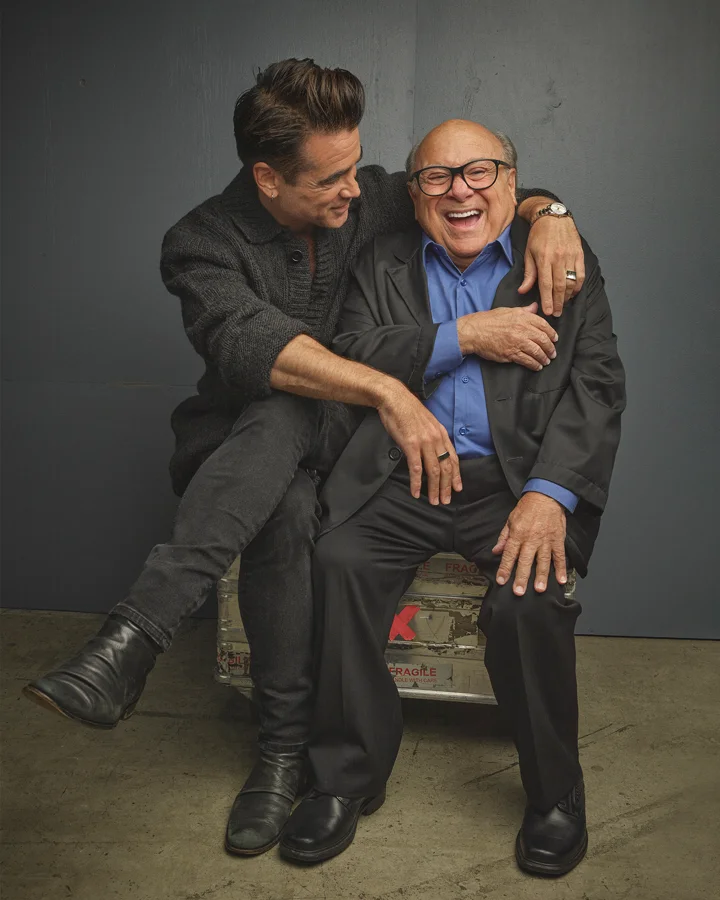
Danny DeVito and Colin Farrell have forged a unique camaraderie after each portrayed the Penguin at different times in cinematic history. DeVito’s Oswald Cobblepot emerged from Tim Burton’s memorable 1992 vision in Batman Returns, while Farrell’s more grounded and gritty Oz Cobb appeared in Matt Reeves’ 2022 film The Batman and will reprise the role in the series The Penguin. Despite the decades that separate their performances, both actors recount the laborious transformation process and the special challenges that come with embodying such a notorious character.
Their shared history dates back over two decades, with Farrell first crossing paths with DeVito when he was just beginning his career. The friendship, initially sparked over a casual visit for a meal, remained as Farrell rose to prominence and eventually assumed the Penguin’s top hat for a new generation of audiences. Having both undergone intense physical changes for the role, they are able to uniquely understand the rigors and artistry that go into becoming Gotham’s infamous villain.
The Rigors of Transformation: Prosthetics and Early Mornings
Behind the Penguin’s sinister exterior lies a rigorous process of makeup and prosthetics, which defined the experience for both actors. Farrell describes his first makeup test at the Warner Bros. lot, which began six months before filming and lasted seven to eight hours. The process was a source of nervous anticipation for the crew, with a team of fifteen artists working to perfect the look. Over time, this lengthy preparation was streamlined to about three hours each morning. Similarly, DeVito recalls his own experience in the makeup chair, starting with five to six hours and eventually reducing to three and a half hours a day. He shares that he would arrive at the studio before dawn, gathering his ritual cup of tea and bracing himself for the initial application of glue and prosthetics.
The transformation was often described as being “buried” under layers of synthetic features, which deeply impacted both actors’ perspectives. Farrell found the routine of coffee, music, and reviewing lines a welcome way to transition into character, while DeVito notes how the initial moments of prosthetic application felt daunting but ultimately gave way to familiarity as filming progressed. For Farrell, the intensity of shooting meant long days of sixteen to eighteen hours, with breaks between filming days to help his skin recover from the demanding process. DeVito remembers filming for sixty-six consecutive days, often making meals and enjoying camaraderie during breaks on set, highlighting the endurance required to sustain such a dramatic transformation.
Research, Rituals, and Comic Relief
To craft their portrayals, both actors delved into detailed preparation. DeVito even visited the San Diego Zoo to observe live penguins, immersing himself in their mannerisms and environment. This hands-on research provided him with insights and comedic anecdotes, including the less-than-glamorous realities of interacting with penguins in close quarters. Such commitment to authenticity underscores the dedication that both actors brought to their roles, whether by ritual or immersive study.
On lighter notes, DeVito talks about his recurring role as Frank in the long-running comedy series It’s Always Sunny in Philadelphia, contrasting the freedom of improvisation in comedy with the scripted intensity of playing Oswald Cobblepot. Farrell expresses admiration for DeVito’s versatility, characterizing his comedic work as anarchic and boundary-less. While the environments and expectations of drama and comedy differ, both actors find the creative process rewarding in unique ways.
The Supporting Cast: Catwoman, Crew, and Family Ties
The Penguin’s world is shaped by memorable supporting characters and cast members. DeVito reminisces about working alongside Michelle Pfeiffer’s Catwoman, describing their dynamic as electric and her presence as a highlight of his time on Batman Returns. Farrell, meanwhile, performed scenes with Zoë Kravitz, whose portrayal brought a fresh energy to the iconic antiheroine. The interplay between their characters reflects not only the evolving depiction of Gotham but also the collaborative spirit among actors.
Farrell also acknowledges the contributions of Deirdre O’Connell, who played his mother in the series. Moments of humor and vulnerability between Penguin and his mother offered new depth to the character, with Farrell reflecting on the complex parent-child relationship that added another layer to his performance. Their exchanges reveal how the surrounding cast and crew influence and elevate the portrayal of such a layered character.
Give me another pound of makeup.
—Danny DeVito, Actor
Tell him to stop stirring the sauce
—Unknown
Would the Penguin Return? Embracing and Shedding the Villain
Both actors have considered what it would be like to reprise their roles as the Penguin. For DeVito, the character offered a unique freedom that allowed him to explore theatricality and larger-than-life emotions, drawing inspiration from the operatic direction of Tim Burton and the world-building of Batman Returns. Farrell expresses gratitude for his time as Oz, recalling his childhood fascination with previous Penguin performances and emphasizing the privilege he felt bringing the character to a new audience. Yet, for all the artistic satisfaction, Farrell also admits to feeling relief when the role concluded, citing the psychological and physical toll that such a dark persona exerted over time.
The process of immersing themselves in such morally complex roles demanded that both actors learn to compartmentalize, avoiding the temptation to let their characters’ darker impulses seep into their personal lives. DeVito speaks to a clear boundary between his work and home life, emphasizing the importance of returning to reality after inhabiting particularly despicable characters.
Ooh, shouldn’t have come here. Should have come here a year and a half ago.
—Colin Farrell, Actor
Personal Routines, Sobriety, and Coping with Fame
Amidst the on-set demands, both Farrell and DeVito shared candidly about their personal routines and efforts to maintain balance. Farrell reflects on earlier challenges with sobriety, especially while filming in environments synonymous with temptation, such as the renowned beer culture in Bruges. DeVito discusses his preference for moderation in drinking and embracing health kicks, content to indulge occasionally but wise to the benefits of restraint. These revelations offer insight into how the demands of their careers intersect with efforts to care for their well-being.
Finding moments of relaxation becomes essential, and both actors describe the activities that help them unwind outside the spotlight. For Farrell, film, reading, time in the sauna, and running offer respite from the heightened energy of the set, while DeVito praises the exercise routines and self-care that help maintain focus and health. Their anecdotes reveal a grounded approach to navigating fame, choosing routines that help them stay connected to a sense of normalcy.
Defining the Penguin’s Relationship to Batman
At the heart of the Penguin’s narrative is the rivalry and begrudging admiration for Batman. Farrell explains that his Penguin, Oz, saw Batman as both an obstacle and an inspiration—an aspirational figure representing the pinnacle of Gotham society and power. For Farrell, the world crafted by Matt Reeves positioned Batman as a looming presence, not yet fully realized as Gotham’s protector, adding tension to the Penguin’s ambitions. DeVito’s Oswald, by contrast, was shaped by the high drama of Burton’s vision, fixated largely on power and recognition.
The actors discuss how their respective Batmen influenced their performances, with Farrell sharing scenes with Robert Pattinson and DeVito recalling Michael Keaton’s iconic role. This dynamic shaped both their characters, fueling their motivations and creating a rich interplay of envy, respect, and rivalry. The shifting relationship between hero and villain reflects broader changes in Gotham’s cinematic storytelling, emphasizing different facets of ambition, tragedy, and charisma.
The Legacy and Enduring Appeal of Gotham’s Villain
As DeVito and Farrell continue to reflect on their journeys as the Penguin, their perspectives highlight the enduring cultural fascination with Gotham’s rogues’ gallery. Both actors found liberation in exploring the unruly, grotesque, and unpredictable nature of the character, using their shared experiences as a lens through which to examine the complexities of villainy. Their reflections not only pay homage to Batman’s world but also underscore how each generation brings fresh interpretations to familiar figures.
With the upcoming series The Penguin, Farrell carries forward the torch ignited by DeVito and predecessors like Burgess Meredith. As the narrative evolves, so too does the character, adapting to new creative visions while honoring the theatricality and depth that have long defined Gotham’s most infamous villain. Through their mutual respect, both actors celebrate the collaborative art of transformation, ensuring that the Penguin remains as mysterious and compelling as ever for audiences both new and old.
