
Christopher Nolan once compared David Fincher to Ridley Scott after seeing Fincher’s work on Alien 3, believing he could become a leader in sci-fi filmmaking. Over time, however, Fincher’s career evolved in a different direction, diverging from the sci-fi focus that defines both Scott and Nolan and instead establishing Fincher as a master of atmospheric crime thrillers.
Nolan’s Early Prediction: Comparing Fincher to Ridley Scott
Christopher Nolan has a reputation for pushing the boundaries of genre film, especially within the realms of science fiction. With movies like Interstellar, Inception, and Tenet, Nolan has consistently demonstrated a knack for exploring original, thought-provoking ideas in great detail. In much the same way, Ridley Scott left a significant mark on cinema with his innovative approach to sci-fi in classics like Alien and Blade Runner. Their work, while distinct, shares a commitment to complex storytelling and ambitious visual spectacle.
Seeing echoes of Ridley Scott’s influence in Fincher’s first major film, Nolan believed Fincher could carry the sci-fi torch forward for a new generation. Nolan was so struck by Alien 3 that, in a 2020 interview, he revealed his expectation that Fincher would become the “new Ridley Scott.” Nonetheless, Nolan admitted that he had never relayed these thoughts directly to Fincher, recognizing the director’s dissatisfaction with his experience on the film.
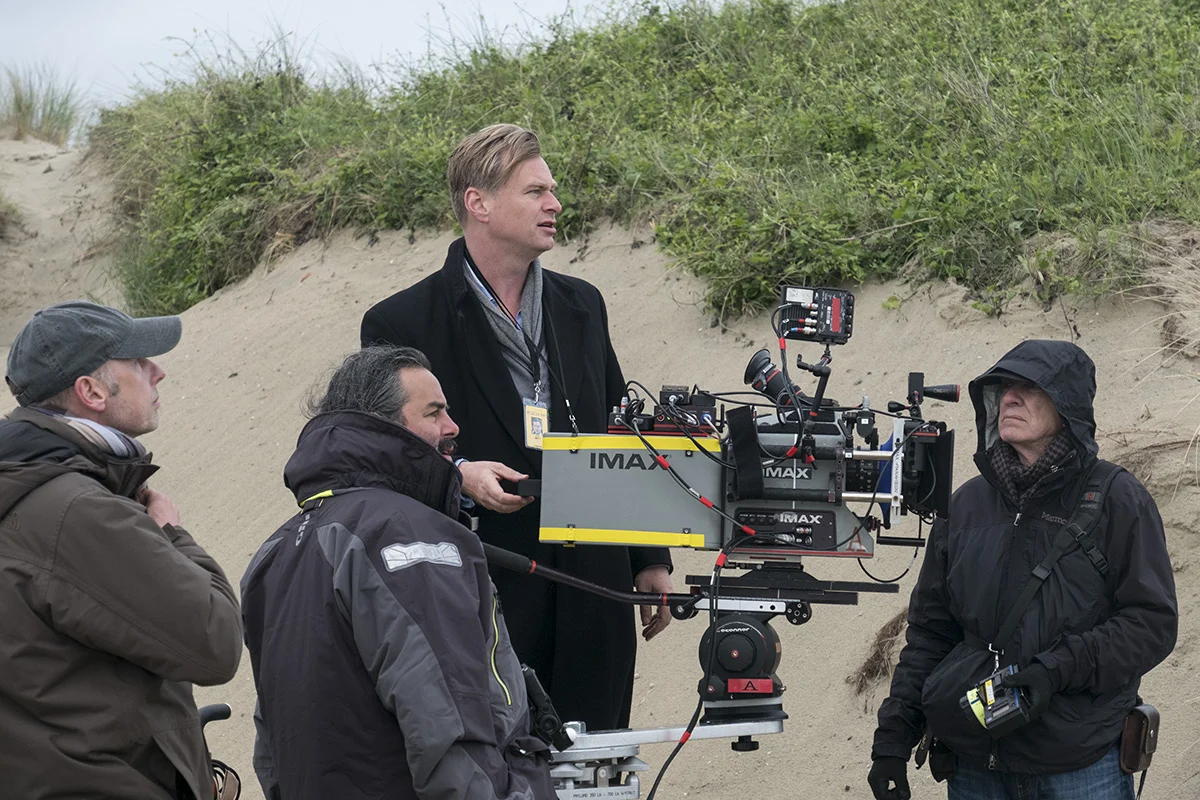
“I’ve never dared mention [Alien 3] to him. I think he’s very aware of the flaws and he’s very aware of the appalling experience he had making it, and how put-upon he was, and I truly can only imagine.”
—Christopher Nolan on David Fincher
Despite the troubled production, Nolan saw great potential in Fincher’s early style, which combined atmospheric world-building and a fresh dramatic sensibility. Fincher, however, was so unhappy with both the process and the final cut of Alien 3 that he nearly left filmmaking altogether, only to soon rebound and redefine his creative path.
Alien 3: A Creative Struggle And Foundational Experiment
Alien 3 was David Fincher’s introduction to feature-length directing—a challenging debut, considering the shadow cast by the original Alien and James Cameron’s action-packed sequel. Alien 3 drew heavily from Ridley Scott’s tone and visual language, embedding suspenseful pacing and a gritty environment that were hallmarks of Scott’s earlier work. Even amidst production difficulties and studio interference, the film showed glimpses of Fincher’s future strengths—his keen eye for dramatic tension and striking visual composition.
Both Alien and Alien 3 set a standard for atmospheric, high-stakes science fiction, although each director brought a distinctive touch. Alien 3, while not regarded as Fincher’s best film, signaled a continued tradition of innovative filmmakers reinterpreting and expanding franchise material. In this context, Nolan’s comments about Fincher’s potential seemed well-founded at the time.
Fincher’s Pivot: Embracing Crime Thrillers Over Sci-Fi
While Nolan imagined a sci-fi legacy akin to Ridley Scott’s, Fincher soon chose a different route. After the difficulties with Alien 3, Fincher launched a new phase of his career with Se7en, a detective thriller that earned immediate acclaim for its moody atmospherics and psychological depth. The release of Fight Club in 1999 further cemented Fincher’s reputation in the crime and psychological thriller genres, rather than science fiction.
Since then, Fincher has largely avoided revisiting sci-fi. The only film that ventures even slightly into genre territory is The Curious Case of Benjamin Button, which offers a subtle blend of fantasy and romance, diverging sharply from traditional science fiction themes. For the most part, Fincher refined his focus on crime-driven narratives, such as Zodiac’s meticulous investigation drama and the twist-filled social thriller Gone Girl. This specialization has become his trademark.
David Fincher’s debut with Alien 3 was so fraught with obstacles and creative compromises that he nearly abandoned directing entirely. Nevertheless, his perseverance allowed him to develop some of the most distinctive and influential films in modern Hollywood.
Relationships with recurring collaborators, notably Brad Pitt, have bolstered Fincher’s impact on the crime drama landscape. Their partnership is set to continue with a new project rumored to revisit the stylish crime thriller template. Notably, the anticipated spinoff from Once Upon a Time in Hollywood serves as further proof that Fincher remains committed to the genres that now define his career.
Changing Expectations and Evolving Legacies
Christopher Nolan’s initial comparison of David Fincher to Ridley Scott reveals as much about changing trends in Hollywood as it does about individual artistry. While Nolan and Scott both remain synonymous with cerebral, high-concept science fiction, Fincher has embraced storytelling steeped in atmosphere, suspense, and psychological intrigue—going from a sci-fi hopeful to a master of crime narratives. The early prediction may not have played out, but it highlights how unique challenges and creative pivots can redefine a director’s legacy. Today, Fincher is not seen as a new Ridley Scott, but as an innovative voice whose influence stretches across a different side of modern cinema.
