
Clint Eastwood has long been celebrated for roles in films like Dirty Harry and Unforgiven, but he considers his work in The Outlaw Josey Wales to be his best performance. This self-assessment highlights not just the film‘s place in American Western cinema, but also the deep emotional resonance Eastwood brought to the role, making
“Clint Eastwood best performance The Outlaw Josey Wales”
a topic of renewed discussion among critics and fans alike.
Eastwood’s Unique Perspective on His Most Memorable Role
The Dollars trilogy, directed by Sergio Leone, catapulted Clint Eastwood into international fame, establishing him as one of Hollywood’s last leading men to truly embody the Western genre before its decline in popularity. While films like The Good, the Bad, and the Ugly and Unforgiven tend to overshadow his later work, The Outlaw Josey Wales (1976) stands out as both a fan favorite and Eastwood’s own choice for his strongest performance. In this film, which he also directed, Eastwood portrays Josey Wales, a Missouri farmer shattered by the murder of his family during the Civil War and driven to become a gunslinger in pursuit of vengeance.
The Outlaw Josey Wales offers more than the conventional action and iconic one-liners typical of Eastwood’s earlier Westerns. The story follows Josey as he gathers a makeshift family of fellow outcasts—characters like Chief Dan George’s Lone Watie and Sondra Locke’s Laura Lee—helping him transition from a hardened cynic to a man capable of healing and connection. This emotional journey, paired with classic Western tropes, gives the film a layered warmth uncommon in many of Eastwood’s roles up to that point. The film remains one of the actor-director’s most praised projects for its nuanced exploration of vengeance, redemption, and community amidst violence and loss.
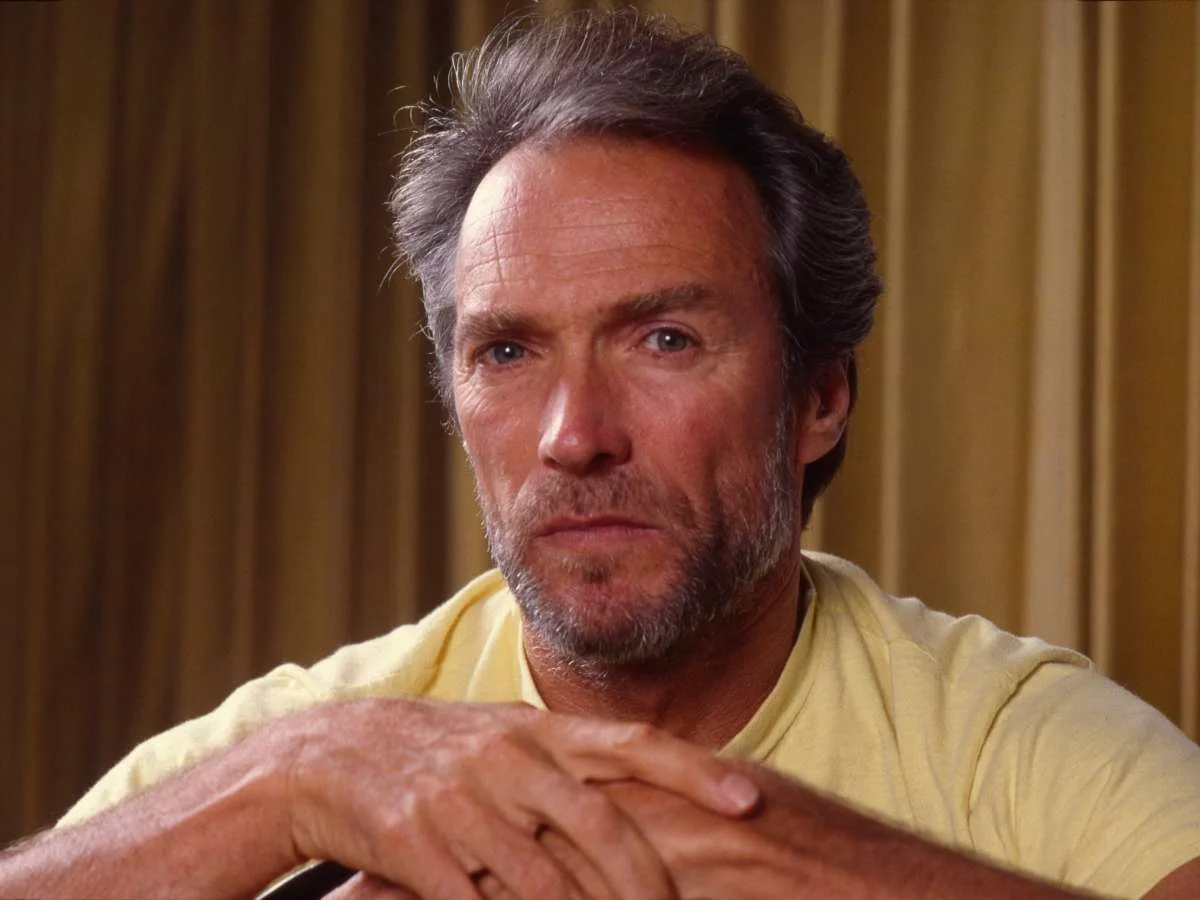
Behind the Scenes: Why Eastwood Views Josey Wales as His Pinnacle
During a conversation with journalist Paul Nelson, later published in
“Conversations with Clint: Paul Nelson’s Lost Interviews with Clint Eastwood, 1979-1983,”
Eastwood was asked to name his finest acting achievements. He responded,
“I think Dirty Harry and Josey Wales would be my two best performances,”
followed by,
“Josey Wales maybe is as good as I can do it.”
—Clint Eastwood, Actor/Director.
It is uncommon for Clint Eastwood to offer detailed commentary on his own performances or attempt to rank his work, which makes his statements about The Outlaw Josey Wales especially revealing. He not only places this character above many of his more famous roles, but describes what made it such a definitive experience for him as an actor.
Eastwood attributed the effectiveness of his portrayal to the way he mapped Josey’s transformation with minimal dialogue or exposition. He explained,
“For that kind of character, I told a lot about a guy without telling a lot about a guy. Using a minimal amount of exposition, the picture of a man and the changing of a man as he went along, through the experiences with meeting other people, were shown without having to stop and do explanatory scenes.”
—Clint Eastwood, Actor/Director.
This approach is visible throughout the film, as Josey begins the story deeply wounded emotionally, propelled mainly by his need for revenge against the soldiers responsible for his family’s murder. As the plot unfolds and Josey is forced on the run, encounters with characters such as Lone Watie and Laura Lee push him towards rediscovering his own humanity. It’s an understated performance, where Eastwood skillfully uses facial expressions and body language as Josey evolves from a figure of pure vengeance to a man who finds the courage to care again.
The film’s iconic final confrontation with Captain Terrill—portrayed by Bill McKinney, the man who slaughtered Josey’s family—serves as a master class in nonverbal acting. After a tense shootout, Josey corners Terrill, taunting the desperate man by pulling the trigger on empty revolvers before ultimately killing him with Terrill’s own sword. In this moment, Eastwood’s stoic expression softens and shifts, conveying relief, sorrow, and acceptance, all without uttering a single unnecessary word.
Eastwood’s Subtle Strengths as an Actor
It is worth noting that although Eastwood made this assessment of The Outlaw Josey Wales over four decades ago, he has rarely revisited or revised that opinion in public statements. Typically reserved when discussing his own talents, Eastwood’s focus on Josey Wales as his crowning achievement reveals the depth of his emotional investment in the character.
Early in his career, critics and audiences often categorized Eastwood as a stern, squinting archetype—a durable screen persona that flourished in his Dirty Harry movies and the revisionist Westerns. However, throughout his body of work, Eastwood has demonstrated a willingness to break away from typecasting. Roles in films such as The Beguiled, Honkytonk Man, and The Bridges of Madison County show his versatility and willingness to take artistic risks.
In Bronco Billy—a role Eastwood himself cites as a personal favorite—he injects unexpected humor and warmth into the story of a grown man living out his cowboy fantasies. Conversely, his performance in Million Dollar Baby as Frankie Dunn, a grizzled boxing trainer who becomes a surrogate father to Hilary Swank’s Maggie, is layered and deeply affecting. The emotional climax of that film, rooted in dialogue and raw vulnerability rather than stoic silence, stands as one of the most heartrending scenes in his career.
Both Josey Wales and Frankie share a journey from cynicism to a kind of reluctant hope, charted through connection with others. Yet, as with Josey Wales, Eastwood is able to communicate these transformations with remarkable subtlety, moving beyond his established image as merely a stoic or “lovable grump.” His ability to explore heartbreak, growth, and grace has made him an underappreciated performer, even as critics have embraced his status as a filmmaker. From appearances in genre-defining projects to more experimental fare, he has consistently proven more dynamic and complex than he is often given credit for.
The Outlaw Josey Wales: A Western Gem That Often Goes Overlooked
While the Dollars trilogy and Unforgiven are recognized as pivotal moments in the evolution of the Western genre—reinventing and then deconstructing its mythology—the merits of The Outlaw Josey Wales are occasionally undervalued by comparison. Despite its substantial box office success, earning over $31 million on a reported $3.7 million budget per Box Office Mojo, it has not attained quite the same level of acclaim as Unforgiven or The Good, the Bad, and the Ugly in the broader cultural conversation.
Production on The Outlaw Josey Wales was not without drama. Eastwood famously replaced the film‘s original director, Philip Kaufman, after creative disagreements, a move that spurred the Directors Guild of America to implement the so-called “Eastwood Rule.” Under this guideline, an actor is prohibited from dismissing a director and taking over that role on the same project, a testament to how significant Eastwood’s intervention was at the time.
The finished film stands out not only because of Eastwood’s lead role, but also for its ensemble cast, which includes memorable performances from Chief Dan George and John Vernon. The movie’s visual style, striking set pieces, and strong character development make it suitable even for viewers new to the Western genre, offering both classic elements and original twists. In many ways, The Outlaw Josey Wales serves as an excellent example of how genre conventions can be honored while also reinvented, proving why it remains one of Eastwood’s most compelling projects—even if it is too often relegated to the shadows of his greatest hits.
The Largely Forgotten Sequel and Eastwood’s Reluctance Toward Franchises
Clint Eastwood has generally avoided sequels, despite his many roles that could have launched recurring franchises. After some consideration, he passed on adapting The Vengeance Trail of Josey Wales for the screen and instead directed his attention to other endeavors. The task of continuing Josey’s story fell to Michael Parks, who assumed both the lead role and the director’s chair in The Return of Josey Wales (1986).
This sequel follows the supposedly deceased Josey Wales as he is pulled out of retirement for one last act of vengeance when friends are murdered. Unfortunately, the film failed to capture the quality and depth of its predecessor. Shot on a significantly lower budget and lacking the sweeping scope and emotional gravitas of Eastwood’s original, The Return of Josey Wales never achieved critical or commercial recognition. Parks’ performance, though charismatic, could not match the iconic presence or subtlety Eastwood brought to the character. Released during a period when Westerns were waning in popularity, the sequel quickly faded into obscurity—a fate not uncommon for entries that lack their original star and vision.
Reflecting on Eastwood’s Enduring Influence Through The Outlaw Josey Wales
The Outlaw Josey Wales represents a high point in Clint Eastwood’s lengthy career in film, encompassing not just his abilities as a director and actor, but his insight into storytelling and character development. Although newer generations may still associate him most closely with the likes of Dirty Harry or the Man with No Name, Eastwood’s own view that The Outlaw Josey Wales constitutes his finest work encourages viewers to reconsider the depth and artistry he has brought to American cinema.
With performances that blend stoic resolve and raw vulnerability, Eastwood continues to stand as a screen icon capable of much more than a signature glare or drawl. His journey from farmer to gunslinger and, ultimately, to a man rediscovering his humanity, will likely remain a powerful testament to his talent for decades to come. For those seeking to understand Clint Eastwood’s legacy, or the power of transformation in tough times, looking to The Outlaw Josey Wales as his best performance may be the most rewarding place to start.
