
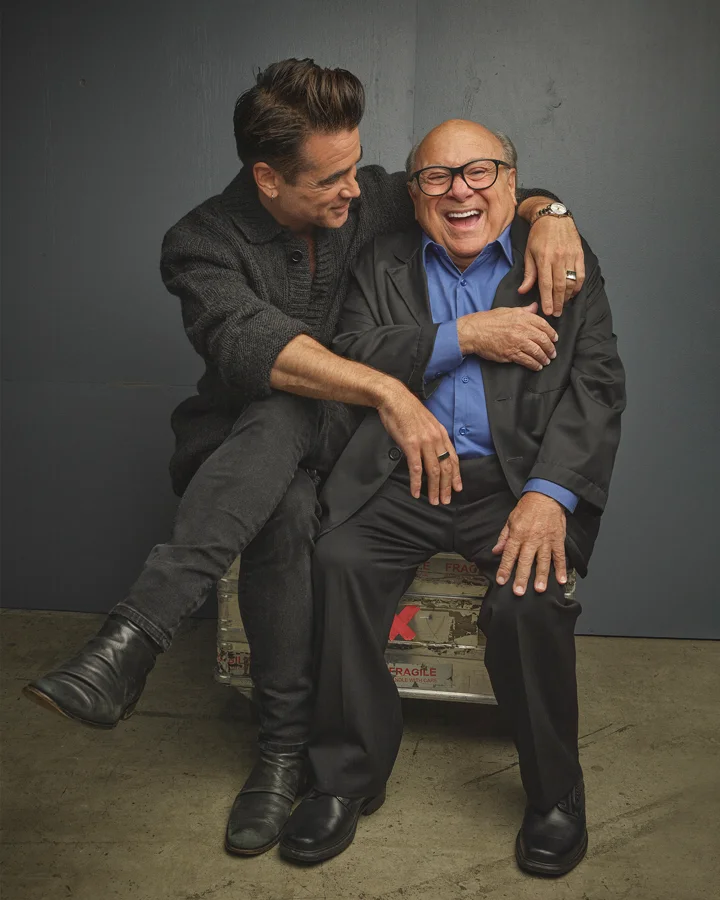
During a recent sit-down on Variety’s Actors on Actors, Colin Farrell and Danny DeVito, both famous for bringing the Penguin villain to life in separate Batman projects, diverted from discussing their DC connections to focus on DeVito’s legendary work on It’s Always Sunny in Philadelphia. Colin Farrell discusses Danny DeVito’s It’s Always Sunny role in a refreshing twist, exploring the successes and insightful moments of DeVito’s sixteen-season journey on the groundbreaking FX sitcom.
Why Farrell Shifted the Conversation Away from The Penguin
Colin Farrell, who celebrated a Golden Globe win at the 2025 awards for leading The Penguin series—an HBO spin-off of The Batman—reunited with Danny DeVito, who played the iconic comic book villain in Tim Burton’s Batman Returns. Although both actors share this notable role in the DC universe, Farrell was more interested in learning about DeVito’s experience with comedy. Their discussion, filmed for Variety, quickly moved away from supervillains when Farrell jokingly insisted,
“F*** the Penguin, I wanna hear about Sunny,”
referring to It’s Always Sunny in Philadelphia. This comment set the tone for a candid exchange about DeVito’s comedic achievements, with Farrell delving into what it’s like to become such a significant figure in a show that has come to define boundary-pushing television comedy.
Looking Back at DeVito’s Impact on It’s Always Sunny
Danny DeVito’s extensive career has spanned film, theatre, and television, with highlights including his Golden Globe and Emmy-winning performance in Taxi and starring roles in classics like One Flew Over the Cuckoo’s Nest and Disney’s Hercules. However, his addition to the cast of It’s Always Sunny in Philadelphia in season 2 was considered pivotal for the series. While season 1 served as a trial run, DeVito’s comedic presence and willingness to fully embrace the most outrageous scenarios cemented the show’s tone and fueled its prosperity as the longest-running sitcom on American television.
Colin Farrell’s admiration in this interview stemmed not just from DeVito’s status as an industry veteran, but from how fully he commits to his characters. On It’s Always Sunny, DeVito plays Frank Reynolds—a role marked by reckless abandon and comedic genius—proving it’s possible to maintain deep respect as an actor, even in the context of outlandish comedy. This inspired Farrell’s curiosity into what has made the series endure and the ways DeVito has contributed to its wild success.
DeVito’s ability to reinvent his career on such an unpredictable and boundary-defying comedy series is noteworthy. It’s Always Sunny, created by Rob McElhenney and featuring prominent talents like Glenn Howerton and Charlie Day, relies on actors unafraid to ridicule themselves and push comedic norms. DeVito’s entry in season 2 elevated not just his own career but the quality and audacity of the show’s narrative. The show’s writing team—including Rob McElhenney, Glenn Howerton, Charlie Day, and David Hornsby—have kept a steady flow of sharp, surprising scenarios, which DeVito consistently meets with equally bold performances.
The series remains celebrated for its chaotic humor and its cast’s eagerness to go to comedic extremes, securing a dedicated fanbase. Amidst the show’s success, real-life parallels intertwine; for example, Glenn Howerton, who plays Dennis Reynolds, has recently found acclaim in another series, which highlights the continued evolution and impact of the show’s core performers.
Colin Farrell’s Own Relationship with Television and Comedy
In the conversation, Farrell reflected on his own growing interest in television, as he has increasingly focused on small-screen projects like The Penguin and Sugar. While he is not traditionally associated with comedy, Farrell has demonstrated his range in films such as Horrible Bosses, where he shared the screen with Charlie Day. This connection served as another bridge between Farrell and the world of It’s Always Sunny, further enhancing his genuine curiosity about DeVito’s tenure on the sitcom.
The popularity of It’s Always Sunny and the caliber of guest stars it has attracted, such as Jason Sudeikis and Sean William Scott, led Farrell to ponder what it might be like to make an appearance himself. Given his admiration for DeVito and his versatile acting background, Farrell hinted at the tantalizing idea of guest-starring in an episode, suggesting he could contribute a memorable performance fitting the show’s legacy of unpredictable, memorable cameos.
The Enduring Significance of Comedy and Collaboration
The candid, energetic exchange between Danny DeVito and Colin Farrell underscores how respect for an actor’s career transcends genre or typical career paths. DeVito serves as an example of how a veteran performer can continue to reinvent himself and thrive, even in the most surprising settings. The ongoing dialogue about what makes veteran actors successful—commitment, risk-taking, and the willingness to tackle wildly different projects—offers lessons about the evolving landscape of television and the power of creative collaboration across generations.
As Farrell and DeVito’s conversation reveals, collaborations between major stars, whether on an HBO crime drama or a no-holds-barred sitcom, shape the trajectory not just of their own careers but also of the genres they inhabit. With Farrell now established as a dramatic force in series like The Penguin, and DeVito as a comedic legend in It’s Always Sunny in Philadelphia, their mutual respect highlights the increasingly blurred lines between comedy and drama in today’s entertainment world.
The possibility of Farrell joining the cast of It’s Always Sunny is exciting for fans and industry watchers alike, promising fresh comedic energy and a testament to how fascination with boundary-pushing roles unites even the most accomplished stars. For now, their shared moment on Variety’s stage stands as a celebration of talent, legacy, and curiosity—a reminder that, sometimes, the best conversations happen when actors swap stories and focus not on what connects them in the public imagination, but on what truly inspires them as artists.
