
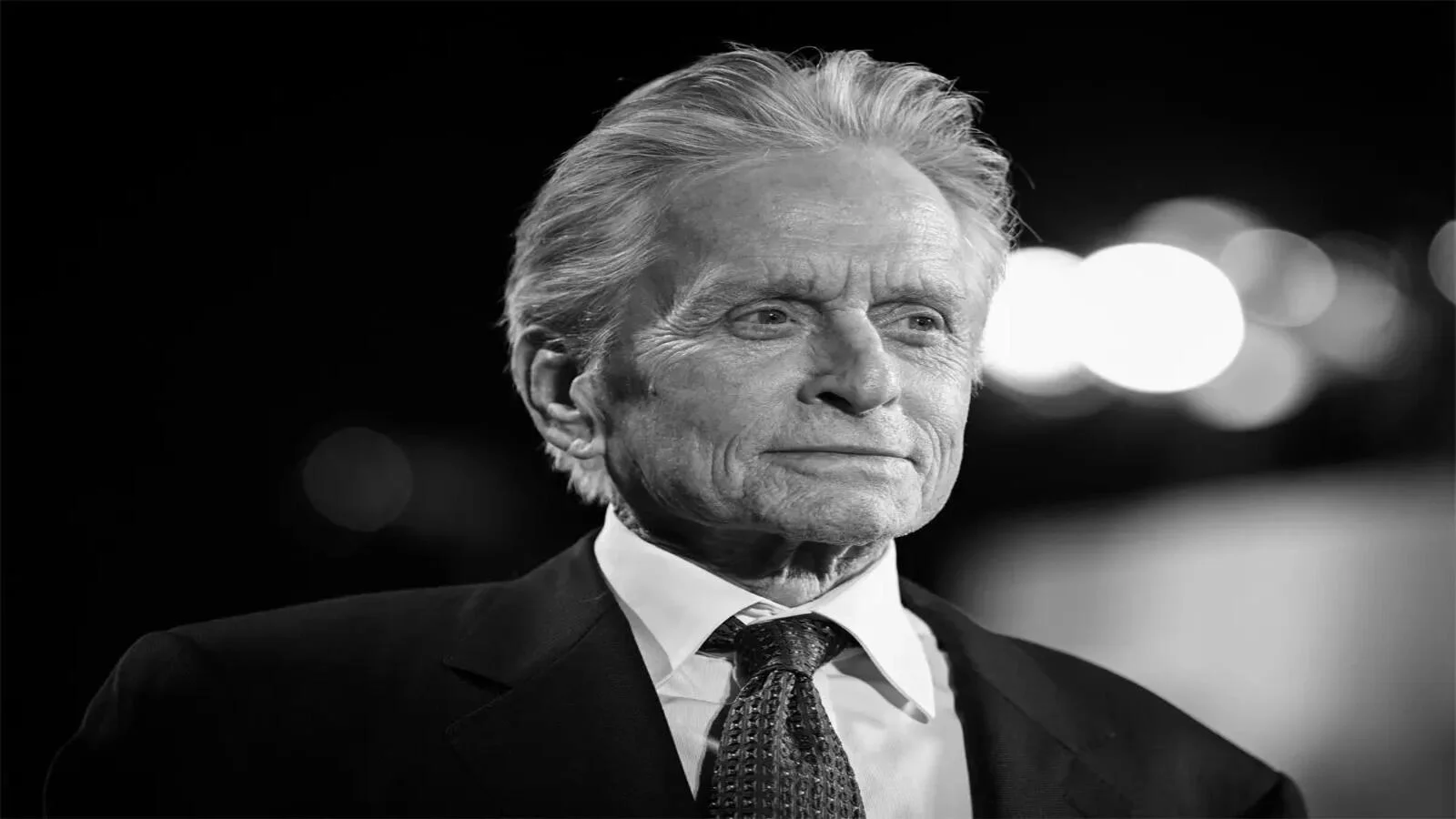
Michael Douglas narrates and produces America’s Burning documentary, a film exploring the increasing political and social rifts in the United States, which originally premiered at the Tribeca Film Festival a year ago. With interviews from prominent voices like James Carville and Leon Panetta, the documentary examines the roots of division while maintaining a focus on optimism and the pursuit of national unity.
Choosing a Title That Captures the Moment
When director David Smick worked to find the right title for his film, he considered many options before executive producer Barry Levinson helped steer him.
“I had a number of clever, abstract titles for the film,”
said Smick. Levinson then shared some crucial advice:
“Dave, have you ever heard of the movie ‘Dangerous Marine Animals on the Cape Cod Coast’? No, because they call it ‘Jaws.’ So, I went with ‘America’s Burning,’ because I thought: you can picture that. And I had anticipated things were going to get worse.”
The resulting name was a direct reflection of the escalating intensity of America’s internal conflicts.
The Film’s Premiere and Its Growing Relevance
America’s Burning made its debut at the Tribeca Film Festival, introducing audiences to a project narrated and executive produced by Michael Douglas. The film brings together the views of political strategists like James Carville and Leon Panetta to detail the climate of division across the country. Yet, the documentary’s narrative emphasizes hope, urging both citizens and politicians to work toward unity. Reflecting on how the film was initially received, Douglas remarked,
“It might have been perceived as being over the top. Now it’s almost underestimating what’s happened since then.”
Despite developments since the premiere, Douglas firmly believes,
“The message is more important and stronger than ever.”
Tackling Economic and Social Discontent
David Smick, who also serves as chairman and CEO of Johnson Smick International and is known as an author and filmmaker, continues to approach the country’s climate with cautious optimism.
“I’m an optimist by nature, but there are a lot of challenges we didn’t have a year ago,”
Smick admitted. Pointing to growing economic frustrations, he stressed,
“We’re discovering we’re one recession away from a major social upheaval if we’re not careful.”
Smick highlighted how deep-seated anger over the distribution of wealth persists, even though the nation’s economy has often been admired globally.
Smick further explained the underlying issues:
“We’re doing terrific, except we’ve got this underlying potential cancer that could spread, and all we need is a stiff recession, and then we’re going to see the anger come out of the woodwork, and people are going to be shocked, I think.”
Despite mounting changes since the film’s initial festival showing, he decided not to update the documentary for its streaming release.
“I didn’t think it needed to be updated,”
he revealed, but he is open to delving deeper in a longer format:
“You go to these screenings, and I watch the audience. I wish I had two hours because there’s so many issues you could get into, but you’re limited. I’m thinking if we ever did expand it, it would be because someone came along and wanted to do a series.”
Michael Douglas Takes the Lead as Narrator and Collaborator
One of Smick’s most strategic decisions was enlisting Michael Douglas, widely remembered for his Oscar-winning portrayal in Wall Street, to bring gravitas to the project. While Smick initially tried narrating himself, it quickly became clear that a more distinctive voice was needed. Douglas commented on the early cut:
“It had his excellent voiceover. They didn’t need me,”
but Smick explained his reasoning for seeking a familiar narrator:
“I have a very soft voice, not very distinctive. I said to my producer, Ian Michaels, ‘We should see if there’s a celebrity that can dominate this.’”
To find the right fit, Smick and his team worked with a casting director, setting criteria for someone who was
“center, but left to center, who is troubled by the fact that the country is so divided. I think there’s a part of the country we could never agree with, but someone who [people] could get behind a movie that may be represented about 70% of the country or 80% of the country. And first was on the list was Michael.”
Douglas himself was quickly drawn to the film’s message and relevance.
“It resonated with me, with all the concerns that I had, which was the loss of our middle class was having, the tremendous amount of money that the Supreme Court allowed into our elections and our lack of bipartisanship. I thought it was a good message, if I could help support it.”
Smick emphasized that Douglas’s role was far from superficial, as the celebrated actor contributed strategic ideas for restructuring the film.
“I would say, minimum, his changes injected 55% more energy into the film.”
Securing Distribution and Finding an Audience
Despite Douglas’s star power, the team faced difficulties attracting distributors.
“But the interesting and frustrating point was how difficult it was to get distribution,”
Douglas revealed.
“There were a lot of companies that, when we initially showed this, I think were a little afraid of it. Even though the attempt was to really be bipartisan, not picking on one party or the other.”
Ultimately, it was Amazon that stepped up to distribute the documentary, with Douglas expressing,
“So kudos to Amazon, and I’m happy they came around. And kudos to David, in terms of [how] he foresaw what was coming.”
Public Response and Cultural Context
America’s Burning not only benefits from Douglas narrating but also draws cultural relevance from his past on-screen portrayals. Having once played the President in Rob Reiner’s The American President, Douglas clarified he has no personal political ambitions, saying,
“No, no, I’m 80. That’s the magic turn-off age.”
Smick also shared how audiences affectionately recall Douglas’s roles, observing,
“That must happen like 10 times a month,”
as people recognize Douglas from his presidential role. Douglas humorously contrasted real life with film narratives:
“In ‘American President,’ I knew how the script ended. That’s the big difference.”
Lasting Importance and Forward Outlook
America’s Burning, as guided by Smick’s direction and Michael Douglas’s voice, serves as a timely examination of the United States’ most pressing divisions. It does not simply dwell on the nation’s divisions, but challenges viewers to consider paths toward understanding and cooperation. The film’s creators see potential in expanding the conversation if there is public interest or support for a longer series, with the underlying belief that even in difficult times, dialogue and optimism are crucial. As economic and political challenges persist, the documentary remains highly relevant, prompting audiences to reflect on what unity could truly mean for America’s future.
