
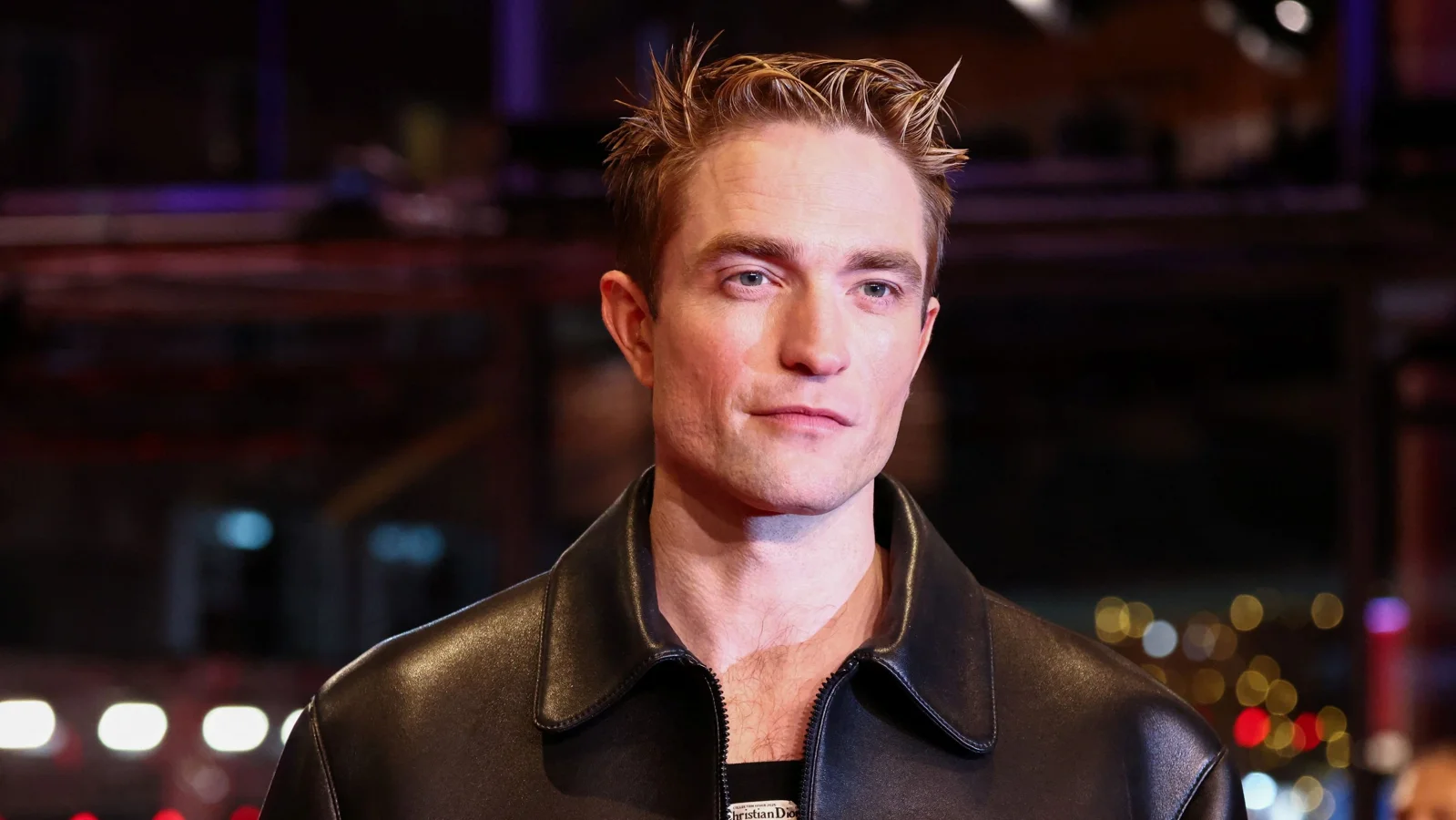
Robert Pattinson movies considered modern masterpieces have cemented his status as a daring and transformative actor, steadily departing from his early fame as Edward Cullen to deliver some of contemporary cinema’s most celebrated performances. Over the span of more than a decade, Pattinson has pushed beyond genre boundaries and collaborated with visionary filmmakers, carving out a unique filmography that continually surprises audiences.
Pattinson’s cinematic evolution began with his memorable portrayal of Cedric Diggory in the Harry Potter series and exploded into global stardom with the Twilight saga. However, unlike many actors tethered to iconic roles, he seized every opportunity to experiment and challenge expectations, partnering with acclaimed directors and taking on increasingly complex characters. Here are eight Robert Pattinson movies considered modern masterpieces, each demonstrating his ability to redefine himself and reshape his public persona.
The Lost City of Z (2016): A Transformative Journey Through the Unknown
In The Lost City of Z, Pattinson appears alongside Charlie Hunnam, Angus Macfadyen, and Sienna Miller under the guidance of director James Gray. Adapted from real events, the film retraces famed explorer Percy Fawcett’s dangerous missions into the Amazon rainforest in search of a mythical civilization. Pattinson portrays Henry Costin, Fawcett’s loyal and pragmatic companion, whose presence provides steadfast support as dangers mount and obsession takes root.
This sweeping historical adventure distinguishes itself as a meticulously constructed drama. Pattinson subverts his previous leading-man persona, embodying the rugged Costin with understated determination and wisdom. The subtlety of his performance draws attention, even as Hunnam’s protagonist commands much of the narrative. The film resists blockbuster conventions, opting for introspective character study and meditative visuals, leading many viewers to regard it as a hidden gem in Pattinson’s body of work.
High Life (2018): Exploring Humanity at the Edge of Space
High Life introduces a wholly cerebral dimension to Pattinson’s repertoire, pairing him with Juliette Binoche in Claire Denis’s nightmarishly poetic science fiction thriller. Set adrift in deep space, the story revolves around Monte, a convict-turned-reluctant astronaut, condemned to an experimental mission toward a black hole. As his fellow passengers succumb to madness, Monte survives with only his infant daughter for company, prompting existential questions of survival, morality, and what it means to remain human.
The film’s elliptical narrative structure gradually reveals Monte’s complicated past, heightening the sense of dread and futility. Stark cinematography and strategic silences envelop the viewer, intensifying isolation and suspense. Pattinson’s performance pulsates with raw vulnerability, anchoring the abstract storytelling with tangible emotional stakes. International critics celebrated High Life for its bold storytelling and transformative acting; it currently boasts a strong 83% approval rating on Rotten Tomatoes.
Tenet (2020): Reimagining the Spy Movie for a New Era
In Christopher Nolan’s high-concept thriller Tenet, Pattinson joins stars John David Washington, Kenneth Branagh, and Michael Caine in a reality-bending race against time. The film’s narrative centers on an unnamed CIA operative (Washington) who learns to master the strange phenomenon of “inversion,” allowing certain objects and individuals to move backward through time. Pattinson’s character, Neil, emerges as a cryptic and knowledgeable ally whose true significance only becomes clear as the intricate plot unfolds.
Tenet dazzles with its layered, nonlinear structure and innovative action sequences, such as reversing car chases and disorienting combat scenes. Amid relentless spectacle, Pattinson delivers a subtle, emotionally resonant performance that provides cohesion to the twisting story. His on-screen chemistry with Washington infuses their partnership with urgency and depth. Despite dividing critics at first, Tenet has since earned praise as a rare blockbuster blending cerebral concepts, visual flair, and genre innovation.
The Batman (2022): A Gritty Take on an Iconic Legend
Matt Reeves’ The Batman reestablishes Gotham’s hero as a brooding detective, eschewing typical superhero spectacle for a gritty noir approach. Pattinson leads as Bruce Wayne in his second year as the vigilante, tracking the Riddler—a serial killer targeting the city’s powerful elite. This journey reveals corruption tied to his own family and pushes Batman to confront Gotham’s criminal underworld, joined by Zoë Kravitz’s Selina Kyle (Catwoman), Jeffrey Wright’s Lt. James Gordon, and Colin Farrell’s Penguin.
Rather than emulating predecessors, Pattinson infuses his Batman with raw vulnerability and obsession. His version of Wayne is emotionally battered and laser-focused, opting for deduction and psychological investigation over mere physical prowess. Under Reeves’ direction, The Batman features atmospheric cinematography, methodical pacing, and a rain-soaked setting, creating an immersive experience viewed by many as a cinematic high point for the character.
The Childhood of a Leader (2015): Power As It’s Born
In Brady Corbet’s haunting directorial debut, The Childhood of a Leader, Pattinson is part of an ensemble cast with Berenice Bejo, Liam Cunningham, and Stacy Martin. The film immerses viewers in post-World War I France, where young Prescott, son of an American diplomat, demonstrates increasingly violent and manipulative tendencies as his family helps negotiate the Treaty of Versailles. The story traces how his upbringing molds him toward a future defined by totalitarian ambition.
Corbet’s film deploys slow-building psychological tension and an evocative score by Scott Walker to drive the narrative. Pattinson’s role as Charles, a shadowy adult figure in Prescott’s sphere, is deliberately ambiguous—a “red-herring character” whose presence adds complexity to the swirling atmosphere. While brief, his contribution amplifies the film’s underlying suggestion that the seeds of tyranny germinate in hidden, seemingly insignificant interactions, leaving a sinister aftertaste. The Childhood of a Leader stands as an unconventional yet undeniable masterpiece.
Mickey 17 (2025): Science Fiction Reimagined
Bong Joon Ho’s eagerly anticipated Mickey 17 marks Pattinson’s dive into the role of Mickey Barnes—a cloned “expendable” sent to colonize a frozen, distant planet. In this dystopian narrative, each time Mickey dies, a new version awakens, retaining memories but losing fragments of personal identity. As the relentless cloning cycle continues, Mickey begins to question the ethical implications of his existence and uncovers disturbing secrets about the colonists’ mission and their employers’ ultimate objectives.
Pattinson brings a nuanced duality to his portrayal, embodying the existential crisis of a character split into two living iterations—each representing polar aspects of himself. Bong’s direction weaves spectacle with meditative themes, emphasizing psychological depth alongside visual innovation. The project’s philosophical backbone, coupled with Pattinson’s layered performance, sets it apart from standard sci-fi adventures, hinting at another career-defining moment for the actor.
The Lighthouse (2019): Isolation and Madness Unleashed
Directed by Robert Eggers and starring Willem Dafoe alongside Pattinson, The Lighthouse plunges viewers into a storm-ravaged 19th-century island. Here, two lighthouse keepers—Dafoe’s hardened veteran Thomas Wake and Pattinson’s enigmatic newcomer Ephraim Winslow—descend into paranoia and delirium as isolation intensifies and their relationship deteriorates under the weight of cryptic visions and relentless storms.
The film’s black-and-white cinematography, cramped aspect ratio, and oppressive atmosphere intensify every moment, turning mundane routines into existential trials. Pattinson’s rendition of Ephraim swings from suppressed vulnerability to explosive emotional release, offering one of the most complex performances of his career. Eggers’ direction and the claustrophobic location fuse to turn the psychological horror into a hypnotic fever dream, earning widespread acclaim for both collaborators.
Good Time (2017): The Edge of Desperation in Neon-Soaked New York
Some of Pattinson’s most riveting work unfolds in the Safdie brothers’ electrifying Good Time, where he stars with Jennifer Jason Leigh, Barkhad Abdi, and Ben Safdie. The story follows Connie Nikas, a desperate petty criminal whose failed bank robbery with his developmentally disabled brother Nick launches a chaotic night-long odyssey through New York’s underworld as Connie attempts to free Nick from Rikers Island.
With relentless pacing, vivid neon color, and a pulsing electronic score, Good Time crafts an atmosphere of mounting anxiety. Pattinson’s immersion into Connie—his quick wits, brittle confidence, and moral ambiguity—is total, revealing a character who will risk anything for family. The role strips away any trace of Pattinson’s earlier heartthrob reputation, instead delivering a raw, urgent, and unflinching portrayal that was lauded by critics for its authenticity and bold intensity.
From Hogwarts halls to Gotham shadows and far into the reaches of speculative fiction, Robert Pattinson’s films reflect a fearless rejection of typecasting and a hunger for complexity. These eight movies exemplify how he continually reinvents himself, collaborating with leading directors like James Gray, Claire Denis, Christopher Nolan, Matt Reeves, Brady Corbet, Bong Joon Ho, Robert Eggers, and the Safdie Brothers. For audiences and critics alike, they offer renewed proof that
“Robert Pattinson movies considered modern masterpieces”
isn’t just a phrase—it’s the story of an actor’s bold transformation and the standard others now measure against.
