
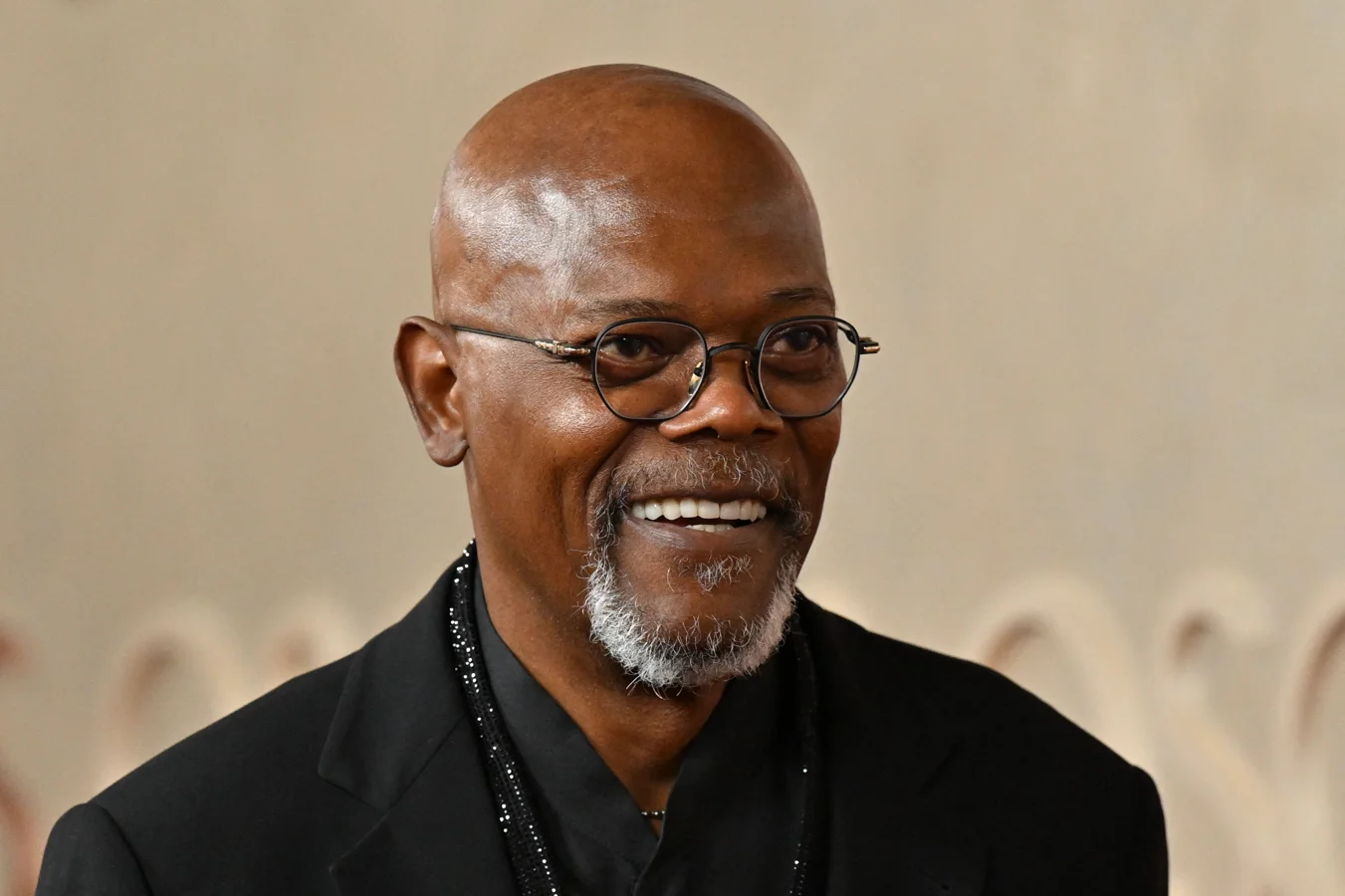
Samuel L. Jackson recently discussed his experience with Kendrick Lamar’s halftime show, revealing he only truly grasped its meaning during the rehearsal, as he shared on the Mad Sad Bad podcast. Samuel L. Jackson on understanding Kendrick Lamar’s halftime show is a striking intersection of performance, activism, and unexpected discovery, highlighting both men’s cultural impact and the continuing relevance of revolutionary expression in entertainment.
Jackson’s Initial Confusion at the Halftime Show
Earlier this week, Samuel L. Jackson opened up to host Paloma Faith about his confusion regarding Kendrick Lamar’s halftime show until he saw the dress rehearsal. He candidly shared,
“I didn’t know what they were doing,”
—Samuel L. Jackson, Actor, to Paloma Faith. During rehearsal, Jackson realized the performance was far more significant than he had originally thought, describing the moment:
“It was kinda trippy because it wasn’t until dress rehearsal that when I looked up, and I looked on that stage, and I go, ‘Oh sh*t, that’s a flag. Ah, f*ck, we’re being revolutionaries.’ Because I wasn’t listening or paying attention.”
—Samuel L. Jackson, Actor, to Paloma Faith.
A History of Activism and the Weight of the Moment
Activism is not new territory for Jackson. He has long participated in civil rights causes and was even a pallbearer at Martin Luther King Jr.’s funeral, connecting him to some of the 20th century’s most powerful moments of change. Jackson recognized the recurring role activism has played in his life, admitting,
“Something about me or my persona has put me in the right place at the right time… in a lot of different moments in my life. And I have to accept that that’s what I’m meant to be sometimes: an agent of change, whether I know it or not.”
—Samuel L. Jackson, Actor.
The Desire to Stand on the Right Side of History
Reflecting on the unpredictability of his involvement in pivotal events, Jackson told Faith,
“I wanna be on the right side of history in terms of what’s going on, and sometimes it’s not by choice.”
—Samuel L. Jackson, Actor. His remarks highlight a sense of destiny and personal conviction, as well as the often-unplanned nature of becoming a figure at the crossroads of culture and politics.
Backdrop of Hip-Hop Tension and Live Event Fallout
Meanwhile, drama continues in the hip-hop world. TDE artist Sir Darryl Farris, known as SiR, explained how tensions between Kendrick Lamar and Drake impacted his own career. He detailed that his concert in Toronto was abruptly canceled due to the ongoing feud, sharing with fans:
“So the venue in Toronto, which was partially owned by Drake, canceled the show completely,”
—SiR, Singer. Efforts to move the concert were unsuccessful as other venues declined to participate, with SiR recalling their response:
“Then when we tried to switch venues, the next venue was like, ‘Nah, we ain’t f*cking with it, I ain’t taking no motherf*cking chance.”
—SiR, Singer.
Fans Affected by Show Cancellations
SiR publicly addressed his disappointed fans after the cancellation, saying,
“So sorry to my Toronto fans. The show has been canceled. We’re working on rescheduling for a later date,”
—SiR, Singer. He clarified on social media:
“For those wondering, we sold that show out. It was canceled by the venue. Not sure why. My apologies again to those that came just to see me.”
—SiR, Singer. The ripple effect of the feud also touched other Top Dawg Entertainment artists, such as ScHoolboy Q, who faced difficulties with performances in Canada during the height of Lamar and Drake’s conflict.
Ongoing Implications for Artists and Music Fans
The revelations from Samuel L. Jackson on understanding Kendrick Lamar’s halftime show highlight the deep intersection between art, activism, and unforeseen insights, even for seasoned icons. As tensions in the music world, such as those involving Drake, Kendrick Lamar, SiR, and ScHoolboy Q, influence live events and fans’ experiences, the role of public figures as agents of change continues to be both impactful and unpredictable.
The discourse, touching on the work of key entities including Samuel L. Jackson, Kendrick Lamar, SiR, Martin Luther King Jr., and the various venues across cities like Toronto, Los Angeles, New York, and Berlin, reveals ongoing dynamics shaping the world of performance and activism. The significance of artists finding themselves part of historical moments reminds us how music and culture are often at the forefront of broader societal movements.
