
Martin Scorsese‘s respectful approach during The Studio cameo left a lasting impression on the show‘s cast and creators during the Apple TV+ series‘ pilot episode. The legendary director, known for his commanding presence, chose restraint and courtesy when offering his insights, surprising the team even as he delivered a rare, candid comment on set.
Scorsese Joins ‘The Studio’ Pilot with Memorable Cameo
When The Studio co-creators Alex Gregory and Evan Goldberg invited Martin Scorsese to appear in the inaugural episode, they hoped to secure not just a big name but also someone whose craft commands immense respect in the industry. Scorsese agreed to portray himself—the renowned filmmaker that Seth Rogen‘s character, Matt Remick, enlists to direct a movie adaptation centered on the Kool-Aid Man. This appearance marked a star-studded start for the Apple TV+ comedy, which later took home the breakthrough comedy series honor at the 2025 Gotham TV Awards.
Reflecting on the filming, Gregory recounted,
“He had one note, but he didn’t give it until later,”
—Alex Gregory, Co-Creator, highlighting Scorsese’s mindful patience. The set dynamic was unique, as both Scorsese and fellow guest Charlize Theron participated in repeated takes, maintaining a quiet, almost conspiratorial dialogue. Goldberg described,
“whispering to each other, and it took like 10 takes to get the shot.”
—Evan Goldberg, Co-Creator, illustrating the deliberate but humble involvement of Scorsese in the scene.
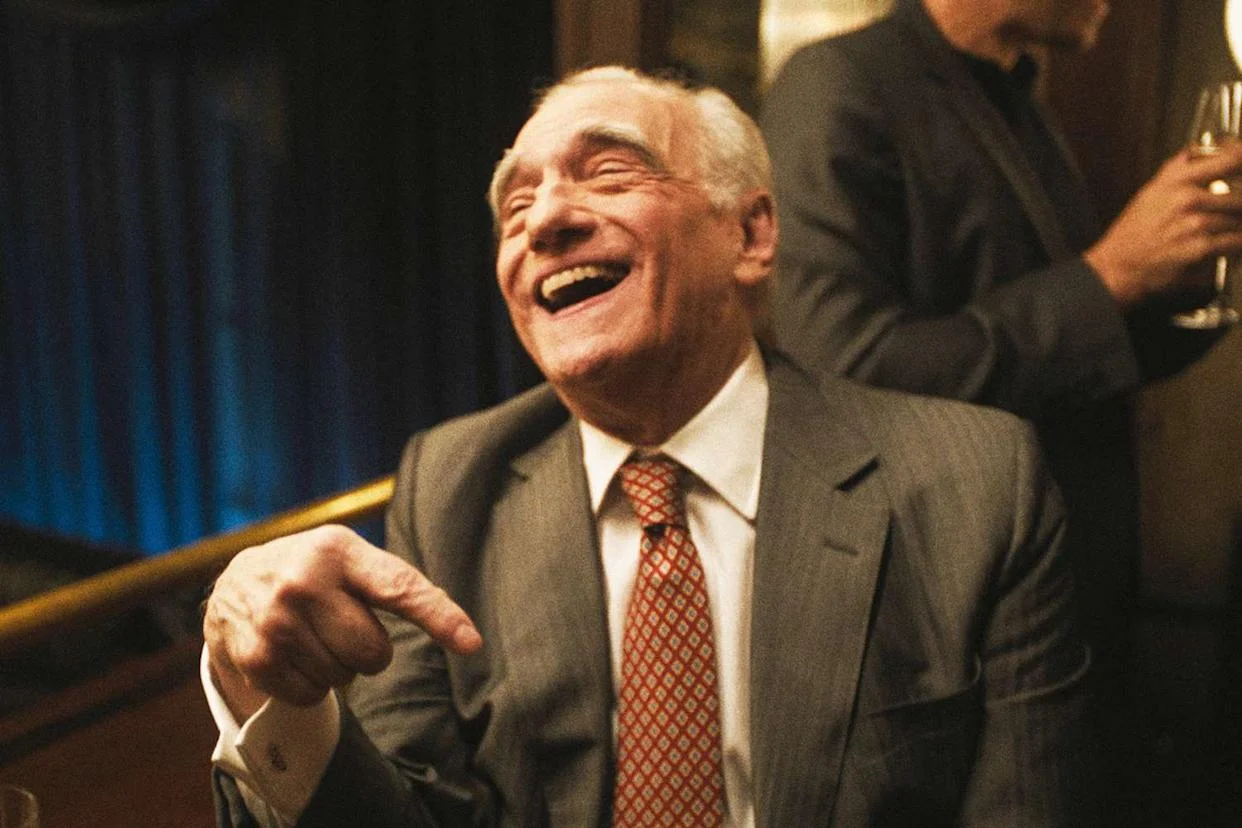
Director’s Reluctance to Overstep and the Unexpected Note
Despite possessing an extensive track record as a director, Scorsese was careful not to overshadow The Studio’s own creative vision. Goldberg shared more of the remarkable restraint Scorsese demonstrated on set:
“And then we got it and I was like, ‘What were you whispering about?’ He was like, ‘I knew you were doing this wrong, but I didn’t wanna be a backseat director, so I just didn’t say anything,’”
—Evan Goldberg. While the team might have benefited from his expertise sooner, Goldberg acknowledged Scorsese’s professional courtesy, adding,
“And I was like, ‘Well, we could have used that time, but I appreciate that you didn’t wanna manhandle us.’”
—Evan Goldberg.
At a SXSW panel during the series premiere, Rogen, who wears several hats on the show as star, co-creator, executive producer, and writer, disclosed that Scorsese did not hesitate to offer at least one pointed piece of feedback. The iconic filmmaker, famous for movies filled with strong language, surprised everyone with his comment:
“You guys say ‘f—‘ too much,”
—Martin Scorsese, as reported by Variety. Rogen responded with disbelief, stating,
“We were like, ‘We say ‘f—‘ too much?!’”
—Seth Rogen.
Irony of Profanity and Scorsese’s Film Legacy
The irony of Scorsese’s observation was not lost on the cast and creative team. The director’s own films are renowned for record-setting profanity; The Wolf of Wall Street, for example, once boasted the highest count of F-bombs used in a single movie—over 500 times. Other films in his catalog, such as Casino and Goodfellas, are similarly noted for their liberal use of coarse language. The reaction from Rogen and Goldberg underscored the intensity of their show’s dialogue, since even Scorsese found it noteworthy.
Big Names and the Creative Process Behind The Studio
Throughout its first season, The Studio attracted several high-profile cameos. Along with Scorsese and Theron, the series showcased appearances from Catherine O’Hara, Kathryn Hahn, Ike Barinholtz, Chase Sui Wonders, Paul Dano, Peter Berg, Nicholas Stoller, and Steve Buscemi, among others. The show’s ensemble, including these notable actors and real-life creatives, played versions of themselves, with the narrative revolving around Matt Remick as he navigates his debut project as a studio head: launching a feature film adaptation of Kool-Aid.
The chance to work with Scorsese, in particular, left the creators in disbelief. As Rogen recalled,
“I’d never met Martin Scorsese before,”
—Seth Rogen, expressing the crew’s excitement.
“We couldn’t believe he did it! But we worked hard to write roles we hoped were funny and that we hoped that people would respond to.”
—Seth Rogen. Goldberg’s appreciation of the director’s acting and commitment was just as heartfelt:
“unanimously we would say Martin Scorsese as an actor was unbelievable. The fact that he actually showed up, ’cause we kept thinking, ‘He’s gonna cancel. It’s too amazing. It’s too special. He’s just the best.’”
—Evan Goldberg.
Art Imitating Life: The Real Stories Behind the Script
The creative roots of The Studio draw directly from Rogen and Goldberg’s experiences in Hollywood. Both have recounted real industry moments that echo in the show’s writing. Rogen shared:
“Me and Evan always are quoting a meeting we had when we were just starting, where a studio executive said literally the thing that Matt says in the pilot,”
—Seth Rogen. The executive’s candid admission,
“He was giving us notes and he hung his head and was like, ‘I got into this job because I love movies, and now my job is to ruin them,’ and the more we started talking about that, we were like, ‘That’s very tragic and sad and inherently very comedic in many ways,’”
—Seth Rogen, helped inspire the nuanced, comedic tone the series has become known for.
A Lasting Impact on Cast and Comedy
Martin Scorsese’s respectful approach during The Studio cameo not only left the cast stunned but further raised the bar for what is possible when seasoned talent joins forces with creative newcomers. His willingness to defer, his incisive yet rare note, and the sincere awe from the show’s creators reflect a meeting of generations and a mutual admiration that resonates beyond the screen. The effect of his involvement—both as a star and as an observer—contributes to The Studio’s standing as a comedy series that thoughtfully examines the film industry’s inner workings, with humor and authenticity at its core.
