
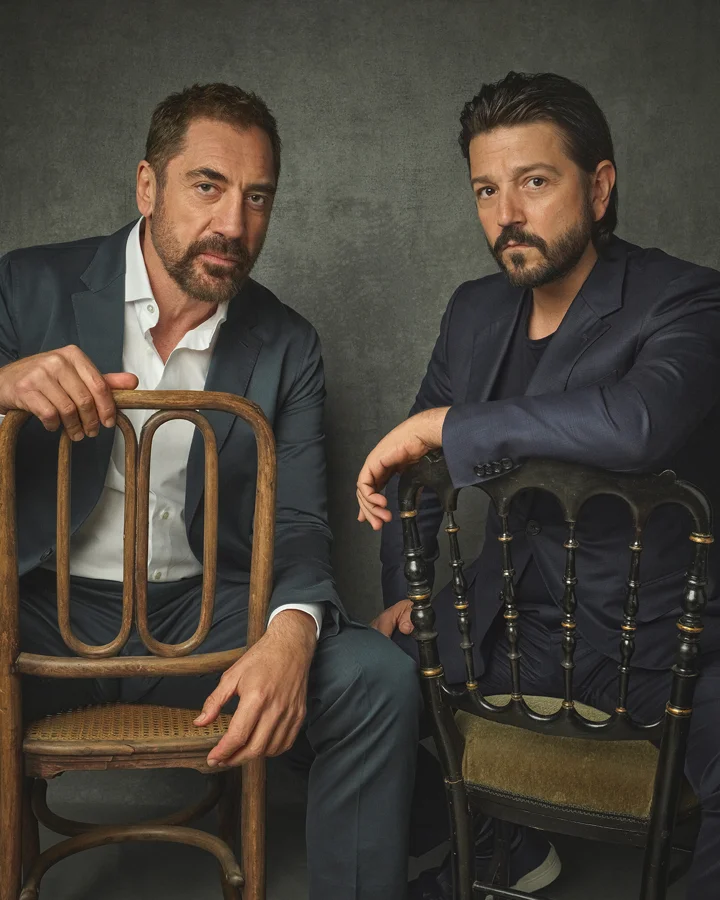
Javier Bardem discusses acting, masculinity, and career journey in a candid conversation with Diego Luna, reflecting on the evolution of their careers and the challenging roles they’ve played in Hollywood. The exchange, which took place decades after their first collaboration on Julian Schnabel’s Before Night Falls, reveals insights into their personal growth, experiences as actors, and the shifting landscape of masculinity onscreen.
The Pivotal Moment That Brought Bardem and Luna Together
Javier Bardem and Diego Luna share a longstanding connection, having first met 26 years ago during the filming of Before Night Falls. Both have since established themselves as influential figures in Spanish-language cinema, as well as on international television. Their enduring friendship has supported their development into prominent actors, taking on complex roles that deeply challenge and define their craft.
In his recent role in the true-crime drama centered around the Menendez brothers, Bardem portrays José Menendez, a complicated and forceful father whose actions cast a long shadow over his sons. Chloë Sevigny takes on the part of the boys’ mother, and together, the family’s dynamic unfolds through dramatic flashbacks. Meanwhile, Luna assumes a central position in the Star Wars universe, depicting a morally driven thief with revolutionary ambitions in the series Andor. These notable projects highlight the extraordinary breadth and variety in their careers.
Exploring Acting in Fantasy and Reality
During their exchange, Bardem praises Luna’s role in Andor, recognizing the unique fulfillment that comes from participating in a franchise that shaped generations of viewers. Luna admits,
“I must confess, it feels cool. I grew up watching Star Wars. We did Andor like in the old days — interacting with droids and machines voiced by an actor through a speaker. [They’re] these wonderful creatures, [and so are the] people working behind the scenes to move them. It’s a kid’s dream. No green screens. It’s moviemaking.”
—Diego Luna, Actor
Luna describes the immersive experience on set, contrasting it with the modern dominance of visual effects. The story, he explains, draws attention to the unheroic, everyday lives of people caught in grand events:
“The idea of this show is that we tell the story of regular people. There are no Jedis. You’re in their kitchens and living rooms. You see how they nap. This is about the regular life of people in an extraordinary moment. But there are rules: No shoelaces. No buttons. The jackets just close. I got to wear a cape.”
—Diego Luna, Actor
Language, Instinct, and the Struggles of Performance
The conversation takes a more personal turn as Luna recalls seeing possibility in Bardem’s early work while performing theater and television in Mexico at age thirteen. Both actors reflect on the challenges of working in English, a language neither grew up speaking, and the impact it has on their sense of identity and instinct as performers. Bardem admits feeling less self-conscious acting in English, while Luna confesses heightened self-awareness and recognition of his linguistic limitations.
These reflections are underscored by their mutual admiration and acknowledgment of the hardships involved in crafting authentic performances across language barriers. Luna directly asks Bardem about the process of inhabiting a character as disturbing as José Menendez, probing how that role became intertwined with his life.
The Challenges of Portraying Dark Characters
Bardem opens up about approaching the role of José Menendez, a character whose actions and legacy are intensely debated. He confesses that the story’s notoriety in the United States was unfamiliar to him before joining the project. Discussing boundaries around difficult subject matter, Bardem reveals:
“There is a secret rule for actors to not play pedophiles. I asked Ryan Murphy how he would deal with this, because I can’t play any scene with a minor in a room. I can go with a cattle gun killing people in No Country for Old Men, but this thing? He said we didn’t have to go there, and he didn’t want to either.”
—Javier Bardem, Actor
Considering the real-life tragedy with few surviving witnesses, Bardem points out,
“There are four people who know what happened [in real life]. Two of them are dead, and two of them are in prison. That’s interesting, because I play a character you’re supposed to think is capable of such an atrocity, but at the same time we don’t know if he really did it.”
Luna, deeply struck by Bardem’s performance, shares his reaction:
“Holy shit. How much can be hidden in this big personality, one that fills the room, always putting on an act? What’s hiding behind?”
—Diego Luna, Actor
Masculinity, Upbringing, and Shifting Perspectives
The conversation shifts towards the question of masculinity and what it means to be a man—an idea that both Bardem and Luna grappled with both on and off the screen. Bardem connects his performance as José Menendez to a deeper reflection on machismo:
“It’s a type of machismo that we know because of [where] we come from. Playing José Menendez really put me in contact with what it meant to be a man educated with the wrong values towards women and themselves. I saw traces of my own education — being raised up in certain stereotypes of what it meant to be a man. In my case, I was blessed by being raised by my mother more than my father, and that was a lifesaver. She was a fighter. She was always her voice and her face in front of everybody for women’s rights and for labor’s rights, and she was an advocate for many causes. And I saw that like, OK, that is correct.”
—Javier Bardem, Actor
Bardem’s gratitude toward his mother for instilling respect for women and social justice causes demonstrates how actors’ personal histories can intersect with, and even shape, their artistic choices. The discussion exposes the difficult realities of inherited masculinity and the potential for positive role models to break negative cycles.
A Lasting Impact and the Road Ahead
This dialogue between Javier Bardem and Diego Luna provides a rare, unfiltered look at how two gifted actors navigate the complexities of their craft, confront the shadows of their roles, and wrestle with broader social issues. Their candid reflections travel from the unique thrill of a childhood dream realized on the “Star Wars” set, to the emotional turmoil of inhabiting morally ambiguous figures in hard-hitting dramas. Along the way, they highlight how cinema serves as both a mirror and a vehicle for challenging old ideas and inspiring dialogue about masculinity, values, and personal growth.
As Bardem and Luna continue to influence audiences and fellow creators alike, the questions they raise—in their work and their conversations—signal a gradual shift in how Hollywood and global cinema portray men, trauma, and accountability. Their journeys, rooted in their personal and cultural histories, remind us of the power film holds to not only entertain but also to provoke difficult, necessary conversations about the world we inhabit.
