
Scott Adkins action performance in Diablo movie stands at the center of this latest action release, drawing attention for its dynamic fight scenes and a divisive antagonist whose darker traits are sparking debate. Arriving in select theaters and on VOD on June 13, ‘Diablo’ promises relentless action in the lush Colombian setting, but it’s the controversial villain character that leaves audiences split.
Fierce Battles and Genre Connections Bring ‘Diablo’ to Life
From its opening scene, ‘Diablo’ wastes no time in showcasing intense action, with Scott Adkins’ Kris Chaney dispatching two would-be extortionists in a gritty fight. The film treats fans to multiple high-stakes confrontations, most notably between Adkins and Marko Zaror, another martial arts luminary whose notoriety has grown in the action film world. Their collaboration reportedly originated on the set of ‘John Wick: Chapter 4,’ where they both secured major roles after years of smaller projects.
Director Ernesto Díaz Espinoza and cinematographer Niccolo De La Fere orchestrate kinetic fight sequences, using agile camera movements that highlight the physical prowess of the stars without falling into unfocused chaos. The film benefits from the longstanding partnership between Espinoza and Zaror, as well as Zaror’s previous English-language appearance alongside Adkins in 2010’s ‘Undisputed III: Redemption.’ Their experience ensures the action feels authentic and brutally efficient, delivering precisely what dedicated fans have come to expect.
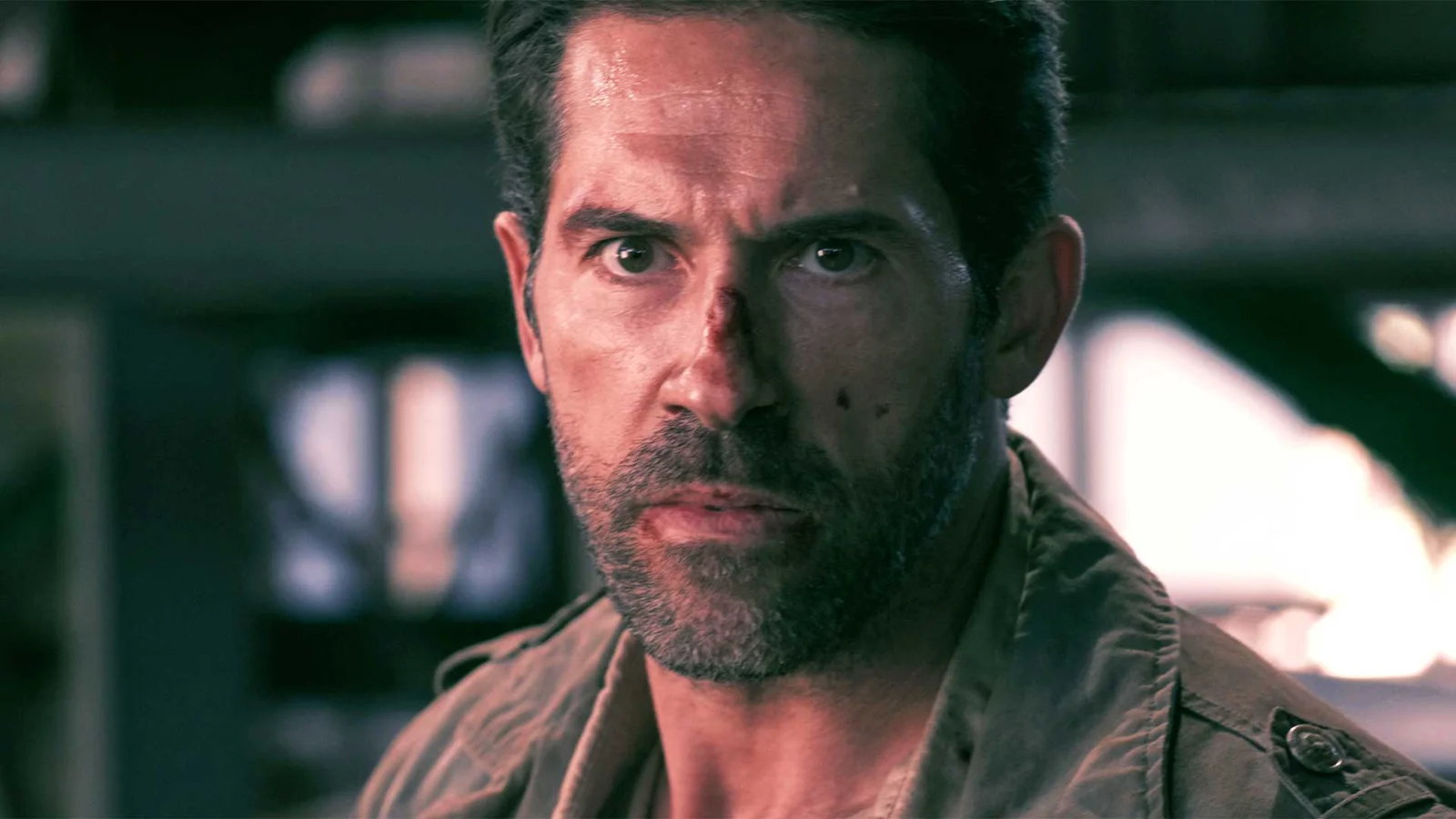
While the action is unrelenting, ‘Diablo’ branches into more troubling territory, especially through its depiction of Zaror’s villainous El Corvo. The film set out to deliver muscular spectacle, and for fans of genre-specific fight choreography, it largely succeeds. However, beneath the punches and kicks, story and character choices loom, giving rise to mixed reactions from viewers and critics alike.
Plot Overview: A Kidnapping Sets Everything in Motion
Scott Adkins brings Kris Chaney to life as a drifter entering Colombia, intent on kidnapping Elisa, played by Alana De La Rossa. Elisa is the teenage daughter of crime boss Vicente, portrayed by Lucho Velasquez. After Chaney successfully abducts her, Vicente’s private army, together with an array of bounty hunters and assassins, pursue the pair. Among these threats, none is more formidable than El Corvo, Zaror’s chilling psychopathic character equipped with a metal hand, whose violence stems from motives that remain ambiguous and personal.
Along with surviving a relentless manhunt, Chaney must persuade Elisa that her mother’s dying wish set everything into motion, and that the reality of her family’s legacy is far more complex than it first appears. Though the narrative serves as a basic scaffold for the film’s succession of increasingly brutal confrontations, it provides a functional engine for the action, if not for deeper character explorations.
A Villain That Challenges and Disturbs
The depiction of El Corvo distinguishes itself from typical action villains, at times evoking the cold-blooded menace of Anton Chigurh from ‘No Country for Old Men’ and the relentless determination of the Terminator. With his distinct appearance—bald, glasses askew—and his emotionless approach to violence, Zaror’s portrayal veers into unsettling territory. He is shown performing acts, such as stitching his wounds without any visible pain, reminiscent of Arnold Schwarzenegger’s iconic robotic assassin. Yet, El Corvo’s actions are not only defined by brutality, but also by a level of misogyny that alters the film’s tone substantially and clashes with audience expectations.
Examples of this include scenes where El Corvo unleashes unnecessary violence on female characters, sometimes allowing men to escape unharmed while making no such exceptions for women. This trait becomes especially problematic during a sprawling club brawl, in which El Corvo displays a disturbing enthusiasm for targeting women, including innocent bystanders. These moments stand out in a film otherwise centered on exhilarating action, inviting criticism about whether such character extremes belong in a straightforward genre vehicle.
The Balance of Darkness in ‘Diablo’
The film’s willingness to explore darker, misogynistic undertones while essentially remaining a formulaic action movie has polarized its audience. While some cinema narratives address themes like unchecked misogyny or violence against women as a means of social commentary—such as the original ‘Terminator’—‘Diablo’ appears to integrate these elements more as character quirks than as intentional themes, creating a tension that can detract from the enjoyment of the action itself. In this way, the villain’s disturbing behaviors are a distraction rather than a thematic anchor, unsettling viewers without offering a meaningful resolution or commentary on the issues raised.
Although both Adkins and Zaror are credited with story contributions, El Corvo’s more shocking actions seem intended simply to make the character memorable. Whether this approach succeeds is a matter of debate; while the villain certainly stands out, his impact makes the overall film experience less enjoyable for many.
Memorable Action but Not Without Flaws
Despite these criticisms, ‘Diablo’ unquestionably delivers what many fans seek: spectacular fight choreography and relentless action. Scott Adkins, approaching 49, demonstrates unflagging athleticism, landing powerful roundhouse kicks and maneuvering through inventive battle scenarios. Iconic moments—like hurling a beer bottle at Zaror, who smashes it in midair with his metal hand—amplify the film’s visceral, playful spirit. The Colombian locations, shot on a lean budget, provide an authentic, visually interesting setting that sets the film apart from standard action fare produced for video-on-demand.
The cast further amplifies the film’s appeal. Adkins as Chaney brings a credible, raw physicality that his fans celebrate. Marko Zaror, as El Corvo, is both riveting and unsettling, while Alana De La Rossa’s Elisa and Lucho Velasquez’s Vicente anchor the plot in an underworld of family loyalty and betrayal. These performances contribute to the drama-thriller’s intensity, even as the script’s simplicity and reliance on tropes become evident.
The Main Players Behind the Action
In addition to the powerful presence of Scott Adkins as Kris Chaney and Marko Zaror as El Corvo, the supporting cast includes Lucho Velasquez as Vicente and Alana De La Rossa as Elisa. Their interplay creates a convincing tapestry of motives and conflicts, even if the overarching narrative is familiar. Strong work from Ernesto Díaz Espinoza as director and Niccolo De La Fere as cinematographer elevates the violent set pieces. Their choices allow viewers to appreciate the physical artistry unfolding onscreen rather than obscuring it with distracting camera work.
The setting of Colombia not only grounds the story geographically but also adds depth and atmosphere, standing out from more generic backdrops typically employed in similar productions. The filmmakers capitalize on local color and landscapes, enhancing both the authenticity of the action and the film’s visual appeal.
Reactions and Lasting Impact
The reception among fans of Scott Adkins and Marko Zaror is shaped by the film’s energetic fight scenes and the performers’ established reputations. As anticipated, ‘Diablo’ meets expectations in offering top-tier action moments and pays homage to previous collaborations among the stars, notably in films like ‘Undisputed III: Redemption’ and ‘John Wick: Chapter 4.’ Action aficionados are likely to appreciate the technical skill on display and the creative ways in which the film frames its battles.
Still, the negative reaction to El Corvo’s character highlights ongoing discussion about the balance of entertainment value and depiction of violence, particularly towards women. The controversy surrounding this villain overshadows the otherwise celebratory tone of an action-driven feature. Adkins’ enduring performance, his mention of past roles such as the German assassin Killa Harkan alongside Keanu Reeves, and anticipation for his upcoming sequel to ‘One Shot’ ensure that his career remains closely watched by fans and critics alike.
What Lies Ahead for ‘Diablo’ and Its Stars
‘Diablo’ signals that Scott Adkins remains a dominant force in action cinema, able to carry films with his martial arts expertise and grounded screen presence. The film’s release in theaters and on VOD opens opportunities for action fans to judge for themselves whether its mix of breakneck combat and sinister overtones cohere into a satisfying whole. Its stark portrayal of a disturbing villain may limit its appeal beyond genre enthusiasts, but it still offers a showcase of skillful choreography and relentless energy.
In summary, ‘Diablo’ is a film that will thrill followers of Scott Adkins action performance in Diablo movie, but its choice of antagonist and uneven thematic undertones will continue to provoke debate among viewers. Whether it stands as a highlight or a curiosity in the careers of Adkins and Zaror may depend on one’s appetite for action and tolerance for boundary-pushing characterizations.
