
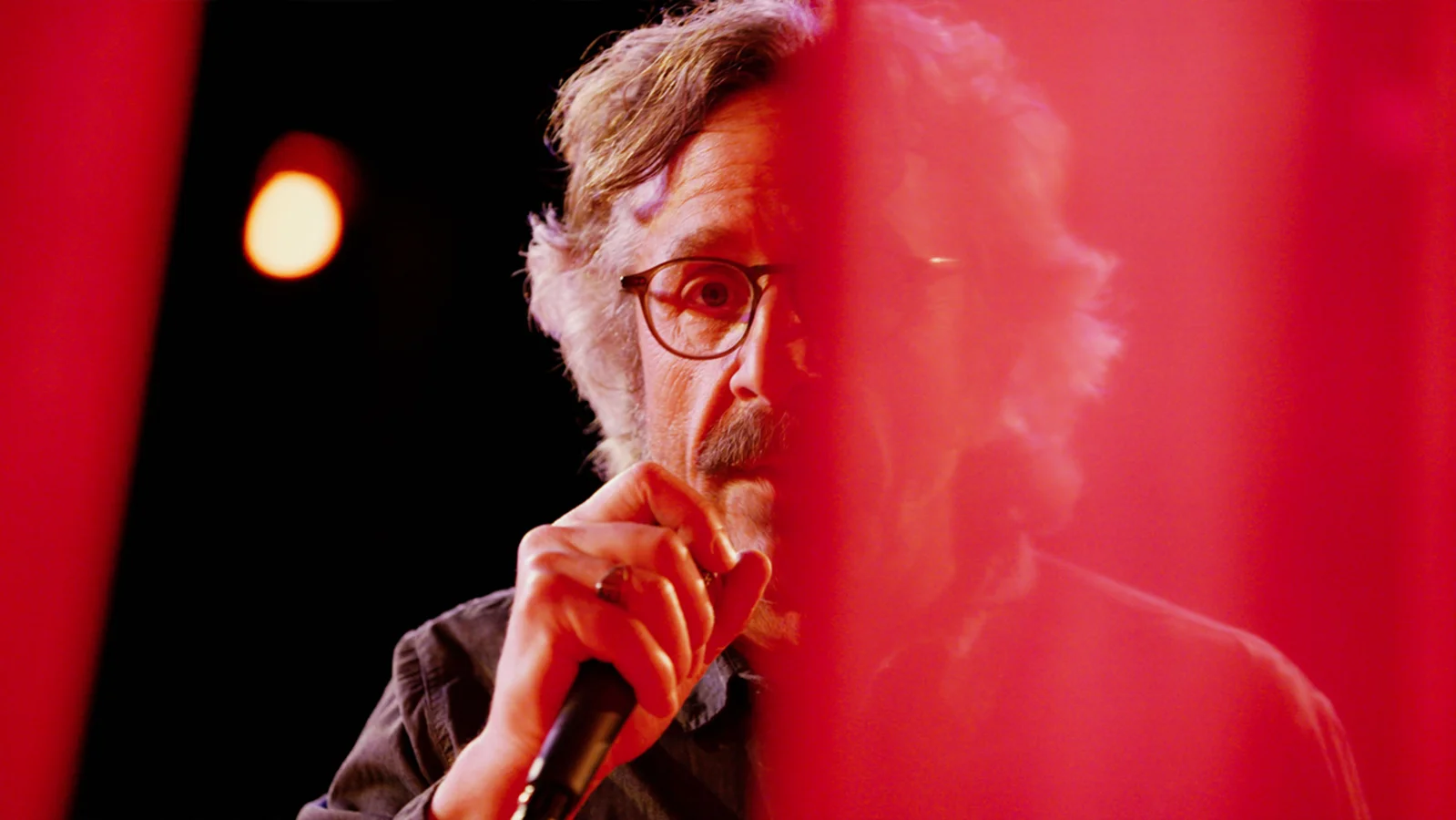
Marc Maron‘s struggle for creative control in documentary filmmaking comes into sharp focus in Steven Feinartz’s project Are We Good?, where clashes between the comedian and director over the depiction of Maron’s story led to a raw portrayal of their behind-the-scenes dynamics. As the film debuted at the Tribeca Film Festival on June 14, it joined a wave of recent celebrity documentaries where directors and stars openly wrestle for narrative authority, highlighting ongoing tensions over who shapes the truth on screen.
Documenting Creative Disputes: The Heart of Are We Good?
In Are We Good?, director Steven Feinartz aimed to chronicle Marc Maron’s professional and personal journey, including his podcasting breakthroughs and how he coped after the unexpected passing of filmmaker Lynn Shelton, his partner. However, the filmmaking process itself became a battleground over storytelling methods. Feinartz suggested animated sequences using still photos, hoping to enrich Maron’s story visually, yet found immediate resistance from Maron.
“The moment I mentioned animation, I could already hear [Marc] recoiling,”
says Feinartz. Ultimately, despite Maron’s reservations, the animations went into the final film, as Feinartz retained final creative say. This friction formed not just an obstacle, but the documentary‘s essence.
“If the film didn’t have that back and forth, it wouldn’t feel like a Maron doc. He’s not someone who just sits back and lets you tell his story. There was trust, but also a kind of tension,”
Feinartz explains.
This visible struggle is part of a broader trend, as Are We Good? aligns itself with other documentaries where stars and filmmakers clash over the shape and soul of the narrative, making the production’s creative push-and-pull as central as the onscreen biography.
Pee-wee Herman and Paul Reubens: The Battle on Camera
Similar tensions drive Matt Wolf’s HBO series Pee-wee as Himself, which follows the late performer Paul Reubens. From the opening sequence, Reubens questions the absence of subject control in documentaries.
“You are not supposed to control your own documentary. You are supposed to [make] people, many people, alright, everyone but me, feel that as the subject of a documentary that you really don’t have a handle. Have a take. What’s the word I’m looking for? What is everyone telling me that I don’t have on myself?”
Reubens asks candidly on camera. When Wolf responds off-screen with, “Perspective,” Reubens fires back,
“You and I are going to be arguing [about that] for a long, long time. Until this documentary is finished. You mark my words.”
This dynamic—documentary subject versus director—is present throughout the series, which premiered in May.
“Paul and I were involved in a power struggle,”
says Wolf.
“He didn’t like the answer ‘no,’ and as a director, I’m accustomed to getting my way. We had similar ideas about his story and how it should be told. I just needed Paul to let go, so that I could do what I needed to do to reappraise him as an artist. I think at the end of the day, Paul and I wanted the same thing. However, to achieve those goals, I needed to be tough about maintaining my editorial autonomy.”
Diane Warren: Uncovering Relentless Control
Bess Kargman’s documentary Diane Warren: Relentless, which premiered at SXSW in 2024, follows Oscar-nominated songwriter Diane Warren. Warren, renowned for her prolific output, resists any deep dive into her songwriting process or her repeated absence at scheduled interviews. One sequence sees her critique a camera angle and, taking charge, reposition it herself—an act symbolic of her desire to maintain control over how she is portrayed.
Kargman addresses these conflicts directly, explaining her intent:
“As I say in the film Diane had a wall up, and I was trying to break through it,”
Kargman says.
“I wanted the audience to experience the occasional deep frustration I had, so you hear me challenge her. In a perfect world, I would not have put myself in the film.”
Her rare on-screen presence thus becomes a tool to immerse viewers in the uncomfortable, real-world negotiations happening off-screen—a departure from the genre’s tendency to present smooth, star-approved stories.
Banter and Friction: Adding Raw Transparency
In all three documentaries, the give-and-take between filmmaker and subject is not just a side note but central to the work’s identity and authenticity. Each project pulls viewers into the messy business of making narrative art out of real, and sometimes stubborn, lives.
“If anything, the banter between me and Marc just made things more transparent,”
says Feinartz.
“You see me trying to make a film, you see him pushing back. It’s less about control and more about letting the mess be part of the film.”
Such transparency can be jarring, with open disputes and creative tension becoming moments of entertainment and honesty. The breaking of the fourth wall in these documentaries may, at times, become even more absorbing than their celebrity profiles, which is notable in a genre often dominated by tightly managed productions offering little new insight.
Celebrity Documentaries: Control and Commercialism
The trend toward these “push-pull” documentaries stands out against a backdrop of glossy, self-produced films starring global personalities like Jennifer Lopez (Halftime), Taylor Swift (Miss Americana), and Beyoncé (Homecoming). Those documentaries, usually crafted by stars or their record labels, tend to carefully frame the celebrities’ lives as highly produced, positive narratives. Even some insightful projects, such as Elton John: Never Too Late, Martha, Beckham, and The Last Dance, raise questions about objectivity and integrity when subjects are compensated and given involvement in shaping their own stories.
Wolf addresses this concern, underscoring the importance of transparency and editorial independence in his Reubens documentary.
“I definitely wanted the audience to be clear that this is not a puff piece, or a vanity project,”
says Wolf.
“However, more importantly, control was an important theme in the film. Paul separated himself from Pee-wee Herman as an artistic and professional choice, but also as a way to protect his anonymity. When that precise separation crumbled after Paul’s arrest, it was devastating for him. Paul lost control of his personal narrative in the media, so it was very relevant that he struggled with issues of control in the documentary. I was less interested in making a meta-commentary on celebrity documentaries, and more interested in understanding Paul’s experiences both in the past and in the present while making the documentary.”
The Future of Candor in Documentary Filmmaking
The emergence of documentaries that allow public arguments and visible power struggles is, for many viewers, a refreshing alternative to sanitized star vehicles. Nonetheless, whether more distributors will support these raw, uncomfortable glimpses into the reality of fame remains to be seen. While the industry often defaults to familiar, slick narratives, films like Are We Good?, along with those featuring artists like Paul Reubens and Diane Warren, open a window onto the real negotiations over narrative ownership and authenticity.
As Are We Good? seeks distribution following its Tribeca premiere, its raw depiction of Marc Maron’s struggle for creative control highlights a changing landscape for celebrity documentaries. By revealing the arguments and creative battles, these films challenge both subjects and audiences to reconsider what makes for honest storytelling—and whether the clash over control might be the truest story of all.
