
In the harrowing universe of 28 Years Later, Aaron Taylor-Johnson explores the father–son dynamic in 28 Years Later amidst a brutal struggle for survival. The film, a direct sequel to the acclaimed 28 Days Later and 28 Weeks Later, dives into the psychological complexities that emerge decades after the catastrophic Rage Virus outbreak, unfolding in a world where both the infected and survivors have transformed in shocking ways.
Survival Redefined and Family Bonds Tested
The post-apocalyptic world crafted by director Danny Boyle and writer Alex Garland sees civilization as mere fragments, scattered across fortified outposts and dangerous landscapes. Aaron Taylor-Johnson stars as Jimmy, a father determined to guide his son Spike, portrayed by Alfie Williams, through a reality shaped by constant peril. According to Sony’s official outline, Jimmy ventures beyond their island sanctuary into a landscape rife with mutated threats and unsettling truths:
“on a mission into the dark heart of the mainland, he discovers secrets, wonders, and horrors that have mutated not only the infected but other survivors as well.”
—Sony, Official Film Description
The story’s emotional core revolves around how parental roles evolve in bleak circumstances. The partnership between Taylor-Johnson’s Jimmy and Williams’s Spike examines the moral ambiguity of survival and the challenge of shielding innocence in a violent environment. Jodie Comer also joins the cast, contributing additional depth to the group of survivors facing unimaginable challenges.
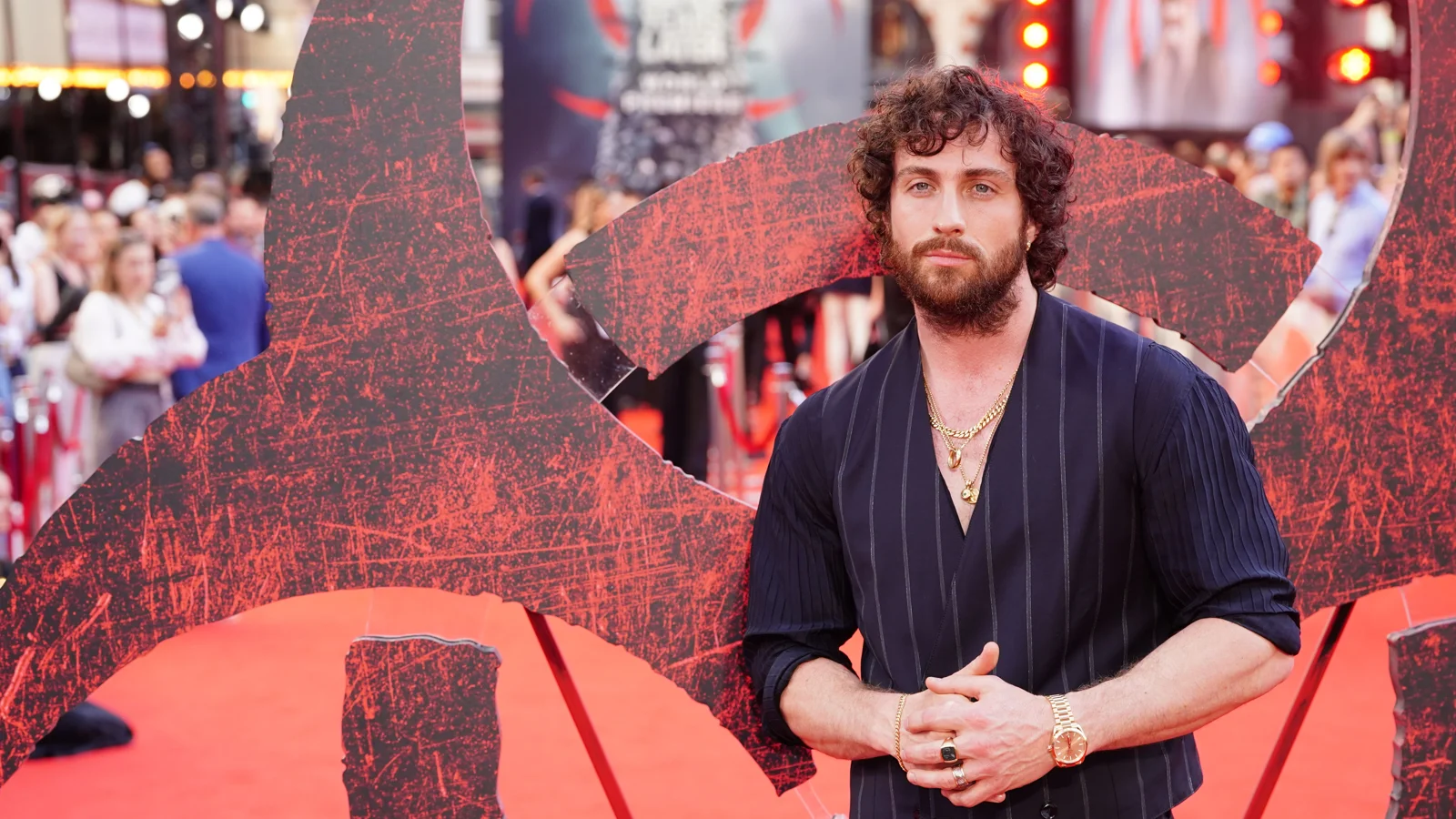
Father and Son: The Reality of Hunting in a Ravaged World
During an in-depth conversation with ComicBook.com, Taylor-Johnson and Williams discussed their characters’ relationship. Their father–son bond is shaped not by typical lessons or playful outings, but by the grim necessity of hunting—directed not at animals but the infected humans that now roam the devastated mainland. In one pivotal scene, Jimmy and Spike’s hunting outing reveals that even moments of beauty, like watching a herd of deer, are brief refuges before a harsh reality returns. Taylor-Johnson described the moment with distinct irony:
“You see this moment of a herd of deer and it’s so beautiful and they’re watching there, ‘Wow, that’s amazing,’ but they’re actually out there to teach [Spike] to kill the infected,”
—Aaron Taylor-Johnson, Actor
This scene is not just about violence—it’s about preparing for a world where brutality is normalized and where children must adapt rapidly to unforgiving circumstances. Williams observed that the level of accepted violence in 28 Years Later has become disturbing yet ordinary. Their conversation highlighted how the trauma of the world has warped typical parent-child teaching moments into lessons of survival and ethical compromise.
Protection, Denial, and Letting Go: Jimmy’s Motivation
Taylor-Johnson, drawing on his own experience as a father, reflected on the peculiar humor and tragedy of Jimmy teaching Spike to hunt infected people. Beyond the initial shock, he explained how this act is Jimmy’s attempt to prepare his son for a world defined by fear, loss, and constant danger. The deeper motivation for Jimmy is a blend of protectiveness and denial; he wants to shield his son, but also refuses to fully acknowledge how much their society and moral boundaries have changed. As Taylor-Johnson articulated:
“make [killing the infected] feel like acceptance, and dehumanize the infected when really, your moral guidance is telling you that this can’t just be it. There’s something more to that.”
—Aaron Taylor-Johnson, Actor
He elaborated on Jimmy’s conflicted state further:
“I’m very much like, this is the way of life, this is how you survive, this is how we’ve done so well. And our community is so perfect. There’s nobody else out there. He’s very sort of in denial, but trying to protect his son, but sort of also holding back.”
—Aaron Taylor-Johnson, Actor
The hunting trip functions as both a means of toughening Spike and a shield for Jimmy, who clings to the idea that their isolated world is safe and justified, despite its reliance on constant violence. The contrast between Jimmy’s approach and Spike’s questioning nature establishes a tension at the heart of the narrative.
The Next Generation: Questioning, Challenging, and Seeking Truth
Despite Jimmy’s efforts to prepare Spike, the younger character does not simply accept what he is told. Spike is depicted as curious, longing for answers and not content with unquestioned obedience. This resistance becomes critical as their shared experiences begin to unravel the certainty Jimmy tries to provide. Taylor-Johnson appreciates the interplay, remarking:
“Spike’s looking for the answers and the truth in it all,”
—Aaron Taylor-Johnson, Actor
The story explores how younger generations in extreme settings seek alternative perspectives, holding onto hope or morality, even when threatening circumstances encourage dehumanization. As their hunting trip takes a disastrous turn, Spike’s challenging spirit and willingness to seek truth sets him apart from adults who have grown accustomed to denial and self-justification.
Impact of 28 Years Later’s Father-Son Story on the Series
28 Years Later, now in theaters, continues the legacy of its predecessors not only by ramping up the tension and horror, but also by delving deeper into emotional and philosophical questions about family, survival, and society. Under the direction of Danny Boyle and with a script by Alex Garland, the film leverages strong performances from Aaron Taylor-Johnson, Alfie Williams, and Jodie Comer to examine the generational struggles that emerge in disaster, especially when violence becomes a way of life.
The father–son storyline, with Jimmy and Spike at its center, underscores themes of protection, denial, and hope, anchoring the wild intensity of the zombie-infested world with emotional complexity. The normalization of violence, suspicion of outsiders, and the difficult choices posed by survival serve as both a warning and a reflection of real-world crises. As fans debate the evolving nature of the series, the film’s layered take on family in crisis promises to spark conversations about what we risk—and preserve—when survival is at stake.
