
Brad Pitt has openly discussed his experiences with Alcoholics Anonymous and how it played a central role in his sobriety journey following his highly publicized separation from Angelina Jolie in 2016. His candid reflection shines a light on the challenges many face with addiction, and emphasizes the value of support and vulnerability among both celebrities and the general public.
Brad Pitt’s Path to Recovery Through Alcoholics Anonymous
Renowned for his roles in films like Ocean’s Eleven and Fight Club, Brad Pitt has addressed his health struggles with unusual openness, especially regarding his time with Alcoholics Anonymous after his marriage with Angelina Jolie ended. Pitt credited the group for its positive effect as he worked to overcome his addiction. During an interview with Dax Shepard on the Armchair Expert podcast, Pitt recounted,
“It was when I first was getting sober,”
—Brad Pitt, Actor.
“It was just incredible. Men sharing their experiences, their foibles, their missteps, their wants, their aches and a lot of humor with it.”
—Brad Pitt, Actor.
Despite feeling apprehensive at first, Pitt found value in sharing stories with others going through similar struggles. He has six children with Angelina Jolie—Maddox, Pax, Zahara, Shiloh, and twins Vivienne and Knox—and navigating a high-profile divorce made the process even more complicated. Eventually, Pitt not only adjusted to, but embraced, the group sessions.
“I was pretty much on my knees and I was really open,”
—Brad Pitt, Actor.
“I was trying anything, anything anyone threw at me. It was a difficult time. I needed rebooting. I needed to wake the f–k up in some areas. And it just meant a lot to me … Everyone was so open.”
—Brad Pitt, Actor.
Sharing openly came with its own risks—especially in light of his fame—but Pitt found strength in honesty. He admitted,
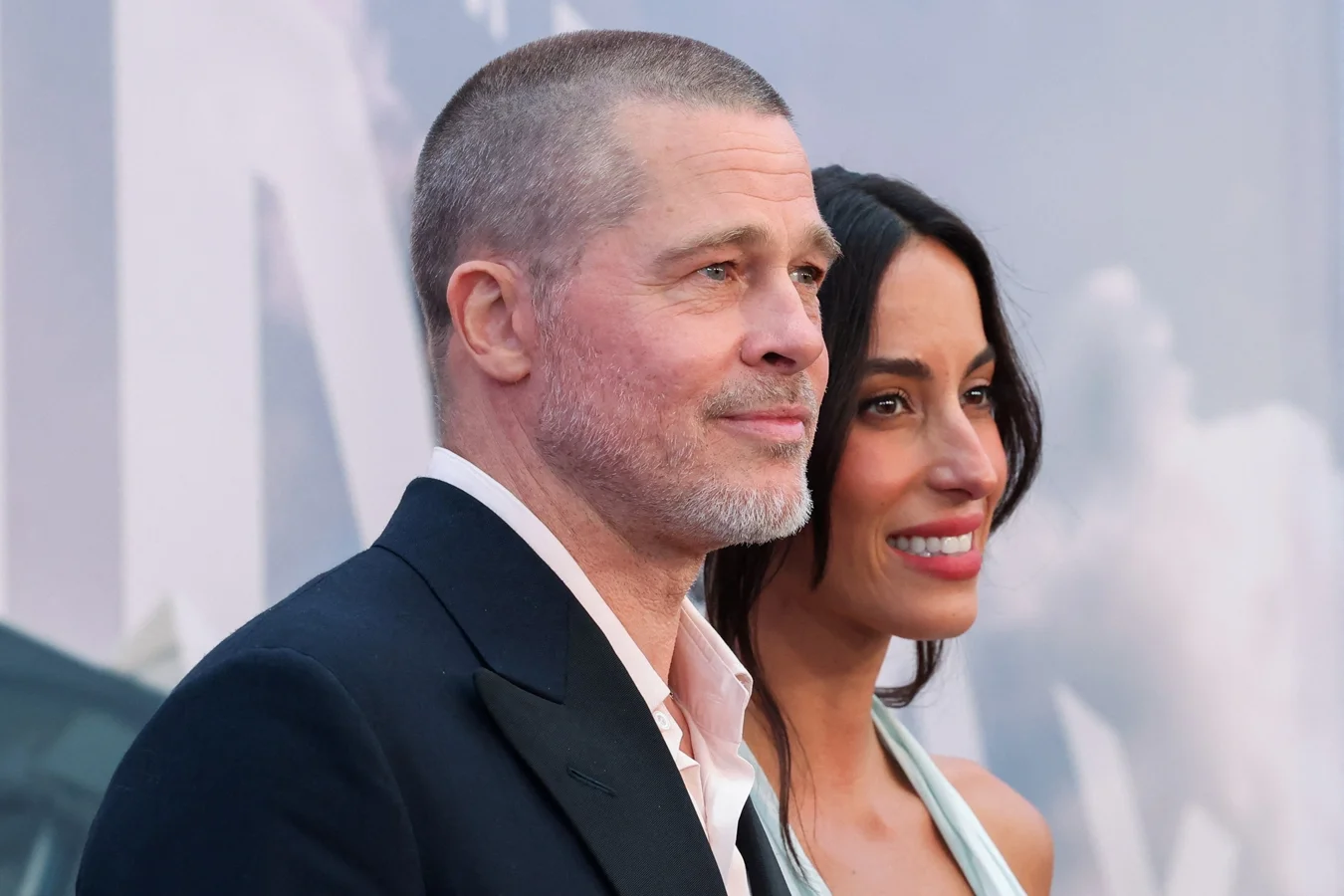
“When I’ve stepped in s–t, I’m pretty good at taking responsibility for it and owning up to it. Now it’s a quest to, ‘What do I do with this? How can I right this?’ And make sure it doesn’t happen again.”
—Brad Pitt, Actor. Observing others who were further along in their sobriety inspired him, and Pitt explained,
“I was really open to see what these guys were doing, who had their thing and been there for a while,”
—Brad Pitt, Actor.
“I can generally be a bit shy in any kind of situation first. But I just remember getting my arms around it pretty quickly. It became a thing for me. It was really something I’d look forward to.”
—Brad Pitt, Actor.
The support of people such as Dax Shepard, who has chronicled his own sobriety struggles, provided additional community and encouragement for Pitt within the 30-person Alcoholics Anonymous group.
“It was really open, honest. It was a way to take whatever theme seemed to go in the evening and then put it in the funniest package. It meant a lot to me, it really did.”
—Brad Pitt, Actor.
Pitt has linked the beginning of his recovery to an altercation with Angelina Jolie concerning his drinking, which reportedly occurred during a private plane flight and contributed to their divorce. He later told The New York Times in 2019,
“I had taken things as far as I could take it, so I removed my drinking privileges.”
—Brad Pitt, Actor.
Other Famous Faces Sharing Their Sobriety Struggles
Brad Pitt’s story is far from unique among public figures. Many have spoken out about addiction, recovery, and the importance of seeking help, adding powerful perspectives to the ongoing discussion about mental health and substance use.
Jason Biggs: Open About the Challenge of Sobriety
Known for his comedy in American Pie, Jason Biggs announced one year of sobriety via Instagram in 2018, after years of struggling with addiction.
“I first tried to get sober over 5 years ago, when the weight of my obsession with booze and drugs became too heavy for me to handle,”
—Jason Biggs, Actor.
“Turns out this s–t is hard.”
—Jason Biggs, Actor.
“After some fits and starts, I’ve managed to put together one year of sobriety. I’m as proud of it as anything in my life. If you’re struggling, know there’s help. Don’t be ashamed. We can do this.”
—Jason Biggs, Actor.
Biggs continues to reflect on the depths of his addiction and the habits he developed to conceal it.
“I’m going to therapy and ‘working on things’ but meanwhile I’m leaving therapy, having just had a good session, and I’m going to the liquor store and buying a fifth of vodka, drinking it and then driving home,”
—Jason Biggs, Actor.
“I knew how to get wasted enough to where I took myself out of the life equation, took myself out of the present, didn’t have to connect in a way that made me feel things.”
—Jason Biggs, Actor.
“I had it figured out to a T. To not get too drunk where I couldn’t have a conversation with you. I was replacing those bottles in the bar all the time.”
—Jason Biggs, Actor.
Ashlyn Harris: Confronting Addiction to Adderall
Soccer star Ashlyn Harris, who won two FIFA Women’s World Cups, spoke about her misuse of Adderall during college.
“I was getting really heavily addicted to Adderall and misusing it,”
—Ashlyn Harris, Soccer Player.
“I was taking it all the time. I would go days without sleeping. It was wild. I felt like I was gonna give myself a heart attack. I was crushing it. I was snorting it. It was so problematic.”
—Ashlyn Harris, Soccer Player. She credited her coach, Anson Dorrance, for guiding her out of darkness through reading and refocusing.
“It got really, really dark and I had to make some serious adjustments,”
—Ashlyn Harris, Soccer Player.
“and Anson would have me read books. I started reading this book called [Man’s Search] for Meaning and it’s about suffering and reframing it and it changed my life.”
—Ashlyn Harris, Soccer Player.
Jax Taylor: Facing Substance Abuse Head-On
Reality TV star Jax Taylor revealed his decades-long struggle with cocaine on the Hot Mic podcast in 2025.
“I am coming out that I’m an addict,”
—Jax Taylor, TV Personality.
“I have substance issues, primarily with cocaine. It’s hard to say out loud.”
—Jax Taylor, TV Personality.
“I’ve been dealing with this on and off since I was 23 and now I’m 45,”
—Jax Taylor, TV Personality.
“There was times where I would stop doing it but then there were times where I’d go heavy on it.”
—Jax Taylor, TV Personality.
He described his concurrent use of alcohol, explaining,
“I don’t necessarily think I have an alcohol problem, but the two go hand in hand. I can’t do cocaine without drinking. So, I just gave up both. I’m proud to say I’m 82, 83 days sober right now, which is the longest I’ve ever gone in my life without either.”
—Jax Taylor, TV Personality.
Tom Holland: Breaking Free from Alcohol Dependence
Marvel actor Tom Holland decided to quit drinking in 2022 after recognizing the impact alcohol was having on his life.
“I was definitely addicted to alcohol, not shying away from that at all,”
—Tom Holland, Actor.
“I think that anyone that has a beer everyday has probably got a little bit of a problem.”
—Tom Holland, Actor.
“And then you would just reach that moment where you’re like ‘Wow, I shouldn’t have had that last beer,’”
—Tom Holland, Actor.
“And you wake up the next day and you have a terrible headache.”
—Tom Holland, Actor.
Giving up alcohol improved his wellbeing in a number of ways.
“Things that would go wrong on set that would normally set me off, I could take in my stride,”
—Tom Holland, Actor.
“I had so much such better mental clarity. I felt healthier. I felt fitter.”
—Tom Holland, Actor.
Alec Baldwin: Looking Back on Nearly Four Decades Sober
Alec Baldwin, famous for his role in Hunt for Red October, rarely addresses his journey, but recently noted the longevity of his sobriety.
“I don’t discuss this a lot,”
—Alec Baldwin, Actor.
“I discuss it every now and then when it makes sense. I’m 39 years sober. I got sober Feb. 23, 1985.”
—Alec Baldwin, Actor. Reflecting on the culture of New York City and Los Angeles during his younger days, Baldwin said,
“I had a white-hot problem every day for two years. I think I snorted a line of cocaine from here to Saturn. We took it back home. I mean, cocaine was like coffee back then. Everybody was doing it all day long.”
—Alec Baldwin, Actor.
After quitting cocaine and eventually alcohol, Baldwin finds comfort in his present life.
“I walk around and I see aspects of it that I’ve never seen before. I’ll look at a building and I’ll go, ‘My God, I never noticed that about that building, those doors.’ I have lunches and coffee and my friends.”
—Alec Baldwin, Actor.
Anne Hathaway: Making the Personal Decision to Stay Sober
Oscar-winning actress Anne Hathaway publicly marked more than five years of sobriety, crediting her choice as life-changing.
“That feels like a milestone to me.”
—Anne Hathaway, Actress.
“I knew deep down it wasn’t for me,”
—Anne Hathaway, Actress.
“And it just felt so extreme to have to say, ‘But none?’ But none. If you’re allergic to something or have an anaphylactic reaction to something, you don’t argue with it. So I stopped arguing with it.”
—Anne Hathaway, Actress.
“My personal experience with it is that everything is better,”
—Anne Hathaway, Actress.
“For me, it was wallowing fuel. And I don’t like to wallow.”
—Anne Hathaway, Actress.
Demi Moore: A Career Nearly Derailed by Self-Destruction
Honored as Woman of the Year by the Peggy Albrecht Friendly House, Demi Moore reflected on moments of personal crisis that shaped her path.
“I feel like there’s a defining moments in our lives that shape who we are and the direction we go and early in my career, I was spiraling down a path of real self-destruction and no matter what successes I had, I just never felt good enough,”
—Demi Moore, Actress.
“I had absolutely no value for myself and this self-destructive path, it very quickly brought me to a real crisis point and it wasn’t clear at the time the reason. Maybe it was divine intervention.”
—Demi Moore, Actress.
With help from two near-strangers, Moore accepted an ultimatum that gave her a vital chance.
“Unless I was dead, I better show up,”
—Demi Moore, Actress. She credited their faith in her as critical to her recovery:
“Clearly they saw more of me than I saw of myself,”
—Demi Moore, Actress.
“And I’m so grateful because without that opportunity, without their believing me, I wouldn’t be standing here today.”
—Demi Moore, Actress.
Noah Cyrus: Battling Xanax Addiction with Support and Structure
Noah Cyrus detailed her recovery from Xanax addiction, which began in 2020.
“It gave me so much structure in the time that I really needed structure, because I didn’t want to just be sitting around and stirring in my brain,”
—Noah Cyrus, Singer.
“Once I felt that it was possible to silence things out for a second and numb your pain, it was over.”
—Noah Cyrus, Singer.
She noted that her peers supported her use initially, but the toll became evident with time.
“it just kind of becomes this dark pit, bottomless pit.”
—Noah Cyrus, Singer.
“I was completely nodding off and falling asleep,”
—Noah Cyrus, Singer.
“And unable to keep my head up or keep my eyes open, because I was so far gone.”
—Noah Cyrus, Singer. Eventually, she sought help:
“it took some time to get on my own two feet.”
—Noah Cyrus, Singer.
Dax Shepard: Managing Relapse and Openness
Actor and podcast host Dax Shepard relapsed after 16 years of sobriety, following a motorcycle injury that required painkillers.
“For the last eight weeks maybe, I don’t really know…I’m on them all day,”
—Dax Shepard, Actor/Podcaster.
“And I’m allowed to be on them at some dosage because I have a prescription and then I’m also augmenting that.”
—Dax Shepard, Actor/Podcaster.
He discussed the guilt and fear that accompanied his relapse.
“And I’m lying to other people. And I know I have to quit. But my tolerance is going up so quickly that I’m now in a situation where I’m taking, you know, eight 30s a day, and I know that’s an amount that’s going to result in a pretty bad withdrawal. And I start getting really scared, and I’m starting to feel really lonely. And I just have this enormous secret.”
—Dax Shepard, Actor/Podcaster.
Jamie Lee Curtis: Coming to Terms with a Long-Term Opiate Addiction
Jamie Lee Curtis described a decade spent addicted to opiates following surgery.
“I had a 10-year run, stealing, conniving,”
—Jamie Lee Curtis, Actress. She recalled reaching her lowest point when stealing prescribed painkillers from her sister.
“I knew she had them in her suitcase in our guest room closet,”
—Jamie Lee Curtis, Actress.
“I basically took all her opiates. When she was leaving I knew she would pack her suitcase and find her pills missing. I knew I had to acknowledge to her what I had done, and so I wrote her a note and left it on her suitcase. I came home that day, and she put her arms around me and told me she loved me and she was concerned about me and she was unwilling to watch me kill myself.”
—Jamie Lee Curtis, Actress.
Her husband, filmmaker Christopher Guest, was shocked when she confessed her addiction.
“He was incredulous that he’d never noticed,”
—Jamie Lee Curtis, Actress. She has remained sober since that day.
Drew Barrymore: Choosing a Life Without Alcohol
Actress Drew Barrymore, who entered rehab for addiction issues as a teen, achieved a milestone by giving up alcohol for over two years.
“I’m just going to say something for the first time in a long time: I have not had a drink of alcohol in two and a half years,”
—Drew Barrymore, Actress.
“And it was something that I realized just did not serve me in my life.”
—Drew Barrymore, Actress.
She highlighted the vulnerability of sharing personal truths, saying,
“It’s so funny. When we reveal ourselves and our truths and the things we’ve worked so hard for, it’s so liberating and vulnerable all at the same time.”
—Drew Barrymore, Actress. Later, Barrymore explained the ongoing struggle with addiction.
“I kept thinking, ‘I’ll master this. I’ll figure it out,’”
—Drew Barrymore, Actress.
“And finally, I just realized: ‘You’ve never mastered this, and you never will.’”
—Drew Barrymore, Actress.
Bradley Cooper: Peer Intervention Led to Change
Bradley Cooper acknowledged problems with drugs and alcohol in his earlier years. It was a friend, Will Arnett, who ultimately pushed him to confront his behavior.
“That was the first time I ever realized I had a problem with drugs and alcohol,”
—Bradley Cooper, Actor.
“He took that risk of having a hard conversation with me that put me on a path of deciding to change my life.”
—Bradley Cooper, Actor.
Brad Pitt’s Sobriety Journey and Support from Bradley Cooper
Pitt also recognized the help he received from others on his journey. At the National Board of Review Annual Awards, he credited Bradley Cooper as a major influence in his recovery.
“I got sober because of this guy,”
—Brad Pitt, Actor.
“And every day’s been happier ever since.”
—Brad Pitt, Actor.
Ryan Phillippe: Finding Gratitude in Sobriety
In 2023, Ryan Phillippe shared on social media his progress in overcoming addiction, expressing gratitude for the clarity and spiritual wellness that came with sobriety.
“the longest I’ve gone since I was a teen without some kind of nicotine or marijuana in my system (among other things).”
—Ryan Phillippe, Actor.
“Feeling thankful for the freedom that comes with breaking addictions and dependency on substance,”
—Ryan Phillippe, Actor.
“Sobriety, clarity, and spiritual connectedness feels real good.”
—Ryan Phillippe, Actor.
Demi Lovato: A Public Fight with Relapse and Recovery
Pop star Demi Lovato’s career has been punctuated by her ongoing struggle with addiction. After marking six years of sobriety, she relapsed in 2018, sharing her experience openly through music.
“Mama, I’m so sorry I’m not sober anymore / And Daddy please forgive me for the drinks spilled on the floor / To the ones who never left me / We’ve been down this road before I’m so sorry, I’m not sober anymore,”
—Demi Lovato, Singer. A subsequent overdose nearly ended her life.
Lovato publicly acknowledged her constant battle with addiction.
“I have always been transparent about my journey with addiction,”
—Demi Lovato, Singer.
“What I’ve learned is that this illness is not something that disappears or fades with time. It is something I must continue to overcome and have not done yet…I now need time to heal and focus on my sobriety and road to recovery. The love you have all shown me will never be forgotten and I look forward to the day where I can say I came out on the other side. I will keep fighting.”
—Demi Lovato, Singer.
Jada Pinkett Smith: Tackling Addictions Head-On
Jada Pinkett Smith has spoken about her struggles with both sex and alcohol addiction.
“My sort of addictions jump. They jump around. When I was younger, I definitely think I had a sex addiction of some kind, yes, that everything could be fixed by sex,”
—Jada Pinkett Smith, Actress. A pivotal moment came when she realized her drinking was problematic.
“I remember reaching a rock bottom that time I was in the house by myself and I had those two bottles of wine and was going for the third bottle,”
—Jada Pinkett Smith, Actress.
“And I was like, ‘Now hold up. You’re in the this house by yourself going onto your third bottle of wine? You might have a problem.’”
—Jada Pinkett Smith, Actress.
Smith explained her approach,
“So I went cold turkey. That’s the thing about me: I can go cold turkey. I am a binger, and I always have to watch myself and I can just get obsessed with things,”
—Jada Pinkett Smith, Actress.
“It’s not what you’re doing but how you’re with it. Why you’re doing it. It’s the behavior that’s attached to it because if you want to have a lot of sex, that’s great, but why are you having all that sex? That’s what you’ve got to look at.”
—Jada Pinkett Smith, Actress.
AJ McLean: From Addiction to Healthier Living
Backstreet Boys member AJ McLean began dabbling in drugs ahead of his group‘s “The Call” music video. He eventually got sober in 2021, shedding pounds and improving his mental state.
“but it also weighed down my mental state.”
—AJ McLean, Singer.
Bow Wow: Using His Platform to Warn against Drug Abuse
Hip-hop artist Bow Wow, also known as Shad Moss, recounted his addiction to cough syrup and the health scare that prompted him to stop.
“To the youth- Stop with these dumb ass drugs,”
—Bow Wow, Rapper.
“Im going to let something out. When me and Omarion worked on FACE OFF album. I was high off lean everyday! When yall saw me on BET going off on Torae i was high off lean. My attitude everything changed. My fans started to…Turn on me my family too. I never promoted lean in my songs. The whole time i was on the UCP tour with Chris [Brown] I WAS SIPPING 4’s atleast 7 times a day. I was addicted until our show in Cincinnati.. i came off stg and passed out woke up in the hospital i was having withdraws.”
—Bow Wow, Rapper.
He detailed the severity of withdrawal and the continued impact on his health.
“I never felt a pain like that ever,”
—Bow Wow, Rapper.
“It was summer but i was walking round with 3 hoodies on because i was so cold. I missed the chicago show of that tour baltimore show BECAUSE I WAS F–KING HIGH AND SICK!!!! that s–t is not cool and i was doing it to be cool! Kick that s–t! Be a good son or daughter. Be the best you. Ima start being more vocal. We gotta save the youth from going out early. Parents watch your kids. Explain to them. We want yall to live man. I almost died f–king with syrup.”
—Bow Wow, Rapper.
“To this day im affected my stomach will…Never be the same and it hasnt been. DRUG FREE IS THE WAY TO BE! smarten up tighten up out here,”
—Bow Wow, Rapper.
“We cant lose no more of you. Not one! I love all yall. The young artist all the kids around the world.. dont follow a trend. Break the cycle. PEACE.”
—Bow Wow, Rapper.
Lily Allen: Candid About Her Darkest Days
British musician Lily Allen has been refreshingly open about her past with cocaine and heavy drinking, particularly during her career’s most intense periods. She recounted a moment of profound hopelessness:
“Nothing seemed to reach or satisfy me. I remember waking up one morning in those dark days thinking, ‘Maybe it’s time for heroin, because nothing else is working.’”
—Lily Allen, Singer.
Dennis Quaid: Surviving a Dangerous Decade
Dennis Quaid battled cocaine addiction in the 1980s, describing the period as one of normalized attitudes toward drug use.
“there was a completely different attitude”
—Dennis Quaid, Actor.
“It was even in some movie budgets. I was basically doing cocaine pretty much on a daily basis during the ’80s,”
—Dennis Quaid, Actor.
“I spent many, many a night screaming at God to ‘Please take this away from me and I’ll never do it again, cause I’ve only got an hour before I have to be at work.’ Then at 4 o’clock in the afternoon I’d go, ‘Oh it’s not so bad.’”
—Dennis Quaid, Actor.
A turning point came when Quaid experienced a vision of losing everything that mattered to him.
“I had what I call a white light experience where I saw myself either dead or losing everything that meant anything to me,”
—Dennis Quaid, Actor. He opened up to then-fiancée Meg Ryan and entered rehab, ending his ordeal:
“That was the end of the love affair with me and cocaine.”
—Dennis Quaid, Actor.
Ryan Lochte: Determined to Break a Destructive Pattern
Olympic swimmer Ryan Lochte decided to seek help for alcohol addiction after an incident in Newport Beach in 2018.
“Ryan has been battling from alcohol addiction for many years and unfortunately it has become a destructive pattern for him,”
—Ryan Lochte’s Representative.
“He has acknowledged that he needs professional assistance to overcome his problem and will be getting help immediately.”
—Ryan Lochte’s Representative. The public statement concluded with a note on his future:
“Ryan knows that conquering this disease now is a must for him to avoid making future poor decisions, to be the best husband and father he can be, and if he wants to achieve his goal to return to dominance in the pool in his 5th Olympics in Tokyo in 2020,”
—Ryan Lochte’s Representative.
Jason Ritter: Sobriety as a Personal and Relational Choice
Actor Jason Ritter, a Parenthood alum, admitted that his relationship with Melanie Lynskey influenced his initial decision to get sober, even though recovery is ultimately for oneself.
“one of the things that you’re not supposed to do is get sober for somebody else,”
—Jason Ritter, Actor.
“At a point, I knew how amazing she was and I thought she would be incredible for someone who deserved her,”
—Jason Ritter, Actor.
“and I didn’t feel like I was that person. I felt a little bit too crazy.”
—Jason Ritter, Actor.
“It was easier for me to say that I’m doing it for her because, at that time, I didn’t feel like I was sort of worth much,”
—Jason Ritter, Actor.
“I didn’t care as much about hurting myself as I did about hurting her. So, initially it was easier for me to say, ‘I’m doing this for her.’ And now, I’m doing it for myself.”
—Jason Ritter, Actor.
Brantley Gilbert: A Decade of Sobriety After Pain Pill and Alcohol Abuse
Country music singer Brantley Gilbert explained how his addictions began after high school and accompanied him through the start of his career. He detailed his pattern of use, including always having a supply on hand.
“at arm’s reach at all times,”
—Brantley Gilbert, Singer.
“every hour and a half to two hours it’d be time to get two or three good pulls on the bottle. And every three or four hours it’s time for a pill or two.”
—Brantley Gilbert, Singer.
Remarkably, the substances never affected his professional performance, a fact that frightened him.
“It wasn’t like I was stumbling around all day,”
—Brantley Gilbert, Singer.
“I was fully functioning — I wrote more songs then than I do now. That was the scary part.”
—Brantley Gilbert, Singer. After experiencing acute pancreatitis and being warned by his doctors that he wouldn’t live much longer if he didn’t stop, Gilbert attempted to manage his usage but fell short.
“I still put it off and was trying to slow down on my own, like, ‘All right I’m only gonna let myself take two pills today. I’m only gonna drink this much of my bottle and make a mark on the bottle,’”
—Brantley Gilbert, Singer.
“And it would work a couple days—and then somebody throws a party.”
—Brantley Gilbert, Singer.
Facing the reality that he needed outside help, Gilbert entered rehab.
“I got to the point where I knew it was something I couldn’t do on my own,”
—Brantley Gilbert, Singer.
“Pissed me off to no end and embarrassed me. I’m a pretty strong-willed person but that was the one thing in my life that I couldn’t get to stick.”
—Brantley Gilbert, Singer.
The Broader Impact of Celebrity Stories on Addiction and Recovery
The openness shown by Brad Pitt and other public personalities in discussing their struggles with addiction and paths toward sobriety offers hope and support to countless people facing similar battles. Sharing experiences through platforms like podcasts, interviews, and social media helps destigmatize addiction, encourages others to seek support, and underscores the message that recovery is possible. As each individual continues their journey, their willingness to be honest and vulnerable paves the way for increased understanding and compassion for those on the path to sobriety.
