
Clint Eastwood has long been celebrated for his legendary westerns, but his impact extends just as powerfully to crime cinema. In this ranked look at Clint Eastwood crime movies, we break down every major entry where Eastwood took on the law, played with moral ambiguity, or directed a suspenseful thriller—spanning seminal classics like Dirty Harry through late-career highlights such as The Mule.
Clint Eastwood’s Penchant for Crime Stories
Eastwood first became synonymous with the American West, thanks to projects like Rawhide and The Good, the Bad and the Ugly, but starting in the early 1970s, he turned his focus to gritty urban tales. His portrayal of Inspector Harry Callahan in Dirty Harry defined an archetype—hard-edged, complicated, and utterly relentless. Over his career, about a quarter of Eastwood’s 40 feature films explored crime in varied forms, from police procedurals to tense psychological mysteries and real-life inspired tales.
While some entries blurred genre lines and films like J. Edgar or The Gauntlet are excluded for being more biopic or action-fueled, the works included here all revolve around crime as a main element in the story.
11. The Rookie (1990)
The Rookie stands out for pairing Clint Eastwood, an established genre icon, with Charlie Sheen, making for a notably odd combination of leads. As a buddy cop story, it rides on their dynamic, with Eastwood as the world-weary veteran and Sheen as the new recruit, David Ackerman and Nick Pulovski, respectively. Unfortunately, the film’s awkward humor, underwhelming action scenes, and by-the-numbers narrative leave little room for their chemistry to develop.
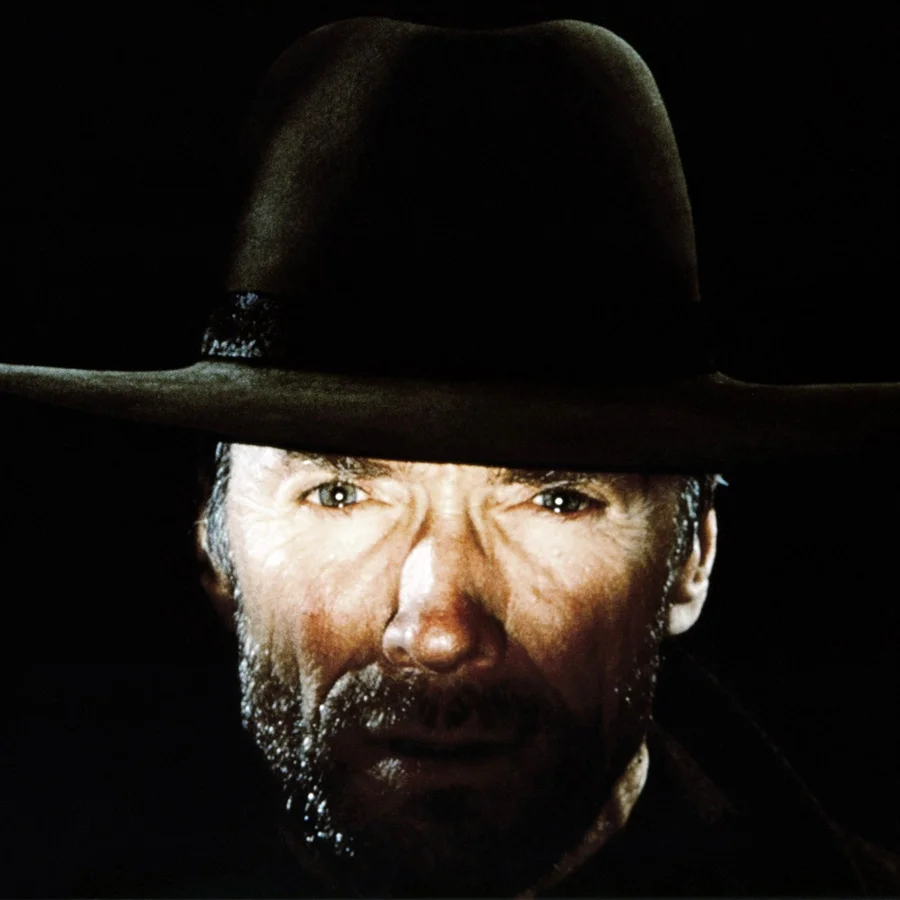
Raúl Juliá’s villain, Strom, injects occasional excitement, but overall, The Rookie fails to find its footing, resulting in a lackluster entry that disappointed both fans and critics. Sonia Braga’s turn as Liesl also gets lost amid the film’s inconsistent tone.
10. Blood Work (2002)
A blend of psychological thriller and crime mystery, Blood Work follows Terry McCaleb (Eastwood), a retired FBI profiler drawn back into investigative work by a compelling serial killer case—one with personal stakes, as clues turn up in his own blood test.
The film, also starring Jeff Daniels as Jasper Buddy Noone and Anjelica Huston as Dr. Bonnie Fox, offers a serviceable story but falls short in delivering twisty suspense or standout thrills. Eastwood, directing and starring, gives a steady performance but doesn’t push the material far enough to elevate it above the merely average. Wanda De Jesus appears as Graciella Rivers, rounding out a cast anchored by Eastwood’s established screen presence.
9. Absolute Power (1997)
Five years after the celebrated Unforgiven, Clint Eastwood reunited on screen with Gene Hackman for Absolute Power. Here, Eastwood’s character, Luther Whitney, is a thief who stumbles upon a crime implicating none other than the President of the United States (Hackman’s President Richmond).
The plot finds Whitney on the run after this dangerous discovery, with Ed Harris as the dogged Seth Frank and Laura Linney as Kate Whitney involved in the unraveling drama. Despite its intriguing set-up and the talent of its stars, Absolute Power lands in the mid-tier—not particularly memorable, yet perfectly watchable and competently made under Eastwood’s direction.
8. True Crime (1999)
True Crime features Clint Eastwood as Steve Everett, a worn-down reporter grappling with personal demons while investigating a potential miscarriage of justice on death row. As Everett races against time to prove Frank Louis Beechum’s (Isaiah Washington) innocence, the film mixes newsroom drama with a race-against-the-clock thriller.
While it doesn’t reach the heights of Eastwood’s most compelling films, True Crime stands as a solid and well-constructed entry, featuring LisaGay Hamilton as Bonnie Beechum and James Woods as Alan Mann. It doesn’t break new ground, but its mature handling of moral urgency gives the story real tension.
7. Sudden Impact (1983)
As the fourth entry in the Dirty Harry series—and the only one directed by Eastwood himself—Sudden Impact continues the saga of Inspector Harry Callahan. Here, the narrative weaves questions of morality and justice, as Callahan investigates a revenge-driven vigilante case involving Jennifer Spencer (Sondra Locke), a woman seeking payback against those who brutalized her.
While Sudden Impact doesn’t reach the original’s iconic status, it does further deepen Harry Callahan’s character by exploring new ethical dimensions. Supporting roles from Pat Hingle as Chief Jannings and Bradford Dillman as Captain Briggs add layers to a film that balances the familiar with genuine evolution for the franchise.
6. Changeling (2008)
Changeling, a crime drama set in the late 1920s, showcases Clint Eastwood’s directorial strengths. Starring Angelina Jolie as Christine Collins, it recounts the true story of a mother whose missing child is returned by the police—except she insists the boy is not her son. Collins’s pursuit of truth brings shocking revelations about institutional corruption within the Los Angeles Police Department.
The film is unflinching in its portrayal of grief, injustice, and abuse of power, with supporting performances from John Malkovich (Rev. Gustav Briegleb), Jeffrey Donovan (Captain J.J. Jones), and Michael Kelly (Detective Lester Ybarra). Jolie’s intense portrayal anchors a story that is difficult yet vital, highlighting Eastwood’s ability to draw strong performances out of his cast.
5. Midnight in the Garden of Good and Evil (1997)
One of the more underrated entries in Eastwood’s directorial catalog, Midnight in the Garden of Good and Evil features John Cusack as reporter John Kelso, drawn into the world of Savannah’s high society through the trial of Jim Williams (Kevin Spacey), who stands accused of murder. Jude Law (Billy Carl Hanson) and Alison Eastwood (Mandy Nichols) contribute to the film’s moody, atmospheric ensemble.
This lengthy drama unravels layers of intrigue, eccentricity, and Southern Gothic flavor as Kelso navigates the complex relationships and secrets behind a society murder case. While sometimes uneven in pacing, the film rewards patient viewers with rich characters and a captivating sense of place.
4. The Mule (2018)
In The Mule, Clint Eastwood delivers a late-career leading performance as Earl Stone, a struggling elderly man who finds himself working as a drug courier for a cartel. The story is loosely inspired by a real event, with Stone’s quiet life soon spiraling into danger as he draws the attention of DEA agents and criminal figures alike.
Alongside Bradley Cooper and Laurence Fishburne, Eastwood’s character walks a fragile line between desperation and resolve. The film is at its best when exploring moral ambiguity, though it loses some momentum in its final act. Michael Pena also appears in a supporting role, reinforcing the drama’s sense of escalating stakes and inevitable reckoning.
3. Juror #2 (2024)
Potentially Clint Eastwood’s final directorial effort, given he was 94 at release, Juror #2 explores new ground in the courtroom drama genre. The story centers on Justin Kemp (Nicholas Hoult), a juror on a high-profile case who hides knowledge that could change the verdict, setting off a tense moral dilemma.
Toni Collette portrays the prosecutor, with the narrative exploring questions of conscience, responsibility, and the tension between doing the right thing and taking the easier path. The ensemble delivers strong performances, with Eastwood bringing understated direction to a straightforward yet resonant script, highlighting the lasting themes of justice and inner conflict present across his filmography.
2. A Perfect World (1993)
In A Perfect World, Clint Eastwood takes a supporting role as U.S. Marshal Red Garnett while Kevin Costner leads as escaped convict Butch Haynes. With Laura Dern also starring, the film tells the story of an outlaw’s unlikely bond with a young boy taken hostage in the aftermath of a prison break.
Balancing tension, empathy, and a surprising degree of warmth, A Perfect World avoids exploitative territory by focusing on the humanity within each character. The writing and performances bring emotional complexity, underlining both the pain and hope experienced along the run. Despite sometimes being overshadowed by Eastwood’s highest-profile films, this one is widely regarded for its nuanced storytelling and strong acting.
1. Dirty Harry (1971) and Franchise Legacy
The entry point for much of Clint Eastwood’s reputation in the crime genre, Dirty Harry introduced Inspector Harry Callahan—a figure who redefined the American cinematic detective. Confronting criminals with unflinching resolve, Callahan became iconic through his pursuit of justice and willingness to challenge bureaucratic limitations. The original film’s impact extended through sequels including Magnum Force and Sudden Impact, pushing themes of vigilantism, justice, and personal code.
These films not only left a mark on crime cinema, but also set the template for conflicted heroes in law enforcement and beyond, inspiring generations of filmmakers and actors. Key supporting roles throughout the series—by Pat Hingle, Sondra Locke, Jennifer Spencer, and others—helped maintain the urgency and emotional intensity that defines the franchise.
The Enduring Impact of Eastwood’s Crime Films
Clint Eastwood’s crime movies remain compelling for their exploration of ethical dilemmas, the shades of morality in law and justice, and the ways individuals confront criminal worlds—whether as marshals, thieves, reporters, or everyday people. Across roles like Insp. Harry Callahan, Luther Whitney, Steve Everett, and Terry McCaleb, Eastwood crafted screen figures who embody intense inner conflict and turbulent emotions.
From the high-action streets of San Francisco to somber true-crime investigations and daring heist tales, Eastwood’s work continues to shape the way moviegoers view crime, justice, and the price of both heroism and wrongdoing. With each film, from Dirty Harry to The Mule, his legacy as one of cinema’s defining voices in crime storytelling endures, and fans will continue to revisit and re-evaluate these films for years to come.
