
The Chris Hemsworth Rush Formula One movie continues to set the benchmark for racing films, drawing praise for its thrilling storytelling and visceral energy that sets it apart from recent F1 cinema efforts. Released in 2013, Ron Howard’s vivid direction and nuanced exploration of the sport’s human element explain why even today, F1 dramas fail to match its passion and impact.
A Tale of Two Rivals: Hunt and Lauda’s Divided Paths
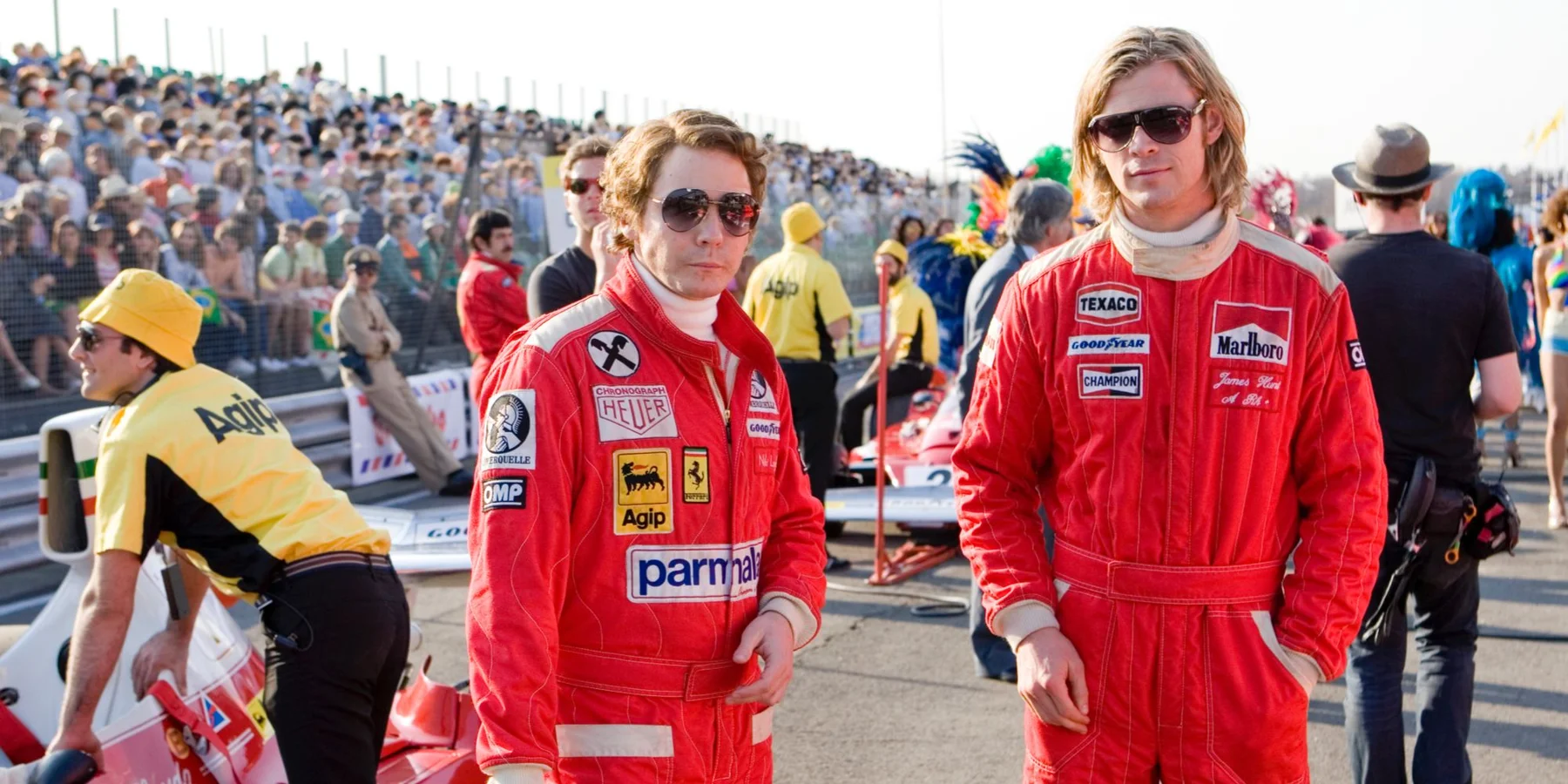
Rush dives into the storied feud between James Hunt, portrayed by Chris Hemsworth, and Niki Lauda, brought to life by Daniel Brühl, both rising as iconic Formula One drivers during the 1970s. The two characters, while sharing impressive backgrounds and a fearless commitment to the racetrack, stand worlds apart in temperament. Hunt embraced chaos, thriving on danger and adrenaline, with a charisma that radiated rebellious spirit. Lauda, on the other hand, approached racing with strict precision, wholly invested in logic and relentless calculation, focusing single-mindedly on victory.
This compelling dichotomy—recklessness versus control, intuition versus calculation—meant that Hunt and Lauda’s dynamic played out not only on the asphalt but in the fabric of their lives, each pushing the other to fresh heights. Ron Howard’s subtle directorial approach ensures that their differences only sharpen the portrayal of their shared humanity, moving beyond rivalry to spotlight the deeper fears and desires propelling both men forward.
Ron Howard’s Emotional Depth Elevates The Action
Ron Howard, long celebrated for his empathy towards his characters, used his experience with actors to bring a unique warmth to Rush. The film relies on the chemistry between Hemsworth and Brühl, both turning in performances that redefined their careers. For Hemsworth, this marked a departure from his well-known Marvel persona, revealing the complexity and wild charm beneath Hunt’s headline-grabbing lifestyle. Brühl’s interpretation of Lauda was so meticulously accurate that it even received a nod from the real Niki Lauda, who recognized himself in the role.
Many critics and audiences saw Brühl’s omission from the Oscars shortlist as a significant oversight, given his nominations at other prestigious events like the Golden Globes and SAG Awards. The ability to generate empathy for both lead characters shapes each race, raising the emotional stakes well above mere spectacle.
The focus on character depth transforms every high-speed sequence, grounding their risk-taking in deeply personal motivations. The races are not just a visual rush, but encapsulate the intense pursuit for respect, personal glory, and peace—making viewers realize what’s truly at stake each time the drivers take to the track.
Unleashing the Raw Majesty of Formula One Racing
Rush sets itself apart from sleeker, commercialized racing movies through its commitment to full sensory immersion. Cinematographer Anthony Dod Mantle, known for Oscar-winning work on projects like Slumdog Millionaire and 28 Days Later, crafts scenes that oscillate between chaos and beauty. The film captures the turbulent, dirty, and overwhelming reality of being at the center of a Formula One contest, far removed from the sanitized presentation sometimes seen in more recent works.
Howard’s boldness appears in every choice, from letting dirt and debris cloud the frame to employing a frenzied blend of camera angles that keep the action unpredictable. Sometimes viewers are thrust inside a roaring engine, glimpsing the fiery mechanics that drive the sport; other moments, they’re right behind a rain-slicked visor, able to sense the fear, sweat, and split-second decisions shaping each lap.
In these sequences, slow motion emphasizes the violent power contained in each spinning tire, highlighting the looming danger surrounding the drivers. Rush brings together the restless energy of classic sports documentaries and the poetic grandeur of Wong Kar-wai’s films, conveying both the peril and the transcendent allure of Formula One.
Changing the Landscape for Racing Films
The Chris Hemsworth Rush Formula One movie doesn’t simply showcase impressive race sequences or flashy visuals. Instead, it raises the bar by fusing high-octane drama with compelling character development, making the excitement of the sport inseparable from the emotional worlds of Hunt and Lauda. Ron Howard’s artistic touch reframes each race as a battle for identity, glory, and connection, keeping audiences invested beyond the checkered flag.
While fresh Formula One cinema like the Joseph Kosinski-directed, Brad Pitt-led projects achieve remarkable technical feats and capture box office attention, they have yet to fully match Rush’s portrayal of the emotional and existential stakes at play. This enduring influence demonstrates how sports movies thrive not only on adrenaline but also by illuminating the humanity behind every risk and victory.
A Lasting Standard for Formula One on Film
Ten years since its release, Rush remains the yardstick by which all Formula One movies are measured, continuing to inspire fans, critics, and filmmakers alike. The involvement of talented actors like Chris Hemsworth, Daniel Brühl, Olivia Wilde, and Alexandra Maria Lara sets the production apart, while Anthony Dod Mantle’s evocative cinematography ensures every moment pulses with life. For those seeking a film that truly embodies the feverish heart and mind of Formula One, Rush still sits firmly in pole position—proof that authenticity and emotional resonance make for the ultimate cinematic lap.
