
Sofia Coppola’s Marie Antoinette film revisits the nineteen years the young queen spent at the Palace of Versailles, capturing both her glamour and her struggles. Released earlier this year in France, the movie creates an immersive experience by filming extensively on location with the cooperation of Versailles’ museum directors, placing the audience right in the heart of the historic palace.
For lead actress Kirsten Dunst, portraying the young queen was an emotionally and physically intensive journey, marked by the once-in-a-lifetime opportunity to inhabit royal garments and walk the estate’s storied halls. Alongside Coppola’s cousin Jason Schwartzman, who plays King Louis XVI, Dunst entered a world where history permeates every corridor.
Kirsten Dunst’s Deep Preparation for the Role
Wearing costumes designed by Milena Canonero, whose craftsmanship blends elegance with a modern touch, Dunst embraced a role that demanded more than acting; it was about moving and breathing as a queen would.
“You breathe differently in those dresses; you move in a special way,”
she said. To connect with the character’s inner life, she even walked alone through the quiet palace at night while a small crew filmed an intimate balcony scene.
“I could look in those mirrors,”
Dunst recalled.
“Be still in myself. Feel my place in that house.”
This solitary walk was crucial for her to sense the echoes of history and the loneliness of a young queen under immense scrutiny.
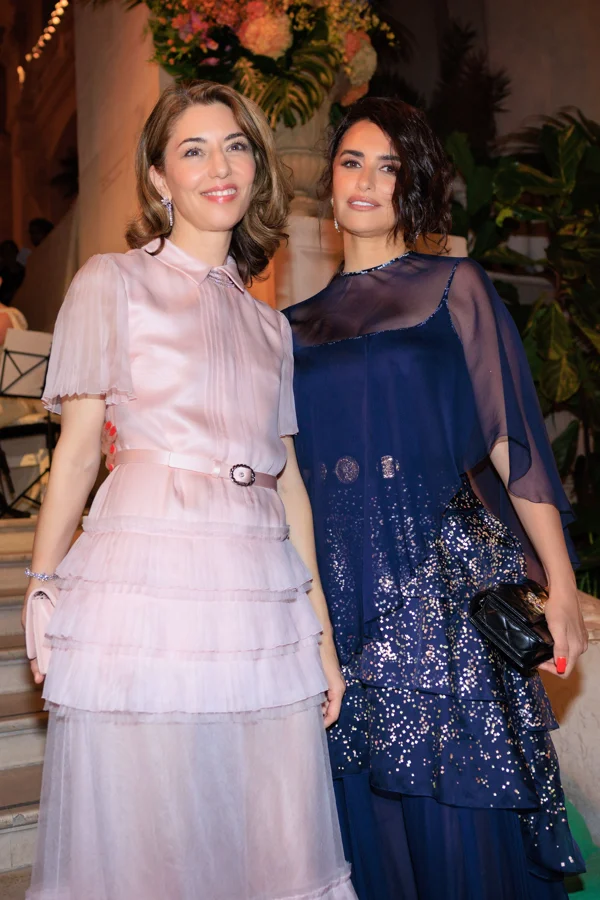
Sofia Coppola’s Vision and the Film’s Place in Her Work
This film marks Coppola’s third feature-length directorial effort after The Virgin Suicides and Lost in Translation, expanding her storytelling scope with a $40 million budget. She approached Marie Antoinette, a figure viewed very differently in France—either as a martyr or a detested queen—by pursuing a personal and feminine perspective focused on youth and self-discovery.
Fashion’s role in the queen’s identity fascinated Coppola, who defended such an interest with conviction:
“You’re considered superficial and silly if you’re interested in fashion,”
she said,
“But I think you can be substantial and still be interested in frivolity. The girl in Lost in Translation is just about to figure out a way of finding herself, but she hasn’t yet. In this film she makes the next step. I feel that Marie Antoinette is a very creative person.”
The Young Archduchess’s Journey from Austria to France
In 1770, fourteen-year-old Archduchess Marie Antoinette traveled from Austria to France to meet her future husband, the fifteen-year-old dauphin and heir to the French throne. The girl was striking, with blonde hair, blue eyes, fair skin, and the distinctive Hapsburg lip. She was the fifteenth child of Empress Maria Theresa, a formidable and efficient ruler who famously read state papers even during childbirth.
Shortly before her departure, it was discovered that Marie Antoinette’s education was lacking; she barely knew how to read and write. Her mother arranged a quick but thorough course in preparation, including cosmetic dentistry, a sophisticated new hairstyle, and a wardrobe fully reflecting French fashion. The princess then traveled to Versailles in an opulent gilded coach adorned with symbols of her native Hapsburgs and her new home’s Bourbon dynasty.
Maria Theresa warned her daughter that from this moment on, every eye would be watching and she must obey orders without hesitation. Despite the stern advice, Marie Antoinette’s lively spirit and short attention span posed challenges in adjusting to the rigid demands of court life.
The Film’s Significance and Anticipated Impact
Sofia Coppola’s Marie Antoinette film offers a nuanced portrayal of a young woman thrust into impossible circumstances, blending historical accuracy with intimate character study. By focusing on the queen’s feminine perspective and creative spirit, the film reframes a widely debated historical figure, emphasizing her humanity rather than just her political role.
Given its ambitious scale and Coppola’s distinct vision, the movie has the potential to reshape popular perceptions of Marie Antoinette. Audiences can expect a richly textured exploration of youth, identity, and the heavy burdens placed on a girl turned monarch in one of history’s most opulent—and unforgiving—settings.
Our Reader’s Queries
Q. Is Sofia Coppola a Nepo baby?
A. Although she is the daughter of famous director Francis Ford Coppola, she has moved beyond being just a “nepo baby.” She has developed a unique style in filmmaking that is clearly hers.
Q. Why was Sofia Coppola criticized?
A. People said Coppola didn’t act well in the movie, describing her performance as rigid and not believable. Although there are real concerns about nepotism in films, singling out Sofia Coppola seems unfair. Many actors have also gotten chances in Hollywood thanks to family ties.
