
Glynn Turman, whose acting career spans more than 60 years with credits including Peyton Place, Cooley High, The Wire, Ma Rainey’s Black Bottom, and Rustin, is set to receive a star on the Hollywood Walk of Fame. Turman attributes much of his success to the encouragement of a perceptive woodshop teacher and, above all, his determined mother. His rise in the entertainment industry is a testament to perseverance and the influence of early mentors.
Raised initially in Harlem, Turman’s family relocated to Greenwich Village, where his mother became part of a lively artistic community that included notable figures like James Baldwin, Odetta, and Josh White. One day, playwright Lorraine Hansberry, a family acquaintance, asked Turman’s mother:
“Do you think Glynn would be interested in a part?”
—Lorraine Hansberry, Playwright. Despite his youth and initial disinterest, Turman auditioned and landed a role alongside Sidney Poitier, Ruby Dee, and Lou Gossett Jr. in the Broadway production of A Raisin in the Sun at just 12 years old.
From Reluctant Young Actor to Committed Performer
Initially, Turman prioritized typical childhood activities like baseball over acting. When his mother persuaded him with the promise that a movie star played the lead role, he reluctantly accepted to audition. His natural confidence as a child helped him succeed without nervousness. Though his early career launched on Broadway, his teenage years diverted toward other interests, including aviation engineering and occasional mischief.
A turning point came when his junior high school woodshop teacher challenged his plans to attend Aviation High School. The teacher pointed out,
“You’re a chronic truant and you avoided math class the entire semester,”
—Glynn Turman, recalling the woodshop teacher’s words and suggested he try out for the High School of Performing Arts instead. Turman took the advice, failed the Aviation entrance exam, but succeeded in the audition for performing arts, which became a stepping stone in his career.
Balancing Acting, Education, and Personal Growth
To keep Turman engaged and disciplined, his mother enrolled him in summer camp, where he discovered a love for horseback riding. This passion persisted into adulthood, leading him to purchase a 20-acre ranch near Los Angeles and become an award-winning horseman. Inspired by this experience, Turman later created Camp Gid-D Up to offer at-risk youth positive opportunities following the 1992 Los Angeles riots, answering Coretta Scott King’s call for community improvement.
While Turman’s career advanced with various stage roles across the country, he always considered himself foremost a theater actor, despite his ongoing work in television. Supporting his family motivated him to appear on television, but he sought roles that avoided stereotypical or shallow portrayals of Black characters. This conscientious approach led him to acclaimed theater performances, including his Ovation Award-winning role as Bynum in August Wilson’s Joe Turner’s Come and Gone at the Mark Taper Forum.
Turman reflects on his selective career path:
“I made decisions based on what I wanted to be a part of, and I carried that mantle because I’d started off with these giants — Sidney Poitier and Ruby Dee and Lorraine Hansberry — who fought the good fights,”
and adds,
“It was difficult, but it was worth it.”
—Glynn Turman, Actor.
Onscreen Milestones and a Brush with Iconic Roles
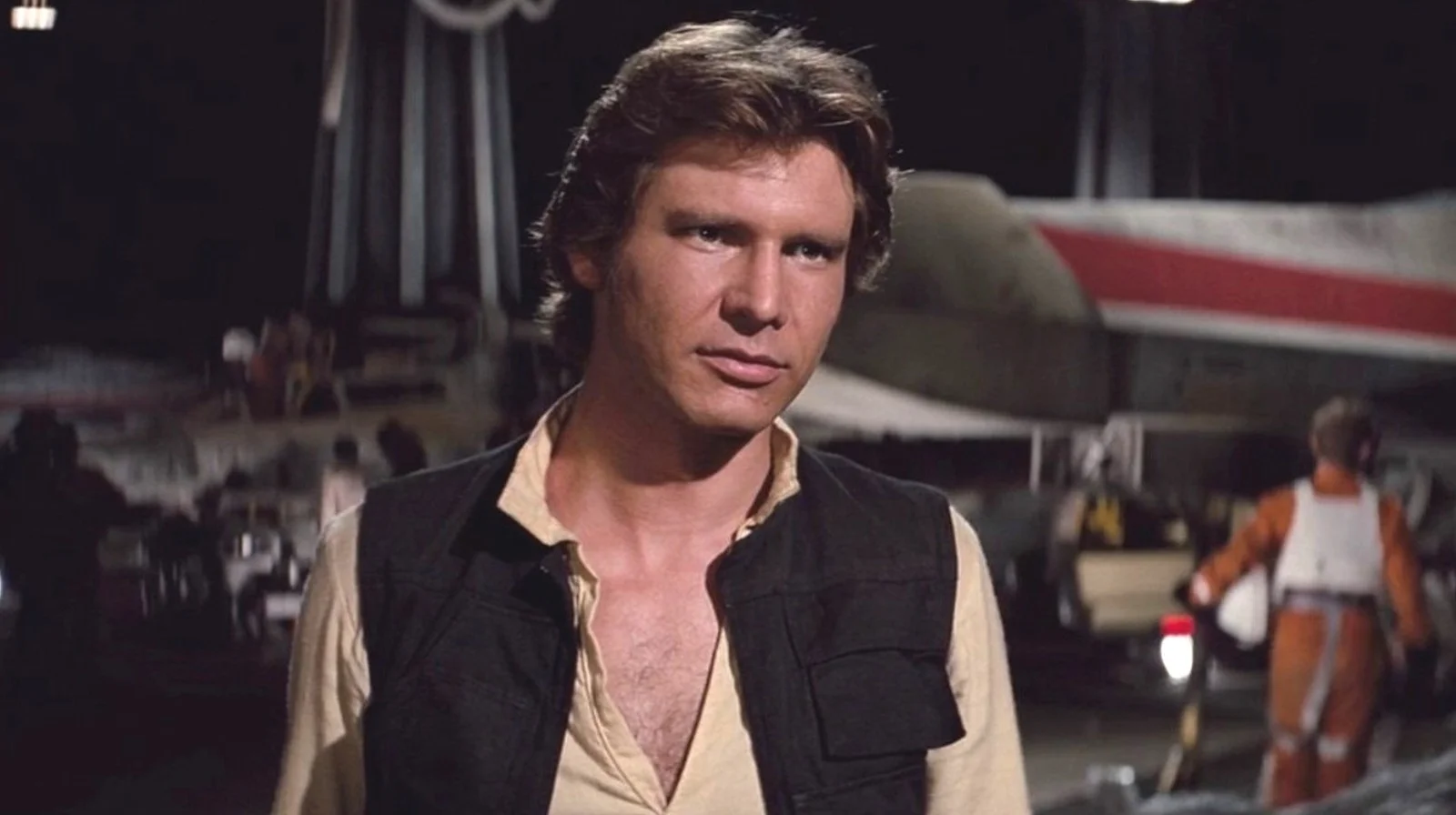
Turman’s early television and film success began with the show Peyton Place at age 21, followed by a standout role in the 1975 film Cooley High, which portrayed a different dimension of the Black experience on screen. He believes this performance could have garnered an Oscar nomination in a more inclusive era. His rising profile in Hollywood led to an audition for the role of Han Solo in a major swashbuckling adventure film. However, the director, concerned about the social context of the time regarding interracial romantic storylines, ultimately cast Harrison Ford in the role.
Turman jokes about this missed opportunity:
“I don’t dwell on the past, so I’m not bitter, but I would like for Harrison Ford to give me some of those residuals,”
—Glynn Turman, Actor, humorously referencing the iconic role and its long-term financial rewards.
A Versatile Career with Critical Acclaim
Following that period, Turman worked on various films like J.D.’s Revenge and TV movies including Carter’s Army, Centennial, and one of his favorites, Minstrel Man. He gained renewed attention and acclaim for his portrayal of Mayor Clarence Royce on the acclaimed series The Wire, a role that creator David Simon highlighted for its complexity.
Simon explains the challenge of the character:
“We wrote his character as inert and defensive and everything people hate about politics as usual, but we needed an actor who would not play him as villainous, which was against our sensibility,”
adding,
“Glynn played him as astute but morally eroded and he charmed the hell out of us.”
—David Simon, Creator of The Wire.
Turman understood his character’s nuances:
“He’s a man of power and with power comes a certain ease. He’s a guy you’d want at your dinner table. He’s not a totally bad guy but he lacks judgment and thinks he’s a great guy.”
—Glynn Turman, Actor.
This role opened doors to projects such as Fargo, Women of the Movement, and In Treatment, the latter earning him an Emmy Award. However, Turman notes how discussions about The Wire often overshadowed his other auditions.
“After ‘The Wire,’ I’d go in for a part and after we finished talking about that, the producers always said, ‘Great, thanks. So, Glynn, what about ‘The Wire’? How was David Simon? And I’m there for another half an hour talking about the show,”
he says.
Mentorship and Camaraderie On and Off Set
Michael Potts, who worked with Turman on Ma Rainey’s Black Bottom and Rustin, praises his colleague not only for his talent but for his leadership and deep understanding of acting history. Turman often shared stories and photos from his early Broadway experiences, captivating younger cast members such as Chad Boseman.
“Chad [Boseman] was enthralled and hanging on every word,”
—Michael Potts, Actor.
Potts also admired Turman’s humility and generosity:
“He’s elegant and eloquent but I was also impressed with how humble he was,”
he says,
“He imparted wisdom to us about how to approach a scene or interact with others on set, but he didn’t see himself as special.”
Despite his veteran status, Turman is known for enjoying lighthearted moments on set. Potts shares,
“He likes to have a good time. We thought he might not join us in cutting up but sometimes he’d lead us.”
Turman laughs in response:
“No, no, no. Michael always says that,”
before explaining how cultivating fun amid serious work keeps the atmosphere positive. He credits this approach to early backstage memories during the original Raisin production, where actors bonded over shared moments.
He concludes,
“That got me hooked on the business, so if I can find it or instigate it, I do it. We’re blessed because we’re getting paid to do something we love. We should have fun.”
—Glynn Turman, Actor.
The Legacy Ahead for a Resilient Actor
Glynn Turman’s career reflects a commitment to meaningful roles and a refusal to settle for superficial representations, evolving from an ambitious child in New York to a celebrated actor and mentor in Hollywood. His candidness about an early brush with an iconic role, along with his dedication to stage and screen, mark him as a figure of both historic significance and ongoing influence. As he steps onto the Hollywood Walk of Fame, Turman’s story underscores the endurance and adaptability required to thrive in the entertainment industry, while remaining true to one’s principles.
Our Reader’s Queries
Q. What is Harrison Ford diagnosed with?
A. Ford’s representatives shared the diagnosis with USA TODAY. The Centers for Disease Control and Prevention explain that shingles happens when the varicella-zoster virus becomes active again. This virus is the same one that causes chickenpox, which means people who had chickenpox before can get shingles later.
Q. What’s the age gap between Harrison Ford and his wife?
A. Harrison Ford and Calista Flockhart have an age difference of 22 years. He married the “Ally McBeal” actress when he was 67, and she was 45. Their wedding was a simple ceremony in Santa Fe, New Mexico, in 2010. The couple first met at the Golden Globes in 2002, and they are raising her adopted son, Liam, together.
Q. How did Harrison Ford get facial scars?
A. Harrison Ford’s story is actually quite simple. As a young driver, he began driving without fastening his seatbelt and accidentally crashed into a telephone pole while trying to buckle up.
Q. Does Harrison Ford have Parkinson’s?
A. Harrison Ford doesn’t actually have Parkinson’s, but I thought he did when I noticed his hand shaking. He was acting as Dr. Paul Rhoades, an experienced therapist at the Cognitive Behavioral Therapy Center.
