
The announcement of four Beatles biopics directed by Sam Mendes, set for release in 2028, has provoked widespread attention among fans worldwide, given The Beatles’ legendary status. These projects have the unique distinction of securing approval from all members’ families, including Paul McCartney, Ringo Starr, and the estates of John Lennon and George Harrison, granting the filmmakers full rights. However, despite this formal blessing, Starr recently expressed reservations about whether the films truly capture the authentic essence of their story.
Although Starr and McCartney have publicly supported the projects, Starr revealed he has lingering doubts regarding the faithfulness of the scripts. The Beatles’ history has been extensively chronicled through documentaries, official anthologies, and countless portrayals, making fans well-versed in the band’s narrative. Still, Starr emphasized that only the group and their closest circles know the intricate details, and this insight fuels his concerns about potential inaccuracies in Mendes’ movies.
Ringo Starr’s Review and Suggested Changes to Script
In a recent interview, Starr shared that he thoroughly examined the scripts for the four films, spending two days carefully reading each line. He compiled extensive notes pointing out that, while the writing quality was commendable, many parts did not accurately represent the real personalities and relationships involved. Starr focused particularly on the depiction of his own family life, which he felt was portrayed incorrectly.
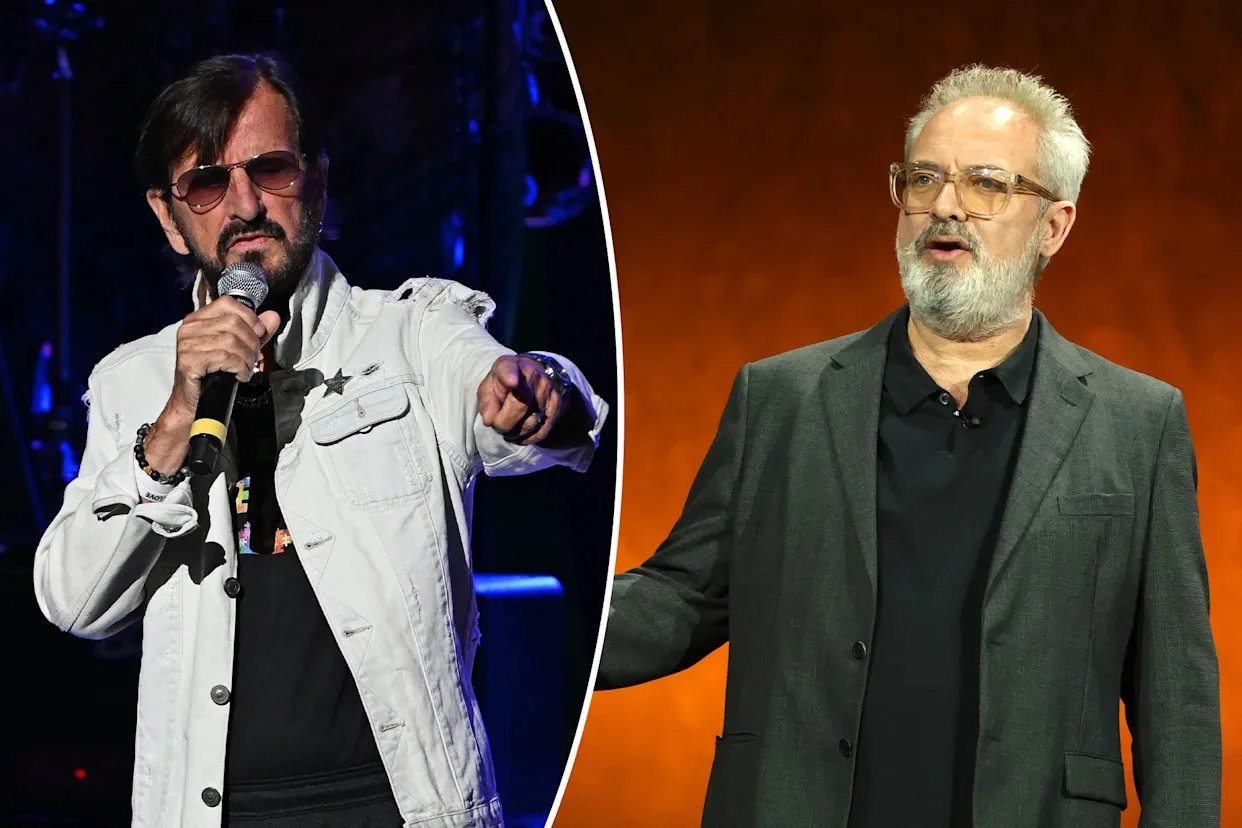
He had a writer — very good writer, great reputation, and he wrote it great, but it had nothing to do with Maureen and I,
Starr said, referring to his first wife, Maureen Starkey Tigrett.
That’s not how we were. I’d say, ‘We would never do that.’
Despite his criticism, Starr acknowledged Mendes’ willingness to incorporate his input and felt reassured once his edits were added to the project.
He’ll do what he’s doing, and I’ll send him peace and love,
he concluded.
Paul McCartney Reflects on Past Biopics’ Shortcomings
Starr is not alone in his cautious attitude toward Beatles portrayals on screen. Paul McCartney has also expressed dissatisfaction with how previous films have represented the band, particularly emphasizing the mishandling of their music and creative dynamics. While McCartney has remained neutral regarding Mendes’ forthcoming films, he has openly criticized earlier biopics for inaccurate storytelling.
For instance, during interviews related to his book Still the Greatest: The Essential Songs of The Beatles’ Solo Careers, McCartney discussed the 1994 movie Backbeat, one of the most well-known accounts of The Beatles’ early years. He highlighted how the film distorted his personality and the band’s collaborative process to fit a particular narrative.
One of my annoyances about the film Backbeat is that they’ve actually taken my rock ‘n’ rollness off me,
McCartney said. He also pointed out factual inaccuracies in the film’s portrayal of musical performances:
They give John the song ‘Long Tall Sally’ to sing and he never sang it in his life,
McCartney explained.
He further compared this to other music biopics that softened or altered real events.
But now it’s set in cement. It’s like the Buddy Holly and Glenn Miller stories. The Buddy Holly Story does not even mention Norman Petty, and The Glenn Miller Story is a sugarcoated version of his life. Now Backbeat has done the same thing to the story of The Beatles.
Challenges and Hopes for Mendes’ Beatles Films
The involvement and feedback from Starr and McCartney add considerable weight to the expectation of these new biopics. Their strong opinions and direct contributions suggest a dedication to authenticity that is uncommon in music biopics. The fact that Mendes allowed Starr to suggest changes and adapted the scripts accordingly demonstrates a commitment to honoring The Beatles’ legacy accurately.
While fans remain cautious given the band’s complex history and the frequent pitfalls of biographical films, the official approval and collaborative nature of this project set it apart. These factors may increase the likelihood that Mendes’ films will present a more nuanced and respectful depiction of the band that helped shape modern music.
Looking ahead, the Beatles’ story continues to evolve not only through these forthcoming films but also in the broader cultural memory, highlighting the enduring impact of the group and the ongoing discussion about how history is portrayed on screen.
Our Reader’s Queries
Q. What was Sam Mendes’s early life?
A. Mendes grew up in London with his mom, who wrote children’s books. His parents split up when he was five. He later attended the University of Cambridge, where he started a theater group with Tim Firth, a playwright.
