
The Marvel Cinematic Universe’s storyline heavily revolves around the Infinity Stones, which influenced character developments and served as key plot drivers across more than a decade, peaking in Avengers: Infinity War and Endgame. Surprisingly, James Gunn, the director of Guardians of the Galaxy, disclosed that he developed the film’s Infinity Stones lore in about three minutes without a detailed plan.
During an interview with GQ, Gunn shared that Marvel had not provided a strict framework. Instead, he was tasked to clarify what the Infinity Stones represented in the MCU, which led him to craft their cinematic mythology on short notice.
How a Quick Writing Session Shaped the Stones’ Role
Gunn explained that Marvel’s team approached him by saying,
“I knew there were Infinity Stones when they said, ‘You know, we have been thinking, and we think maybe some of these things have been Infinity Stones in different ways. And so, could you write up what the Infinity Stones mean?’”
—James Gunn, Director
The director revealed that there was no elaborate planning or extensive series bible to guide him. Instead, he spent just three minutes sitting down to connect the stones narratively, bridging what he described as
“the red thing and the blue thing.”
James Gunn confirmed,
“It was literally me sitting down for three minutes and writing that. And that’s then what became the rest of the Infinity Stones.”
—James Gunn, Director
This brief moment of creative input turned into the foundational lore that propelled the Infinity Saga forward in the MCU.
The Role of Guardians of the Galaxy’s Collector in Establishing Lore
The scene featuring Benicio del Toro’s character, the Collector, explaining the Infinity Stones was Gunn’s initial four-page “brain dump” that solidified the stones’ significance within the MCU. What began as a quick explanatory passage became the narrative backbone of multiple MCU films.
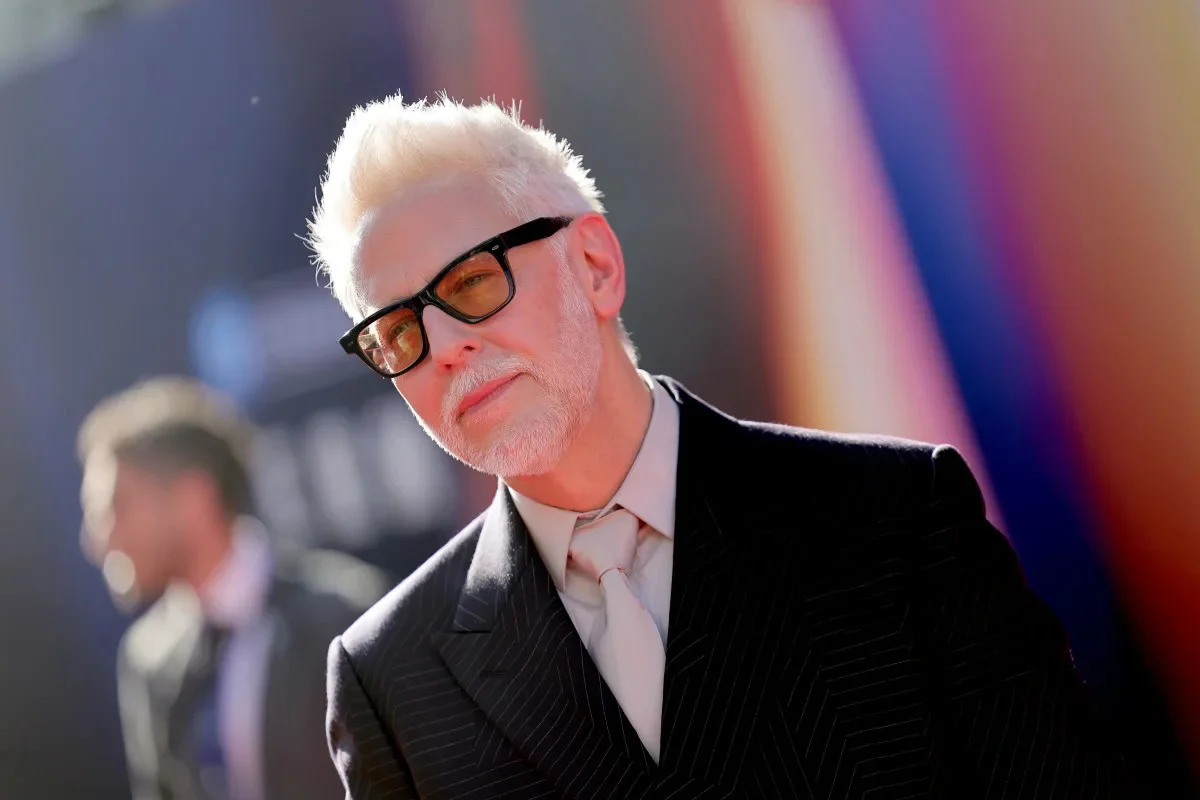
Gunn also highlighted the early flexibility Marvel had regarding the stones’ visual design and identity. For instance, the Power Stone’s color and classification were not immediately fixed.
He noted,
“The Power Stone in Guardians of the Galaxy was originally red. And then they decided the red thing in Thor: The Dark World was going to be the Reality Stone. So then [the Power Stone] became purple in post.”
—James Gunn, Director
This adjustment illustrates how the Infinity Stones were fluid concepts during the MCU’s formative stages rather than rigid elements predetermined by a central committee.
Significance of Gunn’s Contribution to the MCU
In retrospect, the Infinity Stones began as placeholders requiring coherence. Gunn’s rapid creation of their mythos connected disparate elements without Marvel’s intervention via a large creative team or extensive documentation. His ability to produce such influential lore in a matter of minutes underscores both the improvisational nature of early MCU worldbuilding and the director’s deep familiarity with comic book material.
This insight reveals how early MCU storytelling often depended on quick, intuitive decisions rather than long-term planning. As the Infinity Saga expanded, these initial ideas became cornerstones, proving Gunn’s brief contribution was vital to shaping the universe’s overarching narrative framework.
Our Reader’s Queries
Q. Why is James Gunn leaving Marvel?
A. In 2018, James Gunn lost his job with Marvel because some old, inappropriate tweets came to light. These tweets, which included jokes about pedophilia, rape, and abuse, upset many people. July of that year marked a significant turning point for the director.
Q. What is James Gunn’s religion?
A. The CGI version of Krypto the Superdog in Gunn’s 2025 Superman film was inspired by Ozu. Gunn grew up in a Catholic household and often discusses the importance of prayer in his life. However, he has also described himself as “in some ways, anti-religion.”
Q. What religion is James Gunn?
A. He grew up in a Catholic family in Manchester, a suburb of St. Louis, Missouri. He has five siblings: Sean, Matt, Brian, Patrick, and Beth. Sean is an actor, Matt writes about politics and acts, and Brian is a screenwriter. Their father’s family originally came from Ireland.
