
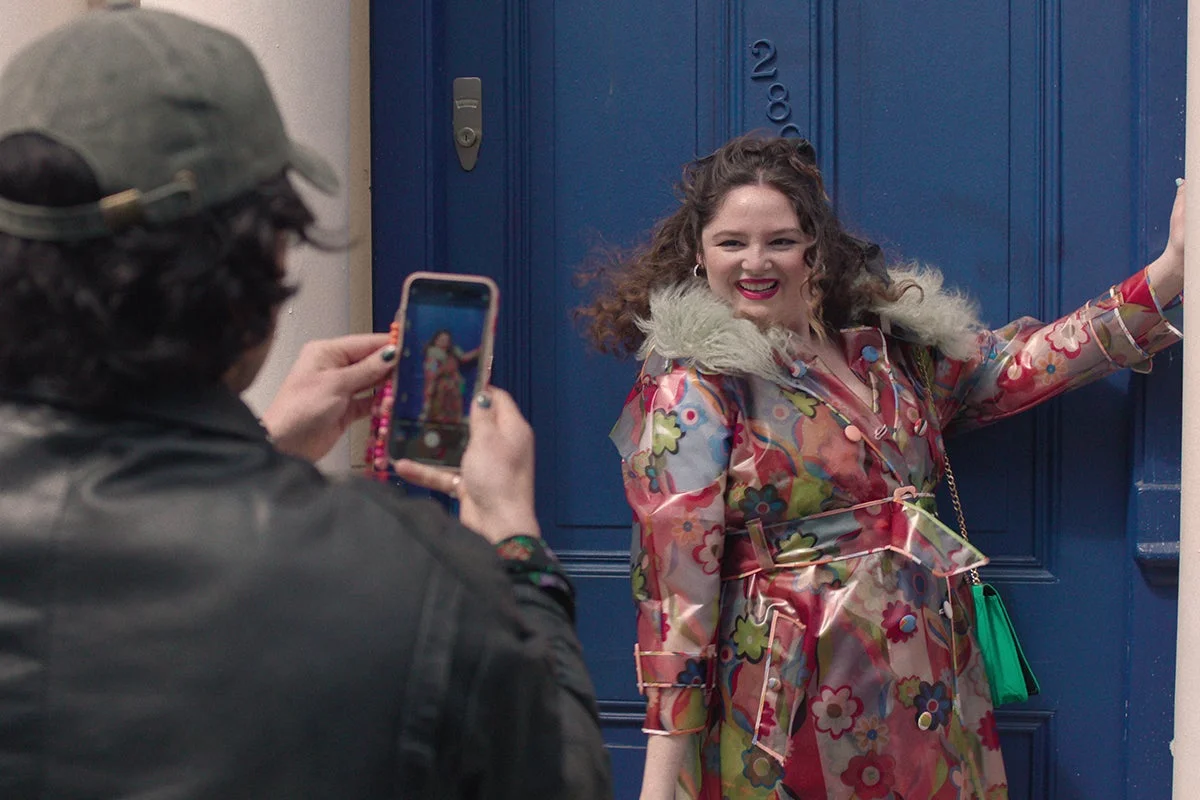
Lena Dunham’s Netflix series Too Much introduces viewers to a candid portrayal of sexual intimacy that defies conventional romance tropes. In the opening episode, Jessica, an American expat played by Megan Stalter, awkwardly attempts to seduce Felix, portrayed by Will Sharpe, revealing an unconventional approach to desire steeped in vulnerability and imperfect human connection. This nuanced depiction of intimacy is central to what makes Lena Dunham sex scenes analysis important in understanding how raw honesty can reshape on-screen sexuality.
Jessica’s teasing remark,
“I’m gonna take off my big dress.”
—Megan Stalter, encapsulates this blend of discomfort and charm. The exchange between Jess and Felix is not polished or traditionally seductive; instead, it is marked by hesitation, missteps, and a slow build of chemistry that feels deeply relatable. Felix’s cautious efforts and Jess’s pointed quip that he’s
“acting like he’s on a talk show.”
—Megan Stalter, expose their mutual uncertainty, making the intimacy feel authentic rather than idealized.
The Signature Awkwardness of Dunham’s Sexual Storytelling
Since her debut film Tiny Furniture, Lena Dunham has cultivated a distinctive style marked by the uncomfortable, the unfiltered, and the honest. Her portrayals of sex reject glamour in favor of exploring the flawed, sometimes embarrassing realities of human connection. Sex in her work is not sleek or effortless—it is prone to awkward pauses and odd dynamics that reveal the complexity beneath physical closeness.
This is evident in Dunham’s breakthrough HBO series Girls, which revolutionized television’s depiction of young women’s sexual experiences. The pilot’s scene between Hannah (Dunham) and Adam (Adam Driver) highlights the dysfunctional layers within their hookup. Their conversation oscillates between insecurity and domination, awkwardness and need, characteristic of Dunham’s interest in flawed desire. Adam’s joke about considering condom use and the interruption to play a “quiet game” after a rejected suggestion for anal sex reflects an uneasy negotiation of boundaries and expectations on both sides.
Sex as a Tool for Character Development
In Dunham’s storytelling, sex often serves as a narrative device revealing deep shifts in characters’ personalities and relationships. The evolution of Hannah across Girls seasons is a prime example. The HBO series uses intimate scenes not only to depict physical acts but to chart Hannah’s growth from needy approval-seeker to a woman asserting desire on her own terms. When she confidently declares
“I want you to make me cum,”
—Lena Dunham, the character marks a moment of self-possession that contrasts with her earlier vulnerability.
Similarly, Marnie, played by Allison Williams, depicts another trajectory shaped through sex scenes. Initially in a relationship that fizzles due to dissatisfaction, Marnie later finds a more raw form of pleasure in unexpected circumstances, such as her encounter with a cheating partner played by Ebon Moss-Bachrach. Her frankness about sexual satisfaction signals a break from traditional portrayals of women settling for less than fulfillment, emphasizing Dunham’s commitment to representing complex, imperfect human experiences.
Continued Exploration of Imperfect Intimacy in Dunham’s Recent Work
Dunham’s 2022 film Sharp Stick further explores the messiness of sexual relationships, focusing on the character Sarah Jo’s journey of sexual discovery after a hysterectomy. The scene where Sarah Jo loses her virginity to Jon Bernthal’s character, who has an emotional breakdown after premature ejaculation, typifies the Dunhamian blend of humor, awkwardness, and sincerity. Sarah Jo’s willingness to ask,
“Can we do it again?”
—Kristine Froseth, underscores a hopeful approach to intimacy despite its imperfections.
In contrast, Too Much injects elements of classic romantic comedy but retains Dunham’s penchant for presenting sex that is uncomfortable yet genuine. The presence of jarring moments—such as a character accused of
“sudden spasmodic movements [and] Tourette’s style outbursts”
—Megan Stalter, even during intimate scenes—adds depth to the portrayal, offering a layered depiction of human connection that acknowledges quirks and flaws.
Building Emotional Connections Through Unconventional Scenes
One memorable moment in Too Much involves Felix and Jess sharing a strange but affectionate act as he spits into her mouth during an early morning in bed. Far from vulgar, this scene follows Jess watching Felix sleep and feels less like a shock tactic and more like an intimate gesture that deepens their bond. This approach captures Dunham’s ability to find tenderness within intimacy that is not conventionally attractive, illustrating how sex scenes can reveal emotional truth rather than merely serve spectacle.
The Power of Sex Scenes as Narrative Instruments
Dunham’s work also demonstrates how awkward or uncomfortable sexual encounters can function as pivotal plot devices. For instance, a forced rendezvous with a pretentious director played by Andrew Scott in Too Much descends into cringe-worthy exchanges where the character demands Jess praise his films and utters lines like
“Direct me like you directed Tim Roth.”
—Andrew Scott. The scene is less about eroticism and more about exposing the power imbalance and Jess’s disgust, driving her back to the comparative security of her relationship with Felix.
Lena Dunham’s Influence on the Portrayal of Sex in Media
While not the first to use sex as a window into character psychology, Lena Dunham’s fearless choice to spotlight the unsexy, unfiltered aspects of sex has made a lasting impact since Girls premiered in 2012. Her work has broadened the narrative range for on-screen intimacy, emphasizing primal, disorganized, and even distressing realities over sanitized versions. This redefinition challenges audiences’ expectations and has arguably contributed to a wider acceptance of portraying flawed, human sexual experiences.
This unconventional representation is particularly relevant now, as the conversation around sex on screen shifts towards more inclusive and honest depictions that acknowledge the spectrum from pleasure to awkwardness, from connection to alienation.
Looking Ahead: What Dunham’s Work Means for Future Storytelling
As Dunham prepares new projects, including a forthcoming raunchy romantic comedy starring Natalie Portman and Mark Ruffalo titled Good Sex, it is clear her exploration of intimate moments will continue to push boundaries. Her portrayal of sexual experiences as anything but simple promises further challenging narratives that confront societal taboos around female desire, vulnerability, and empowerment.
For viewers seeking portrayals of intimacy that reflect the complexity, discomfort, and beauty of real-life sex, Dunham’s work remains a significant cultural touchstone. Too Much is currently available to stream on Netflix, offering another chapter in the ongoing dialogue about how modern media shapes our understanding of human connection through the most private of acts.
Our Reader’s Queries
Q. Did Lena Dunham have OCD?
A. Disorders such as OCD can often be controlled well, but they might return. Recognizing the return of unwanted habits is the tough first step to handling them once more. This topic is particularly delicate because Lena Dunham has personally faced OCD in her life.
Q. What is Lena Dunham diagnosed with?
A. In 2019, Lena shared that she has Ehlers-Danlos syndrome (EDS). This came after paparazzi took pictures of her using a cane.
She explained, “When Ehlers-Danlos flares up, I need more help than just from my friends, so thanks to my helpful cane!”
Q. Did Lena Dunham actually have OCD?
A. Dunham, who created and wrote the show, experienced OCD as a child. She is not unique in this situation. About 1 in 100 adults, nearly 3 million people in the U.S., live with OCD. This condition involves persistent, unwanted thoughts and repeated behaviors that can’t be controlled, often causing anxiety.
Q. Is Lena Dunham a Nepo baby?
A. The show featured actors like Allison Williams, Jemima Kirke, and Zosia Mamet, but faced criticism for having mainly white cast members. Many of these actors were later called “nepo babies.” In 2012, Dunham explained she has Jewish and WASP heritage and aimed to avoid “tokenism” in the casting.
