
Al Pacino’s legacy as one of cinema’s defining actors is almost inseparable from his portrayal of gangster characters, which have left an indelible mark on the film industry. From his early days in 1969’s Me, Natalie to his continued presence in films like the upcoming Dead Man’s Wire, Pacino’s versatility spans genres, but his iconic gangster roles remain a cornerstone of his career.
This article ranks Al Pacino’s most memorable gangster performances, highlighting his incredible range and nuanced portrayals that shaped the crime thriller genre. Throughout this journey, Pacino’s characters—including Michael Corleone and Tony Montana—have inspired generations and defined the archetype of cinematic mobsters.
A Review of Pacino’s Role as Aldo Gucci in the Drama House of Gucci (2021)
Directed by Ridley Scott, House of Gucci (2021) dramatizes the turbulent saga behind the Gucci fashion empire, inspired by Sara Gay Forden’s biography The House of Gucci: A Sensational Story of Murder, Madness, Glamour. Featuring a star-studded ensemble with Lady Gaga, Adam Driver, and Salma Hayek, the film revolves around Patrizia Reggiani’s pursuit to control her husband’s family business, culminating in a brutal murder.
Although Ridley Scott’s direction typically guarantees rich historical detail and cinematic grandeur, House of Gucci adopts a notably detached narrative style that undermines the emotional intensity of the story. Despite this, Al Pacino’s portrayal of Aldo Gucci stands out. Pacino infuses the role with his trademark speaking cadence, magnetic screen presence, and expressive gaze, ensuring his scenes resonate.
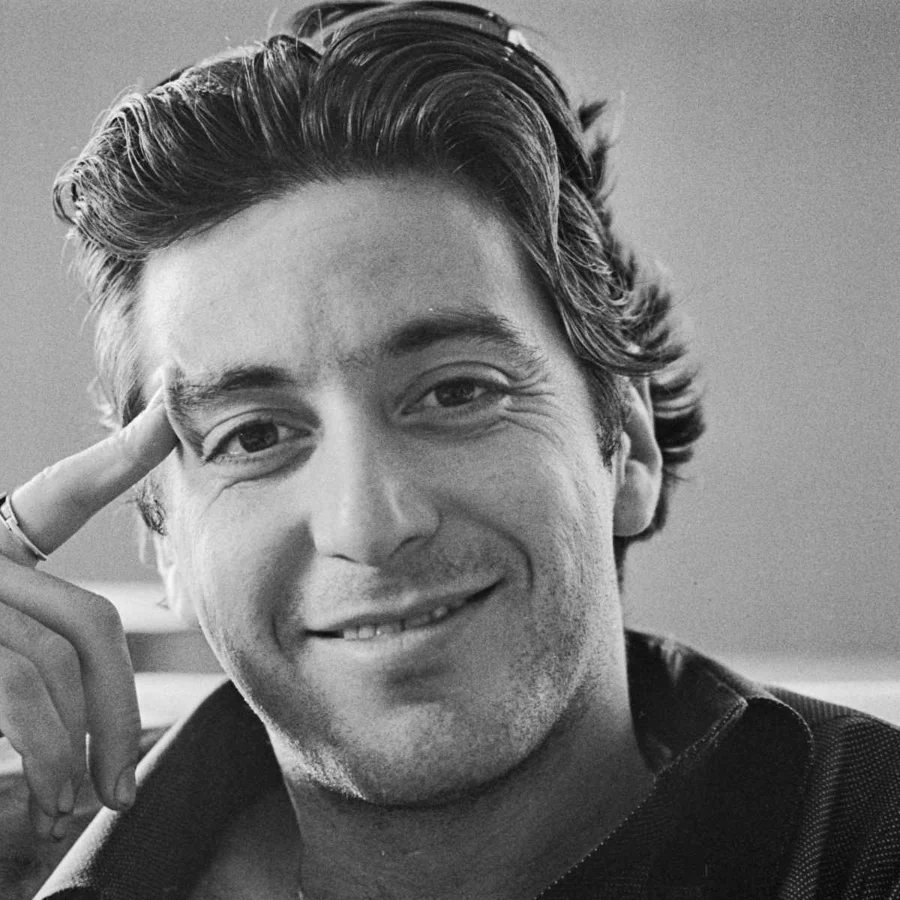
Al Pacino as Willy Bank in the Heist Thriller Ocean’s Thirteen (2007)
Ocean’s Thirteen, directed by Steven Soderbergh, continues the adventures of Danny Ocean and his team of con artists as they seek revenge against casino magnate Willy Bank, played by Al Pacino. After Bank double-crosses one of their own, the crew reunites to sabotage the grand opening of his casino in Las Vegas.
The Ocean’s series is notable for its dynamic and talented ensemble casts, featuring stars like George Clooney, Brad Pitt, and Matt Damon. Pacino’s casting as the villainous Bank was a natural fit, echoing his long-standing association with criminal masterminds. His presence adds a formidable gravitas to the final installment’s antagonist role.
Playing the Dual Role of Menace and Charm: Al Pacino as Big Boy Caprice in Dick Tracy (1990)
In the 1990 film Dick Tracy, Warren Beatty stars as the iconic comic strip detective who battles crime boss Alphonse “Big Boy” Caprice, played by Al Pacino. The movie blends crime drama with the stylistically vibrant visuals reminiscent of its comic origins, with Madonna as the alluring Breathless Mahoney.
While the campy tone distinguishes it from Pacino’s earlier gangster roles, his portrayal received critical acclaim, culminating in a Best Supporting Actor Academy Award nomination. Pacino expertly balances the character’s sinister and comic elements, which makes Big Boy Caprice an unforgettable antagonist in his career.
Al Pacino’s Return as Michael Corleone in The Godfather Part III (1990)
Released on December 25, 1990, The Godfather Part III explores Michael Corleone’s attempts to legitimize the Corleone family’s operations in 1979, while wrestling with his painful past and mentoring a protege across New York and Italy. Although it is generally considered the weakest installment of Francis Ford Coppola’s celebrated trilogy, the film retains significant storytelling power, particularly through Pacino’s performance.
While Pacino did not receive an Oscar nomination for this role, the movie earned several including Best Picture and Best Director. His portrayal of Michael’s bitterness and internal conflict delivers a powerful conclusion to the legendary character’s arc, emphasizing themes of redemption and legacy.
Collaboration with Martin Scorsese: Al Pacino as Jimmy Hoffa in The Irishman (2019)
The Irishman dramatizes Frank Sheeran’s involvement with the mafia and the mysterious disappearance of labor leader Jimmy Hoffa, played by Al Pacino. Adapted from Charles Brandt’s nonfiction book I Heard You Paint Houses, the film traces decades of crime and politics from the 1950s to the 1970s in Pennsylvania.
Despite Pacino’s long career in crime films, his collaboration with Scorsese in 2019 was a momentous event. Pacino brings a blend of intensity and charisma to Hoffa, delivering a standout scene where his character fiercely commands loyalty, building on the gangster persona that Pacino has perfected over decades.
Iconic Representation of Tony Montana in Scarface (1983)
Brian De Palma’s Scarface is a landmark crime film featuring Al Pacino as Tony Montana, a Cuban refugee who rapidly ascends Miami’s drug world to build a sprawling criminal empire. Based loosely on the 1929 novel, the film captures Montana’s brutal, ambitious rise and violent downfall.
While Pacino had already gained fame as Michael Corleone, Scarface cemented his status as a pop culture icon. The film’s memorable lines and scenes have inspired countless homages and parodies. Despite controversy over its glamorization of violence and drugs, Pacino’s portrayal of Montana remains one of the most influential in cinematic history.
Portraying Vulnerability: Al Pacino as Benjamin “Lefty” Ruggiero in Donnie Brasco (1997)
In Donnie Brasco, directed by Mike Newell, Pacino plays Benjamin “Lefty” Ruggiero, a veteran mobster mentoring Johnny Depp’s undercover FBI agent infiltrating the mafia. The film is based on real events and delves into the psychological conflict between loyalty and identity faced by both characters.
This film offers a mature portrayal of organized crime, diverging from Pacino’s usual larger-than-life characters. Lefty is insecure and isolated, embodying the loneliness concealed beneath the gangster facade. Pacino displays remarkable subtlety, humanizing a criminal who is far from glamorous or imposing.
Al Pacino’s Subdued Performance as Carlito Brigante in Carlito’s Way (1993)
Carlito’s Way follows Puerto Rican ex-con Carlito Brigante, portrayed by Pacino, who desires to escape a life of crime after prison but is pulled back by circumstances in 1970s New York City. Directed by Brian De Palma, the film paints a gritty portrait of loyalty and desperation.
Though overshadowed by Scarface, this film showcases Pacino’s ability to deliver a controlled and nuanced performance, matching the movie’s somber tone. Carlito’s internal struggle and sense of impending doom are conveyed with restraint, illustrating a more contemplative dimension of Pacino’s gangster roles.
The Breakthrough Role: Michael Corleone in the Original The Godfather (1972)
The Godfather narrates the story of the Corleone crime family from 1945 to 1955. Michael Corleone, initially reluctant to join his family’s illicit affairs, evolves into a ruthless leader avenging an assassination attempt on his father, Vito Corleone, portrayed by Marlon Brando.
Francis Ford Coppola’s masterful direction and the film’s compelling script made it a landmark in gangster cinema, winning Brando the Academy Award for Best Actor. Al Pacino’s breakout performance as Michael distinguished him as a leading man, capable of holding his own alongside Brando and earning a pivotal role in the subsequent films.
Defining a Legacy: Al Pacino as Michael Corleone in The Godfather Part II (1974)
The 1974 sequel, The Godfather Part II, extends the Corleone saga by juxtaposing Vito Corleone’s immigrant beginnings with Michael Corleone’s ruthless expansion of the family empire during the 1950s. The film explores themes of power, betrayal, and legacy across New York, Las Vegas, Hollywood, Cuba, and Sicily.
Often acclaimed as one of the greatest films ever made, this installment secured Pacino’s place in cinematic history with his deeply layered portrayal of Michael. His nuanced exploration of ambition, regret, and isolation set a new standard for gangster performances and influenced countless actors and filmmakers.
Al Pacino’s diverse and powerful portrayals of gangsters embody the complex humanity behind notorious criminals, showcasing his resilience and dedication to the craft. His work across these films continues to inspire both audiences and aspiring actors, ensuring his legacy endures in the landscape of crime cinema.
