
As Inception marks its 15th anniversary, it continues to captivate audiences with its innovative storytelling and mesmerizing visuals, a testament to Christopher Nolan’s reputation as an auteur filmmaker. The movie, released in 2010, blends mind-bending science fiction with emotional depth, reflecting years of diligent creation and vision from Nolan and his team.
Christopher Nolan spent over eight years developing the screenplay for Inception, crafting the complex narrative that would redefine the sci-fi genre. After finishing his 2002 film Insomnia, Nolan pitched the idea to Warner Bros., who approved the project even though the script was still incomplete. Instead of rushing, Nolan chose to write it carefully as a spec script, expecting a few months to finish but ultimately dedicating nearly a decade while simultaneously rebooting the Batman franchise.
Character Inspirations and Script Collaborations
Inception represented Nolan’s first completely original screenplay since his debut film Following in 1998. The characters were inspired by real-life film production roles encountered by Nolan. Cobb was envisioned as the director, Arthur the producer, Ariadne the production designer, and Eames the actor, with Saito embodying the overseeing studio. This unique grounding added to the film’s layered storytelling.
Leonardo DiCaprio was Nolan’s initial and unwavering choice for the lead role of Dom Cobb. DiCaprio’s involvement went beyond acting; he collaborated closely with Nolan during script development, fine-tuning the screenplay to enhance clarity and maintain the integrity of the characters and narrative. Nolan acknowledged this vital input, stating:
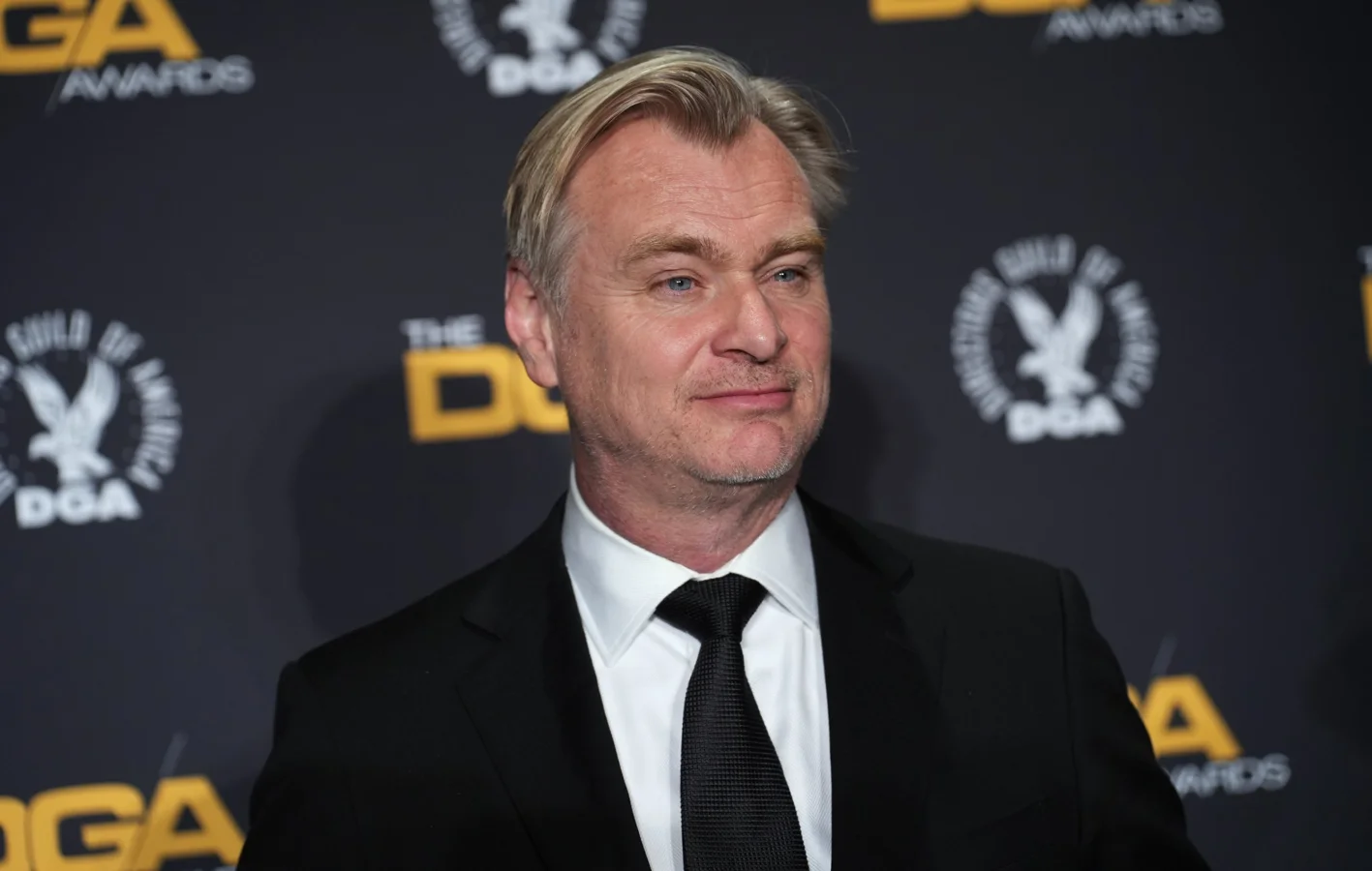
“He made some extraordinary contributions to the script and really challenged me to make the script clear, but also to follow its interior logic and really be true to the essence of the characters and the rules we set out.”
—Christopher Nolan, Director
Casting Decisions and Actor Contributions
The role of Saito was crafted exclusively for Ken Watanabe, a seasoned actor renowned for his samurai roles in Japan, including his acclaimed performance in The Last Samurai. Having previously collaborated on Batman Begins, Nolan wrote Saito’s part to expand Watanabe’s screen presence.
Joseph Gordon-Levitt replaced James Franco as Arthur, bringing his background from TV and indie films into this complex role. During filming, Gordon-Levitt performed most of his own stunts, impressing the production team with his dedication and skill. He arrived at his audition dressed in a full suit, unknowingly matching his character’s wardrobe perfectly.
French actress Marion Cotillard, who took on the role of Mal after Kate Winslet declined, considers this one of her favorite roles. Cotillard’s prior acclaim includes an Academy Award-winning performance as Edith Piaf, whose signature song “Non, je ne regrette rien” became a key thematic element in the film. Nolan initially contemplated removing the track to avoid speculation, but composer Hans Zimmer persuaded him to keep it, enhancing the emotional resonance.
Tom Hardy, then an emerging actor known for roles in Star Trek: Nemesis and RocknRolla, was chosen by Nolan to embody Eames. Hardy’s performance was marked by his ability to quickly grasp the character’s nuances and infuse a playful, cheeky charm. Nolan explained:
“He can inhabit a role. He saw the potential of the character right away and brought a cheeky quality to his performance.”
—Christopher Nolan, Director
Hardy credited Nolan himself as an inspiration for refining his portrayal during filming, highlighting the director’s influence on the performances.
Innovative Practical Effects Behind Inception’s Visuals
Inception’s production kept plot details tightly under wraps, with Nolan describing it as a contemporary science fiction story
“set within the architecture of the mind.”
Influenced by late ’90s films like The Matrix, Dark City, and The 13th Floor, Nolan aimed for a film filled with spectacular special effects and action sequences without relying heavily on digital effects. Instead, the team emphasized practical effects, inventive set designs, and elaborate stunt work to create unforgettable imagery such as the Penrose stairs, rotating hallways, and zero-gravity fight scenes.
Despite winning an Oscar for Best Visual Effects, the film used only around 500 VFX shots, a modest number compared to the thousands typical of large-scale productions, underscoring Nolan’s preference for tangible effects and real environments.
Hans Zimmer’s Unique Musical Approach
Unlike most films that use a temporary score to guide tone during editing, Hans Zimmer took an unconventional route by composing the score simultaneously as Nolan filmed scenes. The soundtrack is notable for its heavy electronic influence and features Johnny Marr, former guitarist of The Smiths, playing evocative Ennio Morricone-inspired segments on a twelve-string guitar. This approach helped shape the movie’s intense and atmospheric mood organically during production.
The Meaning Behind the Ambiguous Ending
The film’s famous final scene, where Cobb’s spinning top wobbles faintly before the screen cuts to black, was designed with intentional ambiguity. Nolan emphasized that the scene’s emotional weight was more significant than solving the puzzle of reality. He stated:
“The real point of the scene—and this is what I tell people—is that Cobb isn’t looking at the top. He’s looking at his kids. He’s left it behind. That’s the emotional significance of the thing.”
—Christopher Nolan, Director
This perspective prioritizes emotional closure over definitive answers, leaving viewers to contemplate the nature of Cobb’s reality while focusing on his reunion with his children.
Box Office Impact and Critical Acclaim
Inception was made with a $160 million budget and grossed $839.4 million worldwide, ranking as the fourth-highest-grossing film of 2010 and standing as one of Nolan’s most successful movies after The Dark Knight series and Oppenheimer. For Leonardo DiCaprio, it remains his second-highest box-office success behind Titanic.
The film received widespread critical praise, earning an 87% rating on Rotten Tomatoes based on 368 reviews and an average score of 8.2 out of 10. Rolling Stone’s Peter Travers described it as a “wildly ingenious chess game” that “results in a knockout,” while Empire magazine awarded it five stars, likening it to
“Stanley Kubrick adapting the work of the great sci-fi author William Gibson,”
celebrating Nolan’s originality and vision.
At the Academy Awards, Inception garnered eight nominations, winning four: Best Cinematography, Best Visual Effects, Best Sound Editing, and Best Sound Mixing. It also won multiple BAFTA Awards, including Best Production Design, Best Sound, and Best Visual Effects, cementing its legacy within both the sci-fi genre and mainstream cinema.
Enduring Legacy of Inception 15 Years Later
Fifteen years after its release, Inception continues to be recognized by film critics and cinephiles alike as a groundbreaking science fiction film and a standout achievement in Christopher Nolan’s career. Its inventive narrative structure, rich thematic layers, and technical mastery have contributed to its lasting influence and admiration.
The film’s blend of emotional depth and intellectual challenge keeps audiences returning for new interpretations, proving its timeless appeal in the landscape of modern cinema.
