
Taylor Sheridan, the creator of the widely popular series Yellowstone and its expanding universe, resists simple political categorization despite his show‘s acclaim among conservative audiences. Known for its portrayal of rugged ranchers and frontier justice, Yellowstone has been called a hallmark for right-leaning viewers, yet Sheridan himself rejects being labeled as either Republican or Democrat. His political views, much like the layered storytelling in his series, refuse to align with traditional partisan definitions.
Sheridan’s shows showcase themes that often resonate with conservative fans — gun rights, masculinity, and loyalty to the land — but underlying these are narratives tackling issues such as Native American displacement, corporate exploitation, and environmental concerns. These contradictions signal a more nuanced political perspective that challenges viewers’ assumptions.
Exploring the contradictions in Sheridan’s political identity
Sheridan’s public statements highlight the difficulty he has in fitting into any political category. Despite his alignment with rural American settings and archetypes, he has expressed controversial stances that do not comfortably rest in conservative orthodoxy. For example, during a 2017 press tour for the film Wind River, Sheridan was reported to have called for the impeachment of then-President Donald Trump, a moment that sparked surprise given the conservative leanings of Yellowstone’s fan base.
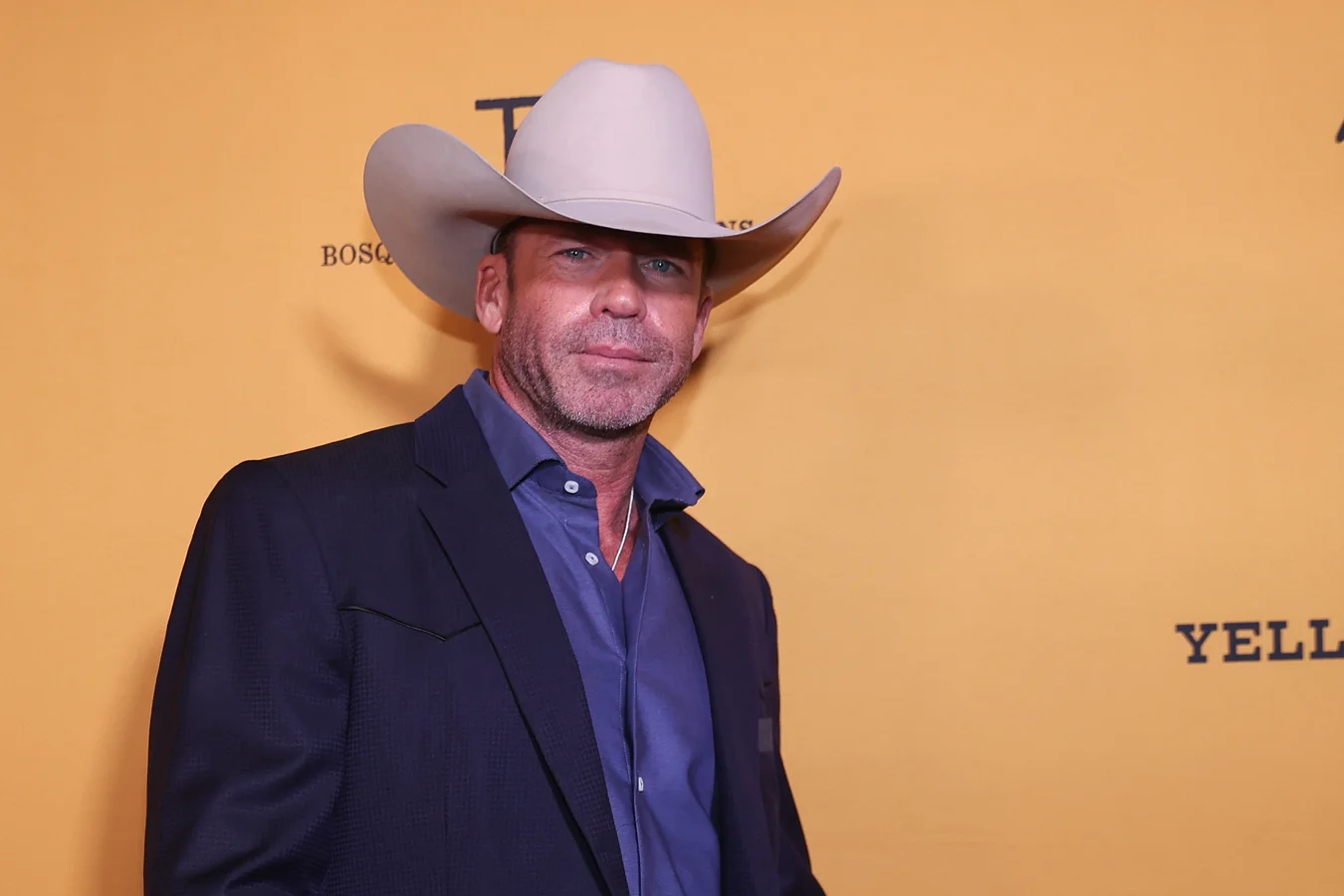
Can we just impeach that motherf**er right now?
—Taylor Sheridan
He later claimed to have no clear recollection of the comment, attributing it to exhaustion rather than political conviction. Nonetheless, this incident reveals the dissonance between public expectations of Sheridan’s views and his own unpredictable political expressions.
Commentators like The Atlantic have characterized the ethos of Yellowstone as a blend combining anti-capitalist skepticism, libertarian support for ranchers, and conservative environmentalism, producing a politically ambiguous mix far from solid party platforms.
mishmash of generally anti-capitalist, anti-modernist populism; pro-rancher libertarianism; conservative environmentalism.
—The Atlantic
Insight into Taylor Sheridan’s personal political perspectives
On platforms like The Joe Rogan Experience, Sheridan has openly criticized the failures of the current political and economic system, focusing on issues such as climate change and the damaging effects of unchecked capitalism. These topics are typically associated with progressive discourse, which further complicates any effort to neatly place his views on a traditional political spectrum.
Moreover, Sheridan has voiced his disdain for what he perceives as out-of-touch liberal elites who fail to communicate effectively with rural Americans struggling with economic hardship.
Help me, Mr. Harvard-f—ing-Ph.D., convince the man who’s losing his ranch, who can’t afford his kid’s college. He has no health care, he has no f—ing clue what Obamacare is. He’s never seen a social security f—ing office, his only concept of federal government is taxes. How do I convince that guy he’s privileged? You won’t do it
—Taylor Sheridan
This criticism suggests Sheridan’s frustration lies less in political ideology and more in messaging that alienates the people directly impacted by systemic failures. He refuses to champion any side unreservedly, portraying instead a deep skepticism of simplified political narratives.
Why Sheridan rejects the label of Yellowstone as a conservative show
Despite Yellowstone’s embrace by right-leaning audiences, Sheridan disputes claims that the show promotes any one political ideology. He stresses that the series presents broader social issues such as the historical and ongoing exploitation of Native Americans, corporate land grabs, and the breakdown of traditional communities. In his words:
The show’s talking about the displacement of Native Americans and the way Native American women were treated and about corporate greed and the gentrification of the West, and land-grabbing. That’s a red-state show?
—Taylor Sheridan
The show’s surface features evoke strong Americana imagery—cowboys, rugged landscapes, and traditional masculinity—but its stories deeply engage with complex social and political themes. Critics like Ross Douthat of The New York Times have maintained that Yellowstone is
“the most red-state show on television,”
underscoring its popularity among conservative viewers. Yet others, including Daniel Fienberg of The Hollywood Reporter, describe Yellowstone as a more centrist drama that explores traditional right-leaning genres without full partisan commitment.
Instead, Yellowstone is just a somewhat centrist drama in a genre that has traditionally leaned very slightly to the right. If TV shows could vote, Yellowstone and Emmy favorite (and, according to Netflix, massive hit) Ozark would probably support the same candidates.
—Daniel Fienberg, The Hollywood Reporter
Taylor Sheridan’s work explores moral ambiguity beyond politics
Sheridan’s stories, including Yellowstone, Lioness, and Tulsa King, all center on characters grappling with flawed systems and impossible choices. His protagonists often find themselves caught in ethical gray areas, making decisions that defy simple labels of right or wrong. This complexity reflects Sheridan’s own refusal to claim a defined political identity.
For example, the series Lioness critiques American foreign policy, depicting covert operations and unintended consequences in a world involving oil wars and black ops. Within Lioness, characters express cynicism about the slow pace of change and the human toll of global conflicts:
All I changed was oil prices.
—Lioness Character
What makes me sick is how little will change.
—Lioness Character
This morally fraught storytelling echoes Sheridan’s earlier work on Sicario, where the main character Alejandro’s violent transformation feels tragic but comprehensible. Sheridan has made it clear that his politics are purposefully hard to define:
If anyone can understand my politics, I’ve failed.
—Taylor Sheridan
He has also asserted a grim view on the consequences of drug-related crime:
There is blood on the hands of every drug delivered illegally.
—Taylor Sheridan
His narratives do not offer simple solutions or political manifestos. Instead, they challenge viewers to confront uncomfortable realities and complex social problems without clear heroes or villains.
Implications of Sheridan’s political ambiguity on his audience and industry
Sheridan’s refusal to align with traditional political camps leaves his audience and critics divided. Some conservatives embrace Yellowstone as emblematic of their values, while progressives acknowledge its critical engagement with systemic injustice. Sheridan’s work resists being co-opted by either side, reflecting a more fractured and less ideologically driven American landscape.
This ambiguous stance also raises questions about how Sheridan’s work will be perceived by the entertainment industry at large. While Yellowstone has become an “outsider darling” within conservative circles, its complex themes may complicate broader recognition and award success. The series’ resistance to political labeling may therefore both enhance its distinctiveness and hinder its mainstream embrace.
In a cultural environment increasingly demanding clear political allegiances, Sheridan’s ability to maintain an apolitical stance through storytelling remains uncertain. Whether his future projects will continue exploring moral ambiguity or shift toward more overt statements is a question that viewers and critics alike will be watching closely.
Our Reader’s Queries
Q. Why did Taylor Sheridan quit acting?
A. The actor, about to become a father for the first time, said he changed careers mainly because of family life.
Q. How much did Taylor Sheridan pay for the 6666?
A. In 2022, he and some investors bought the famous 6666 Ranch for an astonishing $320 million. Since the ranch was already used for filming the show Yellowstone, Taylor decided to rent it to Paramount. Reports say the rental rate was $50,000 a week.
Q. Why is Taylor Sheridan so rich?
A. Although he valued his independence and preferred freelancing over being tied to one company, Sheridan chose to expand his contract with Paramount Global. This decision reportedly earned him $200 million, which was quite beneficial.
