
During a recent interview with Entertainment Weekly, Michael Douglas revisited the famously unusual virtual reality scene from his 1994 thriller Disclosure, acknowledging he rarely revisits movie discussions online. The film, which debuted nearly three decades ago, featured a virtual reality sequence that anticipated technologies like Oculus Rift and Apple Vision Pro long before their existence.
Disclosure, directed by Barry Levinson and based on Michael Crichton’s novel adapted by Paul Attanasio, revolves around a sexual harassment case with a twist—the victim, played by Douglas, is harassed by his female boss, portrayed by Demi Moore. The story unfolds within DigiCom, a Seattle-based tech company, and blends erotic thriller elements with corporate intrigue.
The Plot Behind the VR Sequence and Corporate Conspiracy
Douglas’s character, Tom Sanders, is an executive in DigiCom’s CD-ROM division, preparing for an upcoming merger while happily married. The tension starts when his ex-girlfriend, Meredith Johnson (Demi Moore), lands the promotion he desired and then accuses him of sexual harassment after a tense encounter at the office. What seems like a simple legal dispute escalates into a deeper conspiracy involving Donald Sutherland’s character and the Malaysian government.
To defend himself, Tom accesses DigiCom’s mainframe using a virtual reality headset, plunging into a digital representation of the company’s data. The VR scene features Tom navigating through cyberspace corridors, avoiding virtual pitfalls as he searches for encrypted files. Meanwhile, Meredith appears as a green wireframe avatar, represented with feminine curves but an expressionless face, leading to an unusual cyberspace confrontation typical of sci-fi from that era.
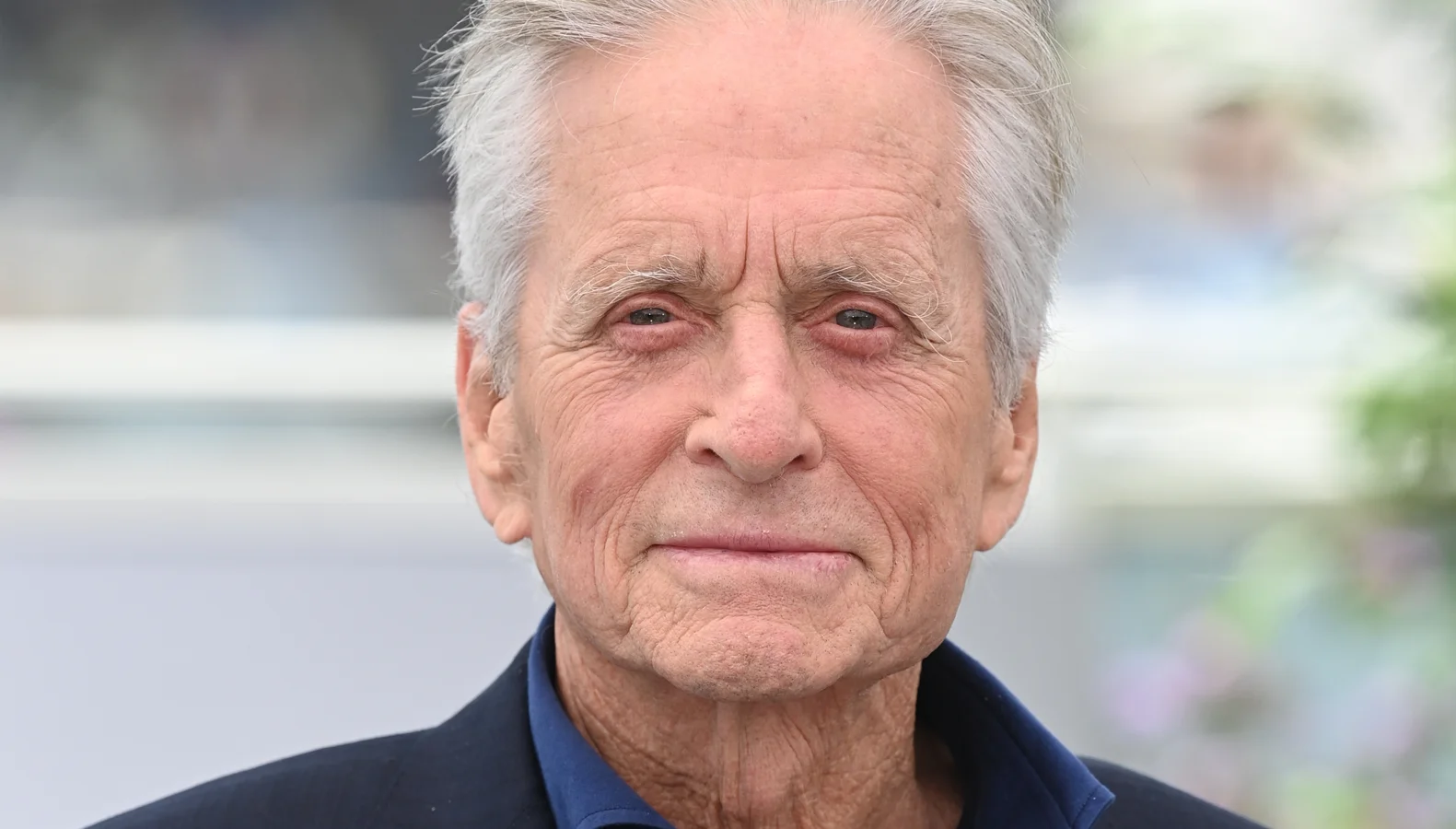
The VR Experience in Disclosure: Ahead and Behind Its Time
This digital showdown includes a flurry of images and synthesizer music composed by Ennio Morricone, adding a surreal layer to the scene. Despite its ambition, the VR segment has a somewhat awkward look by today’s standards, not fully capturing the potential of the technology it hinted at.
Douglas reflected on the film’s approach to both workplace harassment and technology, noting the film’s playful take on a serious issue.
“I’m a current events kind of guy,”
he said.
“A lot of the films I did [kept] up with current events. That one was a little mischievous, with the abusive female boss. But pictures like One Flew Over the Cuckoo’s Nest, The China Syndrome, and Falling Down — these were all [about] issues. Now that you mention the [virtual reality] aspect, you’re absolutely right.”
—Michael Douglas, Actor
While Disclosure captured the idea of virtual reality long before it became mainstream or practical, its premise of using VR for corporate espionage remains more fiction than foresight. Additionally, its storyline involving sexual harassment reversed the typical victim narrative in a way that would not reflect the complexities seen in workplace issues in later years.
Context of VR in Cinema and Media Preceding Disclosure
Disclosure’s virtual reality moment was not the first of its kind. Films such as Tron, The Lawnmower Man, Brainstorm, and even some Star Trek episodes explored VR concepts before 1994. Notably, the TV series Murder, She Wrote featured the episode A Virtual Murder in 1993, where the protagonist, Jessica Fletcher, engaged with virtual reality themes a year before Disclosure’s release.
Such early media portrayals contributed to shaping public imagination about virtual reality before the technology could catch up with fiction, making Disclosure’s attempt both a product of its time and a glimpse into the future tech landscape.
The Enduring Legacy of Disclosure’s VR Scene
Despite its cheesy retro aspects, the virtual reality scene in Disclosure remains a topic of conversation among cinephiles and tech enthusiasts, illustrating how Hollywood has grappled with visualizing emerging technologies. The film’s blend of sexual politics and corporate intrigue combined with its pioneering VR depiction makes it an intriguing artifact of 1990s cinema.
Michael Douglas’s reflection shows pride in having participated in a film that was “a little mischievous” but also ahead of its time in imagining digital environments. As virtual reality continues to evolve, such early portrayals provide a cultural context for how the concept entered mainstream awareness and storytelling.
Our Reader’s Queries
Q. Did Michael Douglas have HPV?
A. Michael Douglas recently shared that his throat cancer was due to HPV, a sexually transmitted infection. This has brought attention to a crucial men’s health concern.
Q. Why did Catherine Zeta-Jones split from Michael Douglas?
A. Michael wanted to be alone and find peace. In contrast, Catherine began craving freedom, new ideas, and a way to express herself. The emotional gap between them widened, especially after the pandemic forced them to spend a lot of time together.
Q. How old was Catherine Zeta-Jones when she married Michael Douglas?
A. They got married on November 18, 2000, at the Plaza Hotel in New York City. At their wedding, Michael was 56, and Catherine was 31 years old. The lavish celebration cost around $1.5 million and had famous guests like Sean Connery, Jack Nicholson, and Steven Spielberg.
Q. How much older is Michael Douglas than his wife?
A. Michael Douglas and Catherine Zeta-Jones have a 25-year age difference. Despite being from separate generations, they both celebrate their birthday on September 25.
