
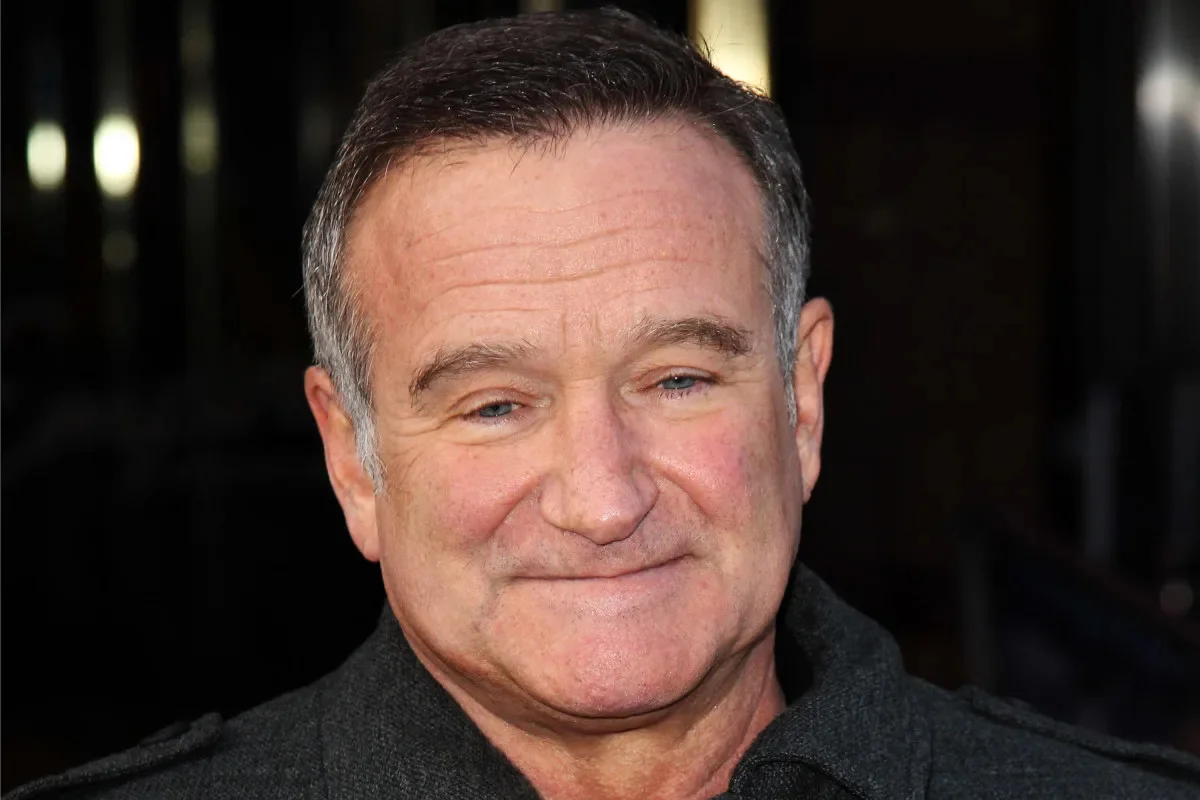
Matthew Lawrence, known for his role as one of the children cared for by Robin Williams’ character in the 1993 film Mrs. Doubtfire, has expressed a heartfelt wish to revive the late comedian’s voice through artificial intelligence. Lawrence shared his vision during a recent interview, emphasizing his hope to create a meaningful tribute that captures Williams’ iconic voice for a new generation. Williams passed away in 2014 at the age of 63.
Inspired by Past Work, Lawrence Sees a Unique Opportunity
The idea came to Lawrence after revisiting a commercial featuring Robin Williams, in which the actor used a computerized voiceover. Lawrence saw this as a foretelling moment, linking it to current developments in AI technology. He said, discussing the commercial,
“It’s kinda like this very contemporary, modern, almost sort of foreshadowing of what’s going on commercial that he did, where he did this computerized voiceover,”
adding that,
“during his passing, with the AI coming out, I’m like, ‘Man, he’s gotta be the voice of A.I. He’s gotta be the voice in something.’”
A Vision to Preserve an Iconic Voice with Family Approval
Respect for Williams’ family remains paramount in Lawrence’s plan, who expressed that any AI project would only proceed with their consent. He explained,
“I would love — now, obviously, with the respect and with the okay from his family — but I would love to do something really special with his voice because I know for a generation, that voice is just so iconic,”
and continued,
“It’s not just the fact that I knew him and worked with him and so it’s in my head — it’s in everybody’s head. And it would be so cool.”
Potential Uses for Robin Williams’ AI Voice
Lawrence imagines the possibilities are nearly limitless if Williams’ voice could be revived through AI. One example he gave was the use of the voice for everyday technologies like giving driving directions, which would bring a unique blend of familiarity and warmth. He remarked enthusiastically,
“It would be Robin! It would be so cool. I’m telling you.”
Personal Reflections on Working with Robin Williams
Reflecting on his experiences on the set of Mrs. Doubtfire, Lawrence highlighted the profound impact Williams had on him both as an actor and as a person. He recalled the lessons Williams imparted about compassion and empathy, saying the late star taught him
“the type of compassion you need to have for people,”
and not to
“judge until you walk in someone else’s shoes.”
Lawrence also described Williams as
“definitely the most brilliant artist I’ve ever worked with,”
noting that the actor combined immense talent with humility and compassion despite personal struggles.
“He really quantified what it was to be a real artist for me in the sense that he was definitely, and I worked with some great people, and he was definitely the most brilliant artist I’ve ever worked with. But on top of that, he had the compassion, he had the humility, and he also had these things that he struggled with.”
Looking Ahead: Honoring Robin Williams Through Technology
As artificial intelligence advances, Lawrence’s hope to create a respectful and heartfelt homage to Robin Williams signals a new frontier in preserving the legacies of beloved artists. By combining cutting-edge technology with family approval and deep personal respect, this project could offer fans a unique way to connect with Williams’ enduring spirit. With continued dialogue among Williams’ family and collaborators, the future may hold a truly special tribute that introduces his iconic voice to audiences in innovative ways.
Our Reader’s Queries
Q. Did Robin Williams have a disability?
A. Before he was diagnosed with Lewy Body Dementia, Robin Williams reportedly dealt with paranoia, confusion, trouble sleeping, constipation, and a loss of smell.
Q. Who was the last person to talk to Robin Williams?
A. Billy Connolly recently shared details about his final chat with Robin Williams, his close friend, according to IMDb.
Q. Does Robin Williams have a disability?
A. Before Robin Williams learned he had Lewy Body Dementia, he dealt with paranoia, confusion, trouble sleeping, constipation, and couldn’t smell. The variety of early symptoms, many not linked to brain function, often makes Lewy Body Dementia hard to identify.
Q. What did Robin Williams get diagnosed with before he died?
A. Many are unaware that depression wasn’t the main reason for Robin’s suicide. Instead, it was due to Lewy body dementia, a rare brain disorder. In his final year, Robin showed unexpected behavior changes.
Related coverage: Robin Williams Ai Voice Revival 2 · Robin Williams Ai Voice Revival 3
