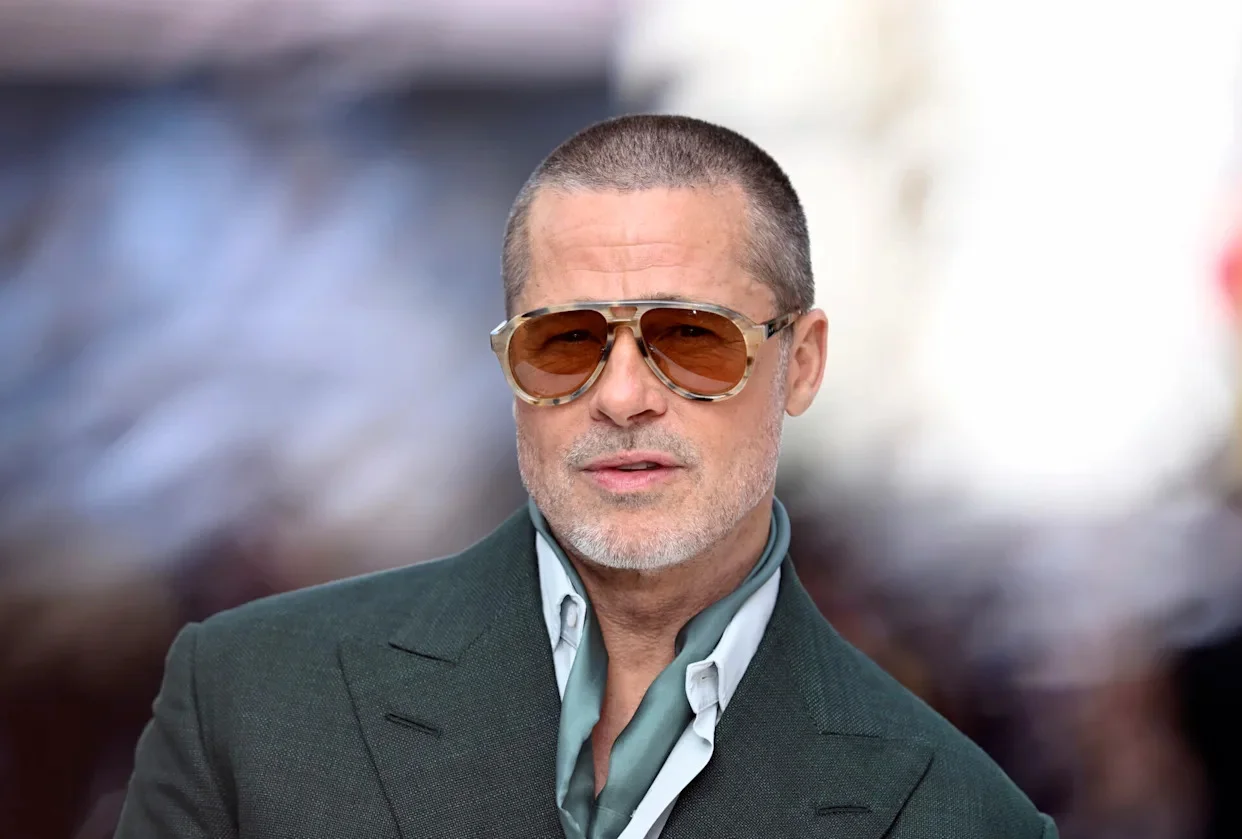
Brad Pitt and Gwyneth Paltrow's romance blossomed during the filming of "Seven," but ended in 1997.
A newly released biography by Amy Odell delves deeply into Gwyneth Paltrow’s personal and professional life, highlighting her rise from Hollywood lineage to wellness entrepreneur. The book, Gwyneth: The Biography, unveils intimate details including the well-known relationship between Gwyneth Paltrow and Brad Pitt, shedding light on the complexities behind their romance and her Hollywood struggles. Drawing from over 200 interviews, Odell paints a vivid portrait of Paltrow’s life without direct participation from Paltrow herself.
Early Struggles and Career Beginnings Amid Family Tensions
Raised by actor Blythe Danner and director-producer Bruce Paltrow, Gwyneth had an upbringing rooted in the entertainment world. After graduating high school in 1990, she acted in a stage production of The Adventures of Huckleberry Finn, where her performance caught the attention of talent manager Joanne Horowitz. Despite her father Bruce’s disapproval—he wanted her to start college at UC Santa Barbara—Paltrow chose to embark on an acting career under Horowitz’s guidance. Horowitz was zealous in securing Paltrow representation at Creative Artists Agency, which also represented Bruce Paltrow.
However, Paltrow’s early adult life was challenging. Following her role in the 1993 filmFlesh and Bone, she found herself financially supported by co-star Tyagi Schwartz after her father cut off her funds. While working as a waitress at Enterprise Fish Co. in Santa Monica, she confided in Schwartz about her struggles. Schwartz recalled,
Image of: Brad Pitt
“Listen, can you guys do me a favor? My dad’s being really a pain in the ass. He’s making me work, and he’s not giving me money. Can I just borrow a few dollars?”
He lent her twenty dollars, joking later,
“I always tell people Gwyneth Paltrow owes me twenty dollars. I’m like, What’s the interest on that?”
Choosing Roles and the Romantic Crossroads with Brad Pitt
One pivotal moment in Paltrow’s career came when she faced a choice between two film roles—Tracy Mills in David Fincher’s Seven, and a part opposite Keanu Reeves in Feeling Minnesota. Seeking advice, she was asked,
“Well, who do you want to date, Brad Pitt or Keanu Reeves?”
Opting for Seven, she began a high-profile romance with Brad Pitt that lasted from 1994 until 1997. The decision impacted not only her career but also her personal life, cementing a Hollywood romance that remains significant.
Encounters with Harvey Weinstein and Industry Power Plays
Gwyneth’s early interactions with Harvey Weinstein reveal a complicated relationship with the Hollywood mogul. The biography uncovers an unreported audition for The Prince of Jutland, known as Royal Deceit, held at the Peninsula Hotel in Beverly Hills, where Weinstein decided against casting her due to concerns over nudity and protecting her image as “a nice girl.” The film went on to star notable actors like Christian Bale and Helen Mirren.
Weinstein also influenced her public appearances. He pressured Miramax executive Marcy Granata to ensure Paltrow’s attendance at the 1996 MTV Video Music Awards with a look that embodied the event’s edgy style, specifically urging that Paltrow wear something sexy by Tom Ford, Gucci’s creative director at the time. Granata supported the idea, seeing the VMAs as an opportunity to promote Paltrow’s upcoming filmEmma to a younger audience. Instead of a sexy dress, Paltrow opted for a 1970s-inspired red velvet tailored pantsuit designed by Tom Ford. Weinstein reportedly reacted with anger, exclaiming, “Look what she’s wearing.” Despite this, the pantsuit became one of the 1990s’ most iconic fashion moments.
When Paltrow was snubbed for an Oscar nomination for her role in Emma, Weinstein called to console her, saying repeatedly, “Gwyneth Paltrow got robbed.” People around him were surprised by his vehement defense, as Miramax was focused more on larger projects like The English Patient. The call implied Weinstein had promised Paltrow a nomination that never arrived.
Behind the Scenes of Casting Battles and Hollywood Rumors
The biography sheds light on Paltrow’s influence behind the scenes. In the 1998 thriller A Perfect Murder, director Andy David wanted to cast Russell Crowe as the lover opposite Michael Douglas. According to David, Paltrow intervened because she previously had a fling with Crowe and did not want him involved in the project. The role ultimately went to Viggo Mortensen.
Another persistent rumor addressed involves the Shakespeare in Lovescreenplay. The story suggests Paltrow stole the script from Winona Ryder’s home after spotting it on her coffee table and then pursued the role herself. However, the biography clarifies that Paltrow was sent the script directly by director John Madden, who was interested in working with her following auditions for his 1994 filmGolden Gate. Initially, she declined the role without fully reading the screenplay. A producer, Paul Webster, reportedly urged her to reconsider, saying,
“It’s this incredible script that Tom Stoppard was involved in, and John Madden’s directing, and it’s an amazing part. I just don’t know why you wouldn’t do it.”
She then accepted the role after reviewing it again. The biography recounts,
“According to someone else who was close to her, Gwyneth turned down the movie without reading the script. Winona Ryder’s name had also been bandied about for the role. Supposedly, Gwyneth picked up the script from Ryder’s coffee table, read it (perhaps after the encouragement from Webster), and decided to do the movie.”
The Lasting Impact of Paltrow’s Early Choices on Her Career and Image
The revelations in Amy Odell’s biography paint a detailed portrait of Gwyneth Paltrow as a young woman navigating the pressures of Hollywood, family expectations, and complicated relationships. Her early career decisions, including choosing roles based on romantic interests and confronting powerful industry figures like Harvey Weinstein, shaped her path to becoming an Oscar-winning actress and later a successful wellness entrepreneur. The behind-the-scenes accounts expose battles of influence in casting and image management within Hollywood’s elite circles.
The biography’s disclosures about Paltrow’s strained relationship with her father, contentious interactions with producers, and control over which actors appeared alongside her provide new perspectives on her professional ascent. These stories also illuminate the forces behind some of Paltrow’s most defining moments, including her iconic VMAs look and her famed relationship with Brad Pitt. As her life continues to evolve beyond acting, the insight offered by this book will likely influence public perception of her legacy and the complexities faced by women in Hollywood.