
On August 6, Amazon Prime Video premiered The Pickup, a crime comedy featuring Eddie Murphy in a role that reinforces why his presence alone can elevate an otherwise conventional film. Despite the movie’s limited scope and low-budget production, Murphy’s performance breathes life into the story, proving his continuing ability to shine in straightforward projects without the need for extravagance.
A Low-Budget Setting Frames the Story
The Pickup arrives in a streaming landscape where large-budget films dominate theatrical releases, pushing modest productions towards digital platforms. Unlike high-profile blockbusters, this film’s setting is noticeably constrained, with much of the action confined to a nearly deserted highway and nondescript locations like warehouses and diners. These modest surroundings emphasize the production’s limited resources and largely prevent the film from achieving a cinematic feel typical of big-screen action comedies. However, the cast’s dedication, especially Murphy’s, injects enough charm to distract viewers from the modest visuals.
Eddie Murphy as the Grounded Veteran Amidst Chaos
In a departure from some of his recent performances, Murphy takes on the role of Russell Pierce, an armored truck driver embodying a disciplined, no-nonsense professional. This contrast is amplified by his partnership with a reckless rookie, Travis Stolly, played by Pete Davidson. The dynamic draws on classic buddy cop tropes: the experienced elder nearing retirement and eager to conclude his duties, paired reluctantly with an unstable newcomer whose mistakes have landed him in this high-stakes assignment. Russell’s primary motivation is to reach his 25th wedding anniversary dinner with Eva Longoria’s character, adding a personal stake to the storyline.
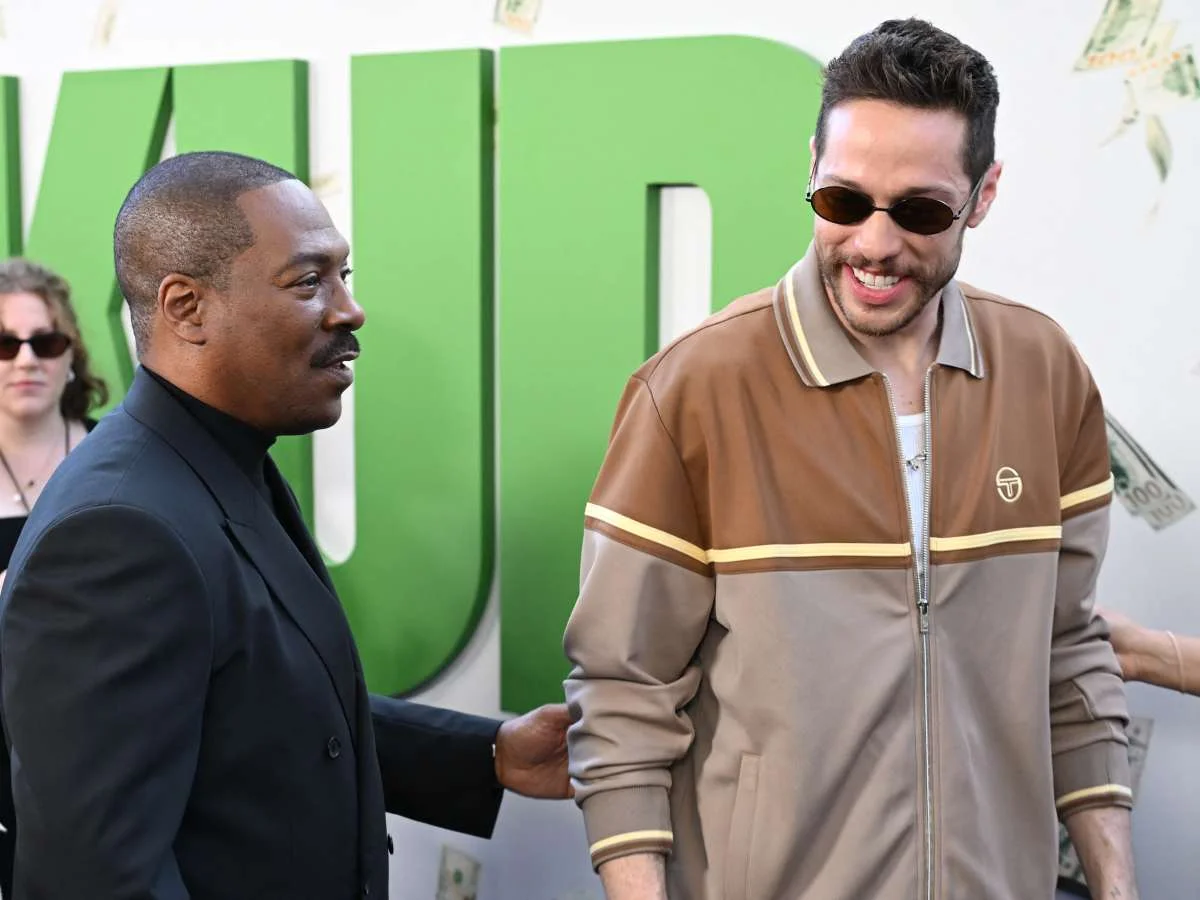
The film’s narrative centers on this mismatched duo’s interactions and escalating challenges, as their chemistry drives much of the film’s energy. Murphy’s calm, steady demeanor balances Davidson’s more chaotic and impulsive style, preventing the pairing from becoming a mere imitation of earlier buddy cop teams. Their exchanges rely on witty, biting banter that maintains momentum even when the plot feels thin or the environment static.
Action Scenes Limited but Supported by Chemistry
Director Tim Story, known for his work on the Ride Along series, shapes the action with an awareness of his leads’ abilities and the film’s budget constraints. The chase scenes along the highway, in which Zoe (played by Keke Palmer) and her associates attempt to intercept the armored truck, unfold in empty surroundings that underscore the film’s minimal production scale. Russell’s physical challenges, including a bad back, and Travis’s inexperience add tension but restrict the scope of the sequences.
Despite these limitations, the rapport between Murphy and Davidson elevates the material. Their natural interplay makes their characters feel authentic, adding depth to an otherwise disposable and formulaic crime comedy. The chemistry compensates for the film’s sparse sets and limited action choreography, making key moments more engaging than anticipated given the constraints.
Keke Palmer’s Role as the Femme Fatale
Joining the central duo mid-film, Keke Palmer’s portrayal of Zoe injects fresh energy into the storyline. Zoe is a clever and resourceful antagonist who boards the armored truck and coerces Russell and Travis into complicity with her plans. Although her character is less developed compared to Murphy and Davidson’s, Palmer’s charisma ensures she remains a captivating presence. Her performance hints at a growing stature in her career, demonstrating her capability to command both comedic and dramatic attention within a modest script.
Why Movie Stars Are Essential to Generic Films
The Pickup ultimately serves as a showcase for Eddie Murphy’s enduring talent as a leading man. His portrayal of Russell Pierce highlights the qualities that have sustained his career beyond his earlier, more flamboyant roles. Murphy’s ability to deliver humor and nuance without relying on exaggerated gimmicks or heavy special effects is evident. This role positions him as a stabilizing, relatable figure amid less memorable surroundings and plot elements.
It is notable that much of Murphy’s post-resurgence work has been released directly to streaming services rather than theaters, reflecting industry shifts. Nevertheless, he has maintained a commitment to his performances, ensuring even less acclaimed projects retain a certain entertainment value. Murphy’s style—combining grounded seriousness with bursts of comedy—remains effective, as seen in The Pickup. He offers a reminder that star power can transform a formulaic vehicle into something marginally more compelling.
The film’s modest premise does not diminish Murphy’s role as an actor who neither depends on elaborate setups nor restricts himself to stereotypical characters. Instead, he showcases a more subtle approach, remaining engaging as the “straight man” to Davidson’s unpredictable character. His presence distinguishes the film, even if it is unlikely to leave a lasting impression beyond its immediate viewing.
Looking ahead, Murphy is reportedly returning to more extravagant and animated projects including Shrek 5, a Donkey spin-off, and a reboot of The Pink Panther. While these roles align more with his career as a comedic performer known for larger-than-life personas, films like The Pickup highlight his versatility and grounded appeal. This crime comedy may not be memorable on its own, but Murphy’s performance underscores the continuing relevance of veteran stars in contemporary cinema, especially in an era leaning heavily on streaming platforms.
