
Celine Song, the writer-director behind the critically acclaimed romantic dramedy Materialists, has responded firmly to dismissive and classist criticisms regarding her film. Since its release, Materialists, which stars Dakota Johnson and Pedro Pascal, has generated over $67 million globally against a $20 million budget, continuing to expand into several major markets. Song’s work, which explores themes of modern love and economic disparity, has sparked meaningful discussions, especially around the intersections of class and relationships.
The Story Behind Materialists and Its Social Themes
Materialists centers on a New York City matchmaker entrenched in the city’s wealthy elite who finds herself torn between an ideal affluent suitor and her caring but financially struggling ex-partner. The narrative delves into the tension between socioeconomic status and personal connection, highlighting the complexities of love when economic pressures are involved. This timely portrayal challenges common perceptions around wealth and poverty in romantic relationships.
Celine Song’s Response to a Classist Critique
During an interview with Refinery29, Song was confronted with a Letterboxd review dismissing the film as
“broke man propaganda?? in THIS economy???”
Her response illuminated her concerns about misunderstanding feminism and the deep-rooted classism embedded in public discourse. She emphasized that much of feminism’s history includes fighting against corporate dominance and class inequality, clarifying that poverty is never a personal failing.
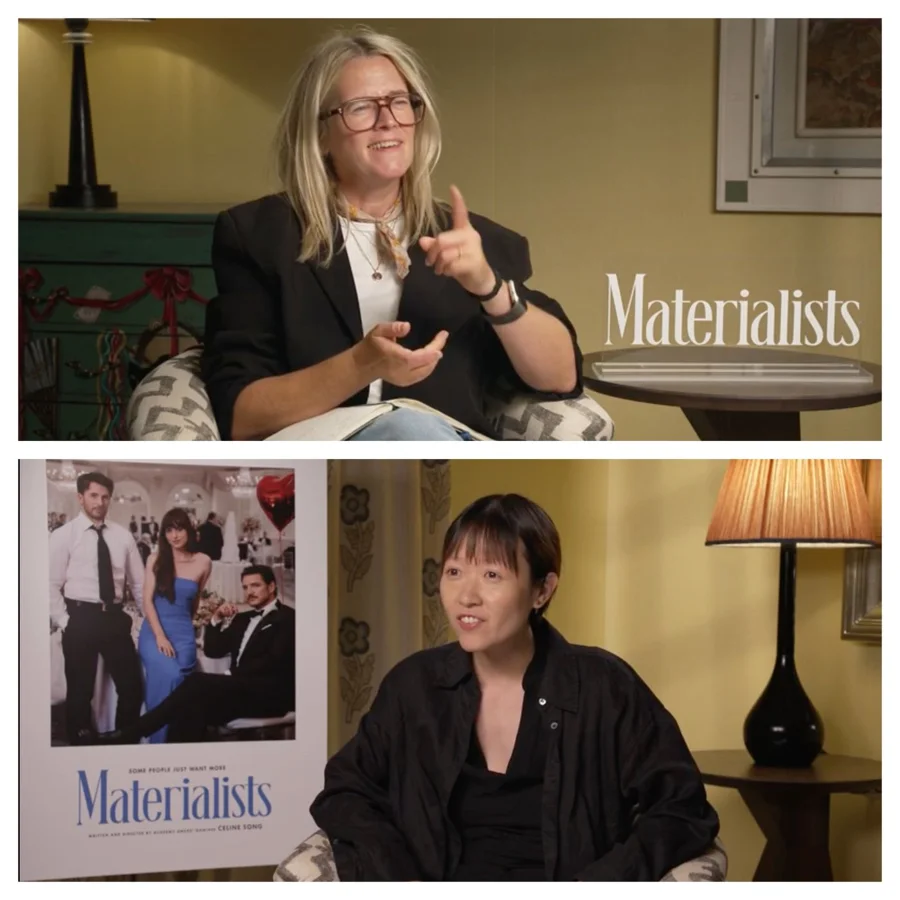
“Well, thank you for asking me about it. I think that it doesn’t make me laugh ‘cause it really, uh, is disappointing to me that, I think that there is a very real confusion about feminism and the history of feminism. Because of intersectionality, so much of feminism has been about anti-corporate and anti-capitalist, and of course it was always at the forefront of fighting classism. So I’m very concerned about the way that we talk about people who are poor. The thing that is very important to me is to stress that poverty is not the fault of the poor.
And I think that given that, it is very brutal and I find it very cruel to talk about John as a character who loves Lucy and who is a beautiful character played beautifully by Chris [Evans] and to talk about him in such cruel terms as ‘broke boy’ or ‘broke man.’ There is something about that, the classism of that, the kind of hatred of poverty, the hatred of poor people, who, again, it’s not their fault, that they’re poor. I think that’s a troubling result of the way that the wealthy people have gotten it into our hearts about how it’s your fault if you’re poor, that you’re a bad person if you’re poor.
So, it doesn’t make me laugh, actually. It just makes me feel very concerned that anybody would talk about my movie and my characters, and to think about it in such a classist terms, you know, the whole movie is about the way that capitalism is trying to colonize our hearts and colonize love.”
Deconstructing Classist Language Within Film Conversations
Song’s remarks highlight how reductive insults like “broke man” not only diminish a character’s depth but also perpetuate damaging societal prejudices. She called attention to the harmful narrative that poverty reflects personal shortcomings rather than systemic inequality, which she believes is a dangerous attitude reinforced by those in privileged positions. Her statement sparked both solidarity from audiences and a reassessment of how socio-economic realities are framed within cultural media.
The Broader Cultural Context of Classism in Film Reception
Materialists’ reception reveals a broader issue regarding the interplay of class and cultural critique, especially in the digital age. Responses to films that foreground financial struggle or question wealth dynamics often become entangled with online irony and snark, as seen on platforms like Letterboxd. While this approach may appear humorous or relatable, Song’s response reminds us that dismissive attitudes risk marginalizing the lived experiences portrayed.
The Challenge of Meaningful Media Conversations in a Click-Driven Era
In today’s media landscape, artists face pressure to generate viral, bite-sized moments rather than engage in serious dialogue. Interviews frequently prioritize lighthearted or gimmicky content—examples include reacting to viral trends or playful fan interactions—instead of deeper discussions. Song’s thoughtful rebuttal stands in contrast to this trend, showing a rare commitment to addressing serious social issues even when confronted with provocation or superficial commentary.
Why Celine Song’s Stand Matters for Industry and Audience
Celine Song’s candid defense of her characters and themes in Materialists is significant for the film industry and viewers alike. It challenges creators and audiences to acknowledge and confront classism embedded within storytelling and criticism. The broader conversation this response encourages may lead to more nuanced portrayals of socioeconomic diversity in cinema, promoting empathy rather than judgment. As Materialists continues its release and Song’s career advances, this dialogue could influence future narratives about love and class.
