
James Cameron is preparing to begin work on his new feature film following the upcoming Avatar: Fire and Ash sequels. The acclaimed director is collaborating with longtime partner and author Charles R. Pellegrino to adapt Pellegrino’s recently published book, Ghosts of Hiroshima, which recounts firsthand testimonies from survivors of the atomic bombings of Hiroshima and Nagasaki, including Tsutomu Yamaguchi, a rare individual who survived both attacks. Cameron’s shift towards this project signals his continued interest in exploring significant historical events with profound human impact.
Concerns Raised Over AI’s Role in Military and Nuclear Decision-Making
During an extensive interview with Rolling Stone, Cameron addressed the escalating risks posed by advanced technology, particularly artificial intelligence. He focused on the potential consequences of integrating AI with weapons systems, emphasizing the dangers that arise when rapid decision-making in high-stakes environments may exceed human capacity. The filmmaker pointed to the parallels between this real-world threat and the premise of his Terminator films, underscoring that current military technology could edge dangerously close to a situation reminiscent of a science fiction apocalypse.
“Look, I mean, I do think there’s still a danger of a Terminator-style apocalypse where you put AI together with weapons systems, even up to the level of nuclear weapon systems, nuclear defense counterstrike, all that stuff. Because the theater of operations is so rapid, the decision windows are so fast, it would take a superintelligence to be able to process it, and maybe we’ll be smart and keep a human in the loop.”
—James Cameron, filmmaker
Reflecting on Broader Existential Threats Facing Humanity
Beyond the risks of weaponized AI, Cameron acknowledged humanity’s precarious position due to several converging global crises. He identified three major existential threats: climate change and environmental degradation, nuclear weapons, and the rise of superintelligent machines. Cameron highlighted how these factors appear to be intensifying simultaneously, creating an unprecedented challenge for human survival and decision-making in the near future.
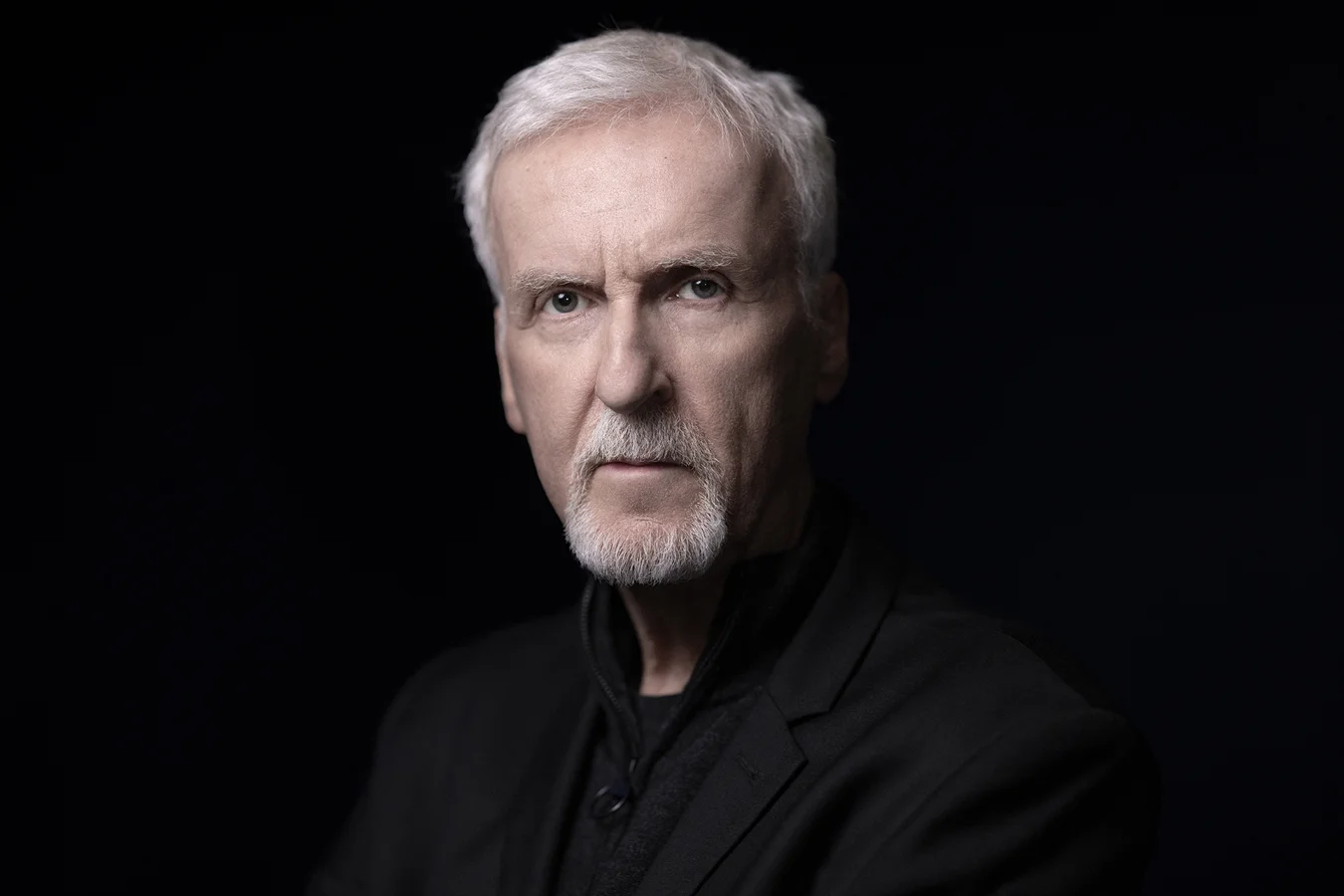
“I don’t know. I feel like we’re at this cusp in human development where you’ve got the three existential threats: climate and our overall degradation of the natural world, nuclear weapons, and superintelligence. They’re all sort of manifesting and peaking at the same time. Maybe the superintelligence is the answer. I don’t know. I’m not predicting that, but it might be.”
—James Cameron, filmmaker
James Cameron’s Ongoing Commitment to Technology and Storytelling
Despite his concerns, Cameron remains a strong advocate for technological innovation in filmmaking. His work with advanced visual effects and his team’s development of cutting-edge virtual camera and facial capture systems demonstrate his passion for pushing cinematic boundaries. However, his warnings about the dangers of over-reliance on AI reflect a cautious perspective on how these technologies should be integrated responsibly, particularly when lives and global security are at stake.
Cameron’s James Cameron weaponized AI warning brings renewed focus to the urgent need for careful oversight and ethical governance of AI in military applications. As global tensions persist, the potential for automated weapon systems to act unpredictably or without human control could have severe consequences. The filmmaker’s insights serve as a serious call to action to policymakers, technologists, and the international community to prioritize safeguards that prevent a catastrophic scenario akin to the fictional Terminator apocalypse from becoming reality.
