
Hollywood actors have long demonstrated remarkable commitment by embracing some of the weirdest roles, often involving heavy CGI, prosthetics, or voice work—a fact clearly seen in the performances of Alan Tudyk and Andy Serkis. These unusual characters, portrayed across various franchises, reveal the extraordinary lengths stars go to for their craft.
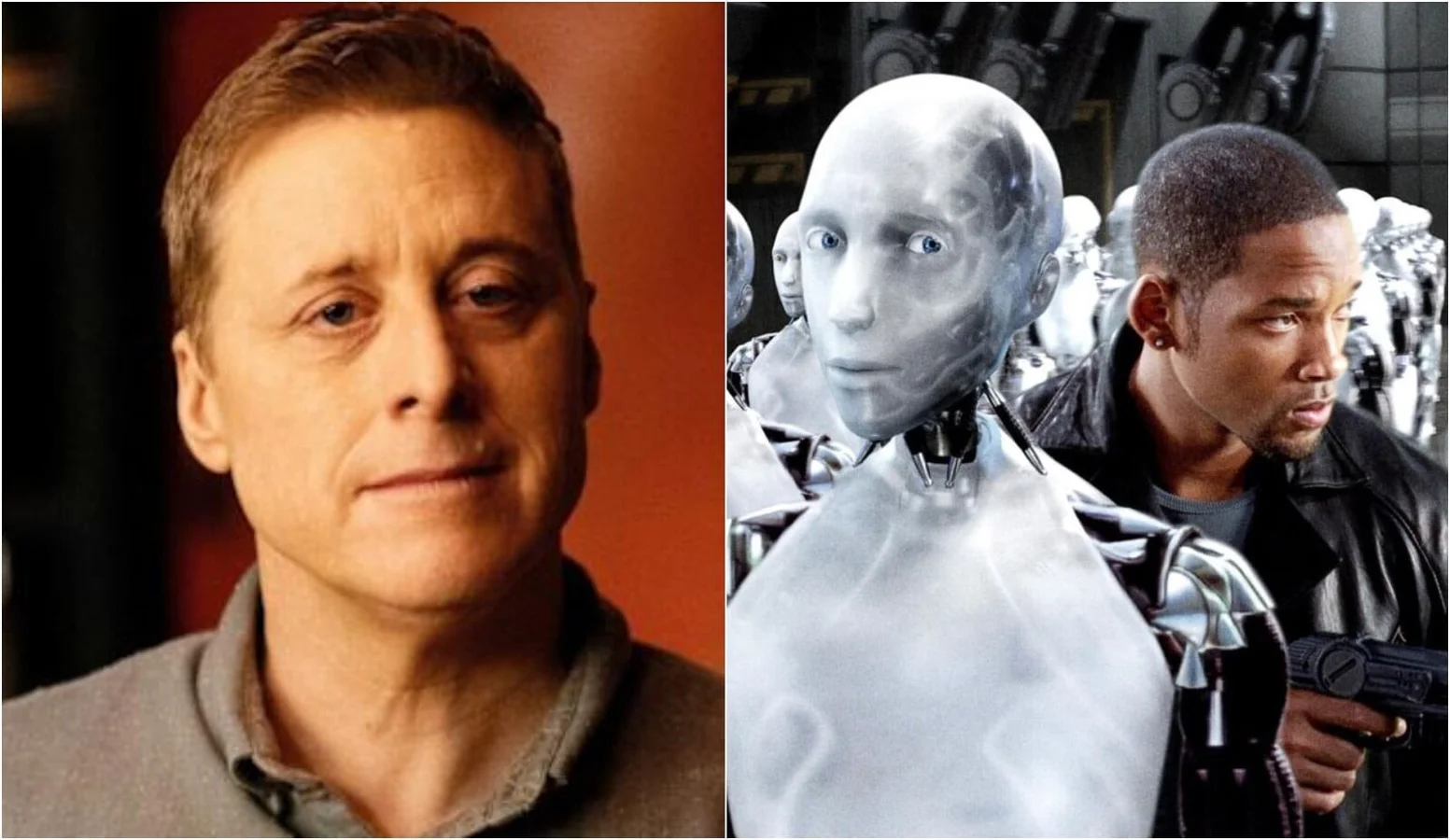
An Unusual Robotic Role: Alan Tudyk’s Sonny in I, Robot (2004)
Alan Tudyk, known for tackling unconventional roles, took on the challenging part of Sonny, the emotional robot in the 2004 film I, Robot. Despite the extensive CGI effects used to bring Sonny to life, Tudyk’s acting provided the robot with a distinctive humanity, blending mechanical traits with empathy and complex emotions. This balance made the character stand out as a testament to his skill and dedication.
In addition to Sonny, Tudyk’s portrayal of the droid K-2SO in Rogue One: A Star Wars Story received widespread praise, reinforcing his reputation for breathing life into non-human roles that demand intense performance behind layers of effects and voice modulation. His ability to animate artificial characters convincingly shows how his approach to such “weird” roles transcends mere physical presence.
Ben Kingsley’s Unlikely Character in The Love Guru (2008)
Ben Kingsley, acclaimed for many serious roles including his Oscar-winning portrayal of Mahatma Gandhi, stepped far outside his usual repertoire as Guru Tugginmypudha in the comedy The Love Guru. The character, marked by grotesque traits and a contentious background, was widely criticized and even nominated for a Golden Raspberry Award, highlighting an unusual moment in Kingsley’s career.
This role was particularly notable for its bizarre premise, involving exaggerated physical comedy that clashed with Kingsley’s previous dignified performances. Despite poor critical reception and a 13% rating on Rotten Tomatoes, this role exemplifies Kingsley’s willingness to explore diverse, if peculiar, characters.
Ian McKellen as Gus the Theatre Cat in Cats (2019)
Sir Ian McKellen took on a strikingly strange role as Gus “Asparagus,” the elderly theatre cat, in the 2019 film adaptation of Cats. Known predominantly for his work in fantasy and drama, McKellen’s participation in this critically panned project surprised many. His serious approach to the whimsical and surreal character was in stark contrast to the movie’s overall reception.
The film’s fantastical premise involved intense CGI and digital fur technology that many fans and critics found unsettling. Despite the critical response—marked by a 19% Rotten Tomatoes score—McKellen’s professionalism amidst an odd production highlights the dedication required when navigating extraordinary roles.
Patrick Stewart Voices an Unexpected Character in The Emoji Movie (2022)
Patrick Stewart, revered for commanding roles such as Captain Picard in Star Trek and Professor X in X-Men, lent his voice to an unusual role: the Poop emoji in The Emoji Movie. This unexpected choice stood in stark contrast to his esteemed career, baffling many fans who found it hard to reconcile Stewart’s gravitas with such a peculiar character.
Although it seems out of place for an actor of Stewart’s stature to voice an animated character symbolizing waste, his involvement illustrates the varied and sometimes surprising career decisions made by respected actors in the industry.
Tom Cruise’s Radical Transformation in Tropic Thunder (2008)
Tom Cruise, known for his high-energy action roles and performing his own stunts, shocked audiences with his comedic portrayal of Les Grossman in Tropic Thunder. The role required Cruise to adopt an unrecognizable appearance, complete with extensive prosthetics, to play a foul-mouthed, overweight studio executive.
This role was a stark departure from the polished, physically fit characters that Cruise typically embodies and included an iconic dance scene to Ludacris’ “Get Back,” which showcased Cruise’s surprising comic timing and physical commitment. His willingness to assume such an eccentric role speaks volumes about his range as an actor.
Sean Connery’s Bold Experiment in Zardoz (1974)
Sean Connery, immortalized as the quintessential James Bond, took a daring and unusual turn in the sci-fi film Zardoz, where he portrayed Zed, a character notorious for wearing a saffron loincloth and engaging in surreal narrative arcs. This role was a significant deviation from his established image, reflecting an attempt to reinvent himself post-Bond.
With a confusing plot and eccentric costume choices, the film was critically divisive, garnering a 49% rating on Rotten Tomatoes. The bizarre nature of the role and movie made it one of Connery’s more obscure and weird performances, showcasing his openness to unconventional projects despite potential reputational risks.
Lupita Nyong’o Performs as the Ancient Alien Maz Kanata in Star Wars: The Force Awakens (2015)
Lupita Nyong’o, best known for her roles in the Black Panther series, embraced a highly unusual part as Maz Kanata in Star Wars: The Force Awakens. Playing a 1,000-year-old alien, Nyong’o’s performance was captured via motion capture technology and CGI, requiring her to deliver subtle movements and expressions that conveyed the character’s deep history and wisdom.
Her dedication to embodying Maz Kanata extended beyond voice work, as every gesture was carefully performed to bring authenticity to this digital creation. This role highlights the evolution of acting in Hollywood, where performers must engage with technology as an integral part of their craft.
Benedict Cumberbatch Brings the Dragon Smaug to Life in The Hobbit Trilogy
Benedict Cumberbatch, acclaimed for his role as Doctor Strange, delivered a notably strange yet impressive performance as the dragon Smaug in The Hobbit trilogy. Though the dragon was realized primarily through CGI, Cumberbatch used physicality extensively, crawling, growling, and embodying the menacing creature’s presence on set.
His full-body engagement transformed what could have been a purely voiceover role into one informed by his physical acting. This unusual approach added depth and authenticity, showing his commitment to fully immersing himself in even the most outlandish roles.
Bill Nighy Portrays the Tentacled Pirate Davy Jones in Pirates of the Caribbean
Bill Nighy’s portrayal of Davy Jones, the terrifying squid-faced pirate in the Pirates of the Caribbean franchise, combined voice acting with nuanced facial expressions captured through motion capture. While the CGI created the character’s elaborate tentacle beard and eerie appearance, Nighy’s precise performance was essential to the character’s menacing presence.
Behind-the-scenes footage reveals the deliberate facial movements Nighy made to embody the infamous pirate, further proving how even heavily computer-generated characters rely heavily on actor dedication to achieve compelling results.
Andy Serkis Revolutionizes Motion Capture with Gollum in The Lord of the Rings Trilogy
Andy Serkis is renowned for his groundbreaking performance as Gollum/Sméagol in The Lord of the Rings trilogy, a role that pushed the boundaries of motion capture acting. Serkis’ intense physicality and facial expressions were captured in unprecedented detail, transforming Gollum from a mere CGI figure to a deeply psychological and emotive character.
His pioneering work on this role significantly raised the profile of motion capture acting within Hollywood, inspiring a new generation of actors and filmmakers to explore the potential of blending technology and traditional performance. Serkis’ commitment to Gollum remains a high-water mark for dedication to strange and complex roles in film history.
A Legacy of Commitment in Hollywood’s Most Unusual Choices
From Alan Tudyk’s lifelike robot Sonny to Andy Serkis’ revolutionary Gollum, Hollywood’s weirdest roles reveal the extraordinary devotion actors place on their craft. These performances often require stepping far beyond traditional acting boundaries, embracing digital technologies, and enduring intense physical transformations. Such efforts highlight their passion and versatility, shaping some of the most memorable and unconventional characters in modern cinema.
As technology evolves, it is likely that actors will continue to face increasingly strange and challenging roles that blend the physical, digital, and psychological. The actors featured here exemplify the relentless dedication required to bring even the most bizarre characters convincingly to life, proving that true acting talent knows no limits.
