
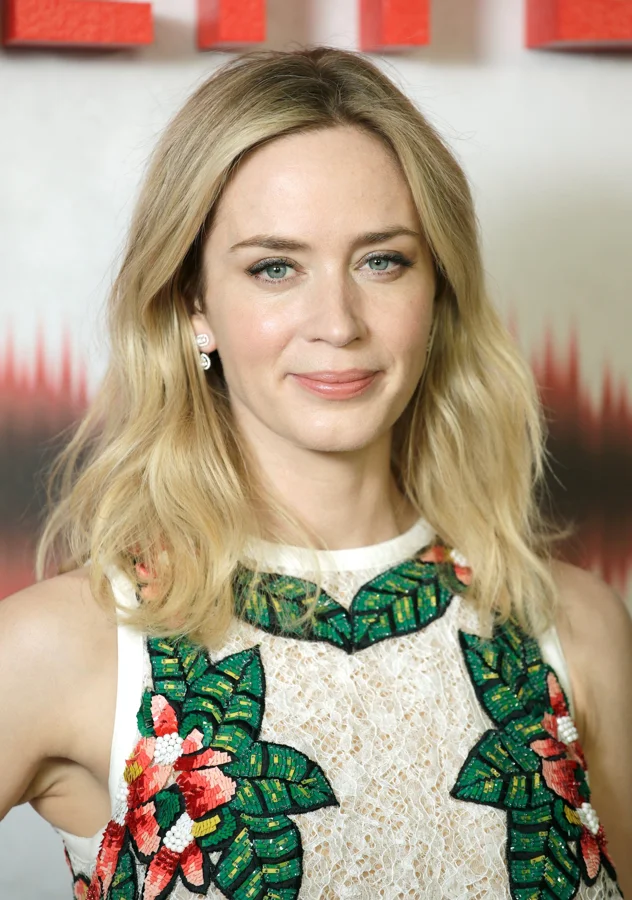
Emily Blunt caught attention on the New York City set of The Devil Wears Prada 2 on August 14, debuting a daring platinum blonde hairstyle, marking a dramatic shift from her character Emily Charlton’s original red hair. This bold Emily Blunt Blonde Hair Transformation comes as the actress embraces a bright shoulder-length style with dark roots, complementing her outfit that included black Dior sunglasses, red lipstick, a black-and-red Coach sweater, and a Maison Margiela skirt.
Despite the recent change, Emily has not fully abandoned her iconic flaming orange locks, having appeared with her red hair only weeks earlier during filming. The sequel sets up a high-stakes rivalry between Emily Charlton and Miranda Priestly, played by Meryl Streep, as both take on executive roles in competing companies. Alongside the returning cast, Anne Hathaway and Tracie Thoms will also reprise their roles, promising a complex narrative that explores the characters’ evolving power dynamics.
On-Screen Rivalry and Off-Screen Reflections from Cast Members
Emily Blunt playfully addressed the tension between her and Meryl Streep‘s characters, joking in a June interview about their frequent on-screen conflicts. Stanley Tucci, returning as well, expressed enthusiasm about revisiting the original film, emphasizing the excitement among cast and crew surrounding the project’s return to the big screen.
The movie’s highly anticipated release is set for May 2026, building on a legacy that began with the 2006 original, which has captivated audiences with its portrayal of fashion industry power struggles. Insights from the making of the first film reveal rich backstories and challenges faced during production, contributing to the enduring appeal of this franchise.
Early Development and Screenplay Challenges Behind the Original Film
The adaptation of Lauren Weisberger’s bestselling novel kicked off even before the book officially launched in 2003. Fox executives were sold on an early draft after reading the first 100 pages and an outline, captivated by the sharp character of Miranda Priestly, whom Carla Hacken, the studio’s former executive vice president, described as
“one of the greatest villains ever.”
The screenplay went through multiple iterations before Aline Brosh McKenna wrote a version that emphasized the sacrifices women endure climbing the ranks in high-fashion magazines. She recalled quickly drafting and revising the script to integrate notes, ultimately creating a narrative that portrayed the cutthroat fashion world with enhanced realism and complexity.
Access Hurdles and Authenticity Struggles During Filming
Production faced significant obstacles due to Anna Wintour’s formidable influence on the fashion industry. McKenna shared that many insiders refused to cooperate out of fear of disfavor from Vogue. Director David Frankel reported that several iconic New York locations, including the Metropolitan Museum and Bryant Park, were unavailable due to scheduling conflicts or guarded exclusivity, forcing the crew to find alternative filming spots such as a borrowed Upper East Side townhouse.
Despite limited official Vogue cooperation, production designer Jess Gonchor managed to secretly study Wintour’s office, allowing him to recreate the set with remarkable accuracy. Frankel noted that the attention to detail was so precise that Wintour herself updated her office after seeing the film’s version.
Designer Wardrobe Coordination and Costume Challenges
Initially, the production team struggled to secure high-profile fashion pieces because designers were reluctant to upset Anna Wintour. Enter Patricia Field, the costume designer, who assembled an impressive collection of approximately 150 garments from names like Donna Karan, Zac Posen, Rick Owens, and Prada, carefully distinguishing Miranda Priestly’s character from Wintour herself. Meryl Streep famously avoided eating spaghetti on set to prevent damaging the precious wardrobe pieces, demonstrating the care taken during filming.
Anna Wintour’s Subtle Involvement and Reaction to the Film
Though Wintour was not closely involved in production, she attended a screening alongside Lauren Weisberger. While she appreciated the entertainment value, she clarified that the film was not an exact depiction of life at Vogue. An amusing interaction between Wintour and Streep during Vogue’s 125th anniversary highlighted the playful yet complex relationship between the real-life inspiration and the actress portraying Miranda.
Meryl Streep’s Own Approach to Portraying Miranda Priestly
Streep was the unequivocal choice for the role of Miranda Priestly, with Carla Hacken recalling the moment she celebrated upon hearing the actress wanted to meet. Streep valued Miranda’s unyielding nature, noting that the character did not shy away from difficult, harsh traits and refused to soften herself to get her way, a perspective she shared reflecting on female behavior in power dynamics.
Streep also adopted strategic measures before accepting the role, negotiating salary assertively after feeling the initial offer undervalued her contribution. She successfully influenced the script by securing two crucial scenes: one explaining the significance of fashion symbolism and another revealing Miranda’s vulnerable side.
The actress’s decision to keep Miranda’s iconic white hair was a deliberate choice, made during a sit-down with studio executives where Streep’s commanding presence ended any doubts about the hairstyle.
Anne Hathaway and Casting Dynamics Behind the Scenes
Anne Hathaway’s path to playing Andy Sachs was not straightforward; she revealed she was the ninth choice for the part but undertook a persistent campaign to land the role, including a memorable gesture of writing “hire me” in a studio executive’s zen garden. Hathaway’s enthusiasm on receiving the news was palpable, recalling the excitement shared with friends at home.
The initial preferred candidates, including Rachel McAdams and Kate Hudson, declined the role for various reasons, opening the door for Hathaway. Streep’s support of Hathaway’s prior work was instrumental in solidifying the casting decision, with director David Frankel recounting Streep’s endorsement to studio executives.
Emily Blunt’s Audition and Contribution to the Character of Emily Charlton
The search for Miranda’s fierce assistant was extensive, with over 100 actresses auditioning before Emily Blunt was selected. At the time, Blunt was on the Fox lot auditioning for another film and read for The Devil Wears Prada on short notice, despite feeling underprepared and casually dressed. Her British accent inspired screenwriter McKenna to adapt Emily Charlton’s character to fit, peppering the script with British expressions.
Blunt also drew inspiration from real-life moments, incorporating a sharp phrase she overheard a mother saying to her child during a supermarket shoot. This attention to authentic, relatable details enhanced the character’s depth and wit.
Stanley Tucci’s Role and On-Set Chemistry
Stanley Tucci, cast at the last moment as Nigel, flawlessly delivered the character’s signature dry humor, even improvising some of his most memorable lines. He fondly remembers a scene where cast laughter challenged the shoot but led to iconic moments like the phrase “Gird your loins.” Tucci’s connection to Emily Blunt extended beyond filming, as he was invited to her wedding and eventually married Emily’s sister, Felicity Blunt.
Tucci shared poignant memories of meeting Felicity at the film’s premiere while he was still married to his late wife, adding a deeply personal layer to the film’s legacy.
Tracie Thoms and Memorable Experiences in a Supporting Role
Tracie Thoms, who played Lily, shared the excitement of receiving her casting news on her 30th birthday during an Alan Ball workshop. Confident in her audition, Thoms embraced the role as fitting neatly within her career trajectory. She recounted watching fellow actor Adrian Grenier cleverly use fan attention to promote his band, admiring his supportive approach to colleagues.
One cherished prop, a Marc Jacobs bag coveted by her character, became part of a personal storyline that was unfortunately cut from the final film, a disappointment she still recalls fondly.
Production Decisions and Challenges in Filming Key Scenes
Originally, no Paris shoots were planned for Miranda and Andy’s climactic trip to Paris Fashion Week, a decision that shocked director Frankel. After securing additional budget, Hathaway and co-star Simon Baker filmed in France, while Streep completed her scenes stateside due to cost concerns. Streep’s choice to fully envelop herself in Miranda’s intimidating persona led to some on-set isolation, a sacrifice she humorously acknowledged during interviews.
Anne Hathaway recalled a final pep talk from Streep, marked by a famously dry tone, underscoring the serious yet sometimes tense atmosphere embraced by the lead actress while filming.
The Enduring Cultural Impact and Anticipated Return in the Sequel
The original The Devil Wears Prada left a lasting mark on pop culture and the fashion world by exposing the pressures and complexities behind a glossy facade. Its rich backstory, from difficult negotiations, cast dynamics, and extraordinary costume designs, adds layers to its enduring appeal. The upcoming sequel promises to revisit these characters in new roles that reflect their evolution, with Emily Blunt’s striking blonde transformation symbolizing dramatic changes both on screen and in character development.
As the film prepares for its 2026 release, fans eagerly await answers regarding the motivations behind Emily Charlton’s bold makeover and the unfolding rivalry with Miranda Priestly, anticipating that the sequel will deliver both the intensity and sharp wit that made the original a beloved classic.
