
Julian Schnabel’s new film, In the Hand of Dante, explores the intertwined lives of two artists from vastly different eras, connecting the 14th and 21st centuries. Premiering out of competition at the Venice Film Festival on September 3, the drama is based on Nick Tosches’s novel of the same name and weaves a tale of crime, literature, and deep artistic passion, centered around the rediscovery of a rare manuscript of Dante Alighieri’s The Divine Comedy.
The story follows a character inspired by Tosches, who hails from a New Jersey gangster family. When a handwritten version of Dante’s masterpiece surfaces in the Vatican library and falls into the hands of a New York mob boss, Tosches is tasked with authenticating the text. This journey mirrors Dante’s own, with Tosches portrayed as Dante’s reincarnation as he navigates between his turbulent modern life and the Tuscan poet’s legendary era.
Star-Studded Cast Brings Complex Characters to Life
For this ambitious project, Schnabel assembled a high-profile cast, with Oscar Isaac embodying both Tosches and Dante. The film features performances from Gal Gadot, Jason Momoa, Gerard Butler, John Malkovich, Louis Cancelmi, Sabrina Impacciatore, and Franco Nero. Notably, Martin Scorsese makes a memorable appearance as Isaiah, an elderly sage who influences Dante during the creation of The Divine Comedy.
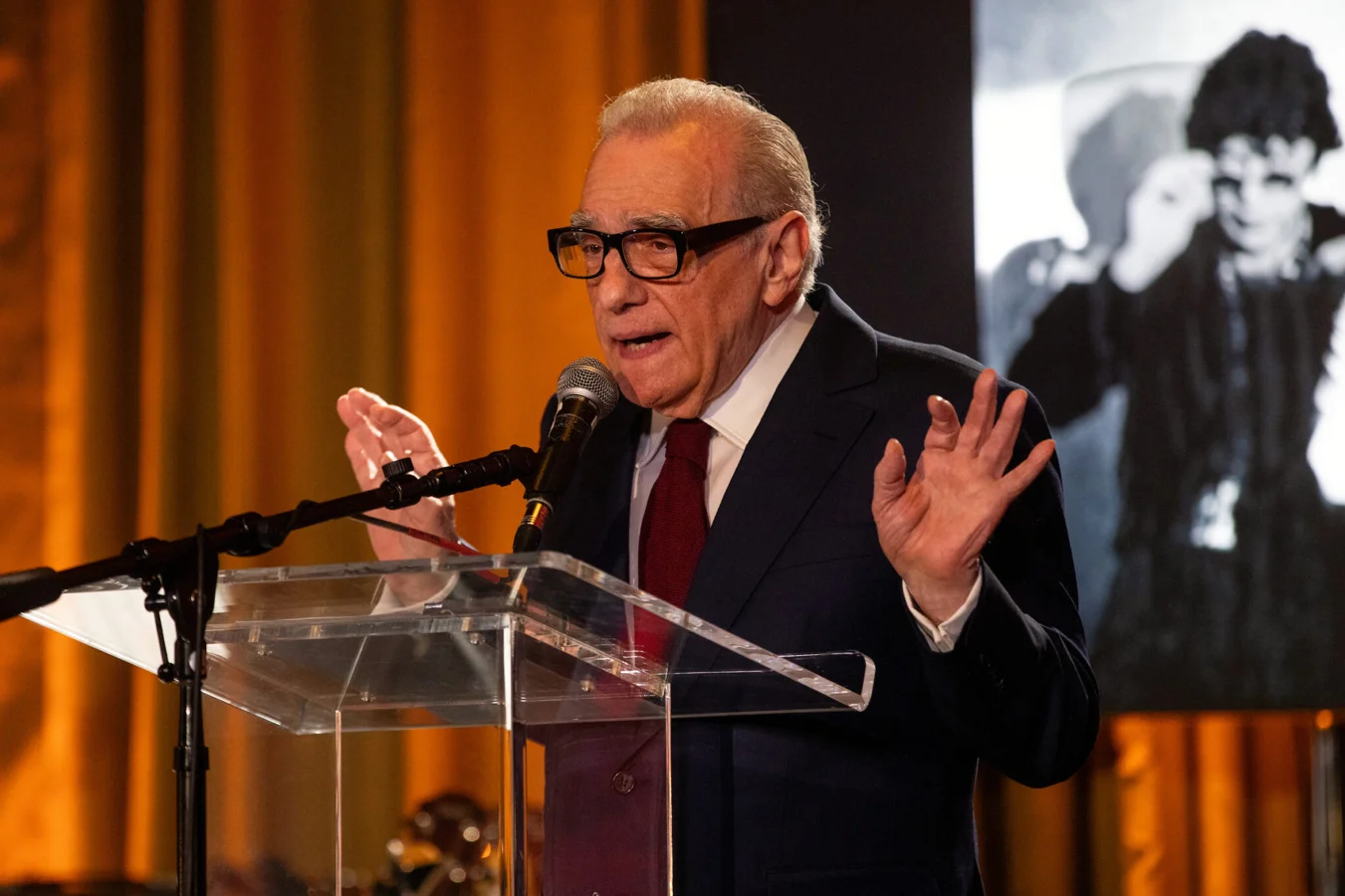
Scorsese’s involvement was a distinct honor for Schnabel, who revealed that the veteran director had long been a supporter of his work. Schnabel described Scorsese’s role as small but pivotal, delivering a line that stands out within the film’s intense and layered narrative.
The Significance Behind Scorsese’s Controversial Line
Discussing the provocative line spoken by Scorsese’s character—“Arab is the new Jew”—Schnabel explained its historical and contemporary resonances. The phrase connects to the Arab diaspora of Dante’s time and echoes ongoing issues faced by Palestinians today, highlighting longstanding oppression that dates back centuries.
“When Isaiah says Arab is the new Jew, I think he’s talking about the [Arab] diaspora at that time. I also think that if we are talking about what is happening now, I made a film 15 years ago called Miral where I described the Palestinian situation, and I was basically representing the fact that Palestinians have a [largely untold] narrative. So I think these people have undergone oppression. But the film [Hand of Dante] was written long before the current situation occurred,”
Schnabel said.
Julian Schnabel’s Artistic Vision and Personal Connection
Before embarking on this film, Schnabel reflected on his deep fascination with both Dante and Tosches, who is himself portrayed as a reincarnation of the poet. Schnabel was struck by Tosches’s detailed knowledge of Dante and his complex background, rooted in a gangster family from Newark, New Jersey. This juxtaposition of imperfection and brilliance mirrored the artist’s real-life struggle, which Schnabel sought to capture.
“Maybe Nick is the reincarnation of Dante Alighieri,”
Schnabel mused.
“Why couldn’t a child born into a family of gangsters from Newark, New Jersey, be Dante’s reincarnation?”
According to Schnabel, both Tosches and Dante lived imperfect lives marked by personal and emotional turmoil, with parallel conflicts such as misplaced love and artistic obsession.
He highlighted how Dante’s love for Beatrice was essentially an idealized image rather than reality, a theme that resonated with the artistic tendency to prioritize work over personal relationships.
“Basically, what he’s in love with is not Beatrice but his description of her. He’s in love with his work, so he excludes his family. He excludes his wife [Gemma Donati]. I think that happens to artists a lot.”
Visual and Narrative Contrast Between Centuries
The film visually contrasts the two time periods using a unique stylistic choice: the present-day scenes with the modern gangsters are depicted in black and white, symbolizing a purgatorial existence, while the 14th-century sequences burst into vibrant color. This imagery aligns with the historical setting of the Cappella degli Scrovegni in Padua, where the famous Giotto frescoes depict Dante and where
“the trees were green and the sky was blue.”
This deliberate stylistic decision underscores the thematic divide between the contemporary world’s commodification of art and the spiritual richness of Dante’s era.
Actor Insights and Behind-the-Scenes Details
Schnabel revealed that Oscar Isaac was committed to the project from early on, eventually stepping in after the originally intended lead, Johnny Depp, had to withdraw.
“Oscar had said to me,
If he [Johnny] doesn’t do this, I’m there.
I think in the meantime, Oscar’s life had evolved to where he was really ready to be this guy.”
The director praised the performances across the board, commending Al Pacino, John Malkovich, and Gerard Butler, with the latter delivering what Schnabel called “the performance of his life.”
Musically, the film features an evocative score by Benjamin, who also performs the haunting piano piece “Last Movement of Hope.” Schnabel noted the song’s almost Gregorian chant quality and its emotional depth, augmented by contributions from Sicilian funeral singers, enhancing the film’s atmospheric and historical tone.
The Broader Artistic and Cultural Resonance
In the Hand of Dante is more than a historical drama; it reflects on the timeless struggles of artists and the complexity of their inner lives. Schnabel’s layered narrative and the blend of crime and spirituality invite the audience to reflect on the imperfect humanity behind artistic genius.
Martin Scorsese’s participation adds a metatextual element, especially in the delivery of the film’s most provocative line, underscoring ongoing cultural tensions and the enduring relevance of Dante’s themes in today’s world.
With its Venice Film Festival premiere imminent, In the Hand of Dante promises to spark conversation not only about art and history but also about identity, diaspora, and the far-reaching impact of creativity across time and place.
