
Gwyneth Paltrow, the 52-year-old actress and wellness entrepreneur, shared a candid reflection on how misunderstood she feels despite her fame. During an August 28 interview on The Cutting Room Floor podcast, Paltrow revealed that she believes her true self will only be fully understood after her death, highlighting the gap between her real identity and public perception surrounding her. This insight sheds light on the complex “Gwyneth Paltrow misunderstood narrative” that has followed her for decades.
Living with an Unrecognizable Persona
Having risen to prominence in the 1990s, Paltrow is deeply aware of the public narrative crafted around her. Yet, she finds it bewildering and disorienting how this external story fails to reflect her true self. She expressed that she never built this public image herself and lives with an “avatar” that others project onto her.
No one will understand me until I’m dead,
Paltrow stated plainly.
I have never created my own narrative. I’m aware that that exists, but I have had a really strange life in this respect. Like, imagine being an actual person and know that people are characterizing you in a way and you can’t understand how they arrived at that narrative. I have no idea who people are talking about. I’ve lived for many decades now with this avatar that’s, like, projected on very very strongly, and I don’t know why.
—Gwyneth Paltrow, actress and entrepreneur
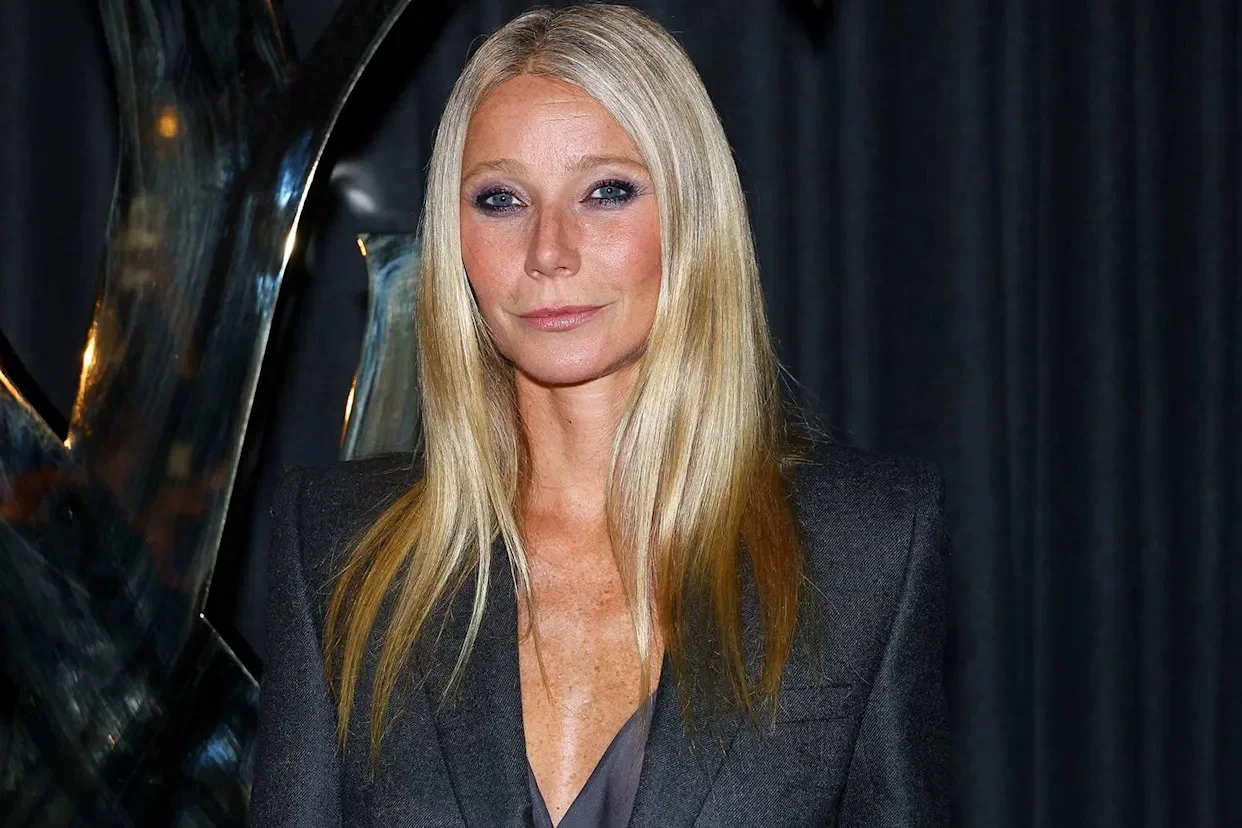
She also pointed out how frustrating it can be when people reduce her to simple stereotypes that fail to capture her complexity, but she is learning to stop trying to correct these misperceptions.
I know why, but these are like very tropey, reductive things that you could say about a lot of people and culture. And I also feel like I get distilled down to the most easy-to-understand trope. We’re all human beings, so it hurts when somebody willfully misrepresents you or misperceives you. You want to say, ‘But this is not true,’ or, ‘I never said that,’ but lately I’ve been really trying to almost meditate on this idea of, if you could get to the stage where you could really let go of trying to correct misperception, what could that do?
—Gwyneth Paltrow, actress and entrepreneur
The Impact of Social Media on Celebrity Privacy and Image
Paltrow contrasted her early days of fame in the 90s, when celebrities were cloaked in mystery, to the current social media era which demands ongoing self-exposure. She noted how Instagram disrupted the traditional celebrity mystique, forcing stars to share intimate aspects of their lives, a practice she finds discomforting given her introverted nature.
So, in the 90s there was all this mystery around movie stars and that was sort of part of the machine, I think, in a lot of ways. In the olden days movie stars were supposed to be mysterious and you were given these tidbits about their lives and it was so exciting and titillating. And then that bred this whole tabloid thing that reached an apex before Instagram.
—Gwyneth Paltrow, actress and entrepreneur
Instagram kind of dismantled a lot of that business model. There was this pursuit of images and information to sort of humanize celebrities, and then we segued into this bizarre new media milieu where everybody was putting their life in front. But for me, because I’m introverted, it’s been uncomfortable.
—Gwyneth Paltrow, actress and entrepreneur
She finds the instinctive sharing of personal moments on social media to be counterintuitive and challenging but acknowledges its effectiveness as a marketing tool, especially for growing a consumer packaged goods (CPG) business like her own.
It’s not intuitive. It’s very uncomfortable, but I understand from a marketing perspective how valuable that lever is and how, if you’re growing a CPG business, it’s very hard not to be a celebrity who is trying to leverage their celebrity without those channels.
—Gwyneth Paltrow, actress and entrepreneur
Clarifying Misconceptions About Goop and Its Audience
While Paltrow seems reluctant to fully clear up misunderstandings about herself, she addressed some common misconceptions related to her wellness company, Goop. She admitted that the brand’s offerings might not be accessible to everyone but insisted that Goop is not designed to be universally attainable or to transform customers into replicas of Paltrow herself.
I don’t think that everything on the site is unattainable, but trying to be everything to everybody is a disaster,
she shared.
The Goop woman is kind of, like, the ‘me’ of her circle.
—Gwyneth Paltrow, entrepreneur
She described Goop’s typical customer as a well-educated, affluent woman over 40, often living on the coast with children. She differentiated between readers of the site and paying shoppers, noting higher household incomes among the latter group.
She’s 40 plus, she has 2.2 children, college educated, largely coastal,
Paltrow said, adding that wealth is indeed a notable factor.
Yes, we kind of have two cohorts — we have a reader cohort and a shopper cohort, but the shopper cohort has a higher household income than the reader.
—Gwyneth Paltrow, entrepreneur
Importantly, she emphasized that Goop is about enabling people to be their authentic selves rather than aspiring to be like her.
selling people the prospect that they can be them.
—Gwyneth Paltrow, entrepreneur
Addressing Criticism and Defending the Brand’s Purpose
Paltrow also pushed back against critiques that Goop intentionally relies on gimmicks to attract attention. She insisted that the company was not created to shock but to explore health and wellness topics that were once seen as unconventional but are now mainstream.
We didn’t try to be gimmicky,
she said.
We weren’t like, ‘Hey, let’s make a vibrator to shock the world.’ The stuff that we talked about that people flipped out about that now is, like, so mainstream. There are so many examples of that … pelvic floor health, gut health, plant medicine, conscious uncoupling, clean food.
—Gwyneth Paltrow, entrepreneur
She also highlighted Goop’s appeal to women who appreciate a rebellious spirit and question traditional systems.
There’s also something irreverent about me,
she remarked.
There’s a push back against existing systems that I think our woman likes. That’s who I believe Goop is speaking to.
—Gwyneth Paltrow, entrepreneur
The Broader Implications of Paltrow’s Experience
Paltrow’s reflections reveal the emotional complexity of maintaining a public image that feels detached from reality, especially in the age of social media. Her comments suggest a deep personal conflict between privacy and public exposure, as well as a desire for authenticity that is challenging to uphold in the spotlight. The “Gwyneth Paltrow misunderstood narrative” underscores how celebrity personas often become distorted avatars that the individuals behind them struggle to reclaim.
Her willingness to openly discuss these struggles may prompt broader conversations about how society perceives public figures, the toll of constant scrutiny on mental wellbeing, and the shifting dynamics of celebrity culture in digital spaces.
