
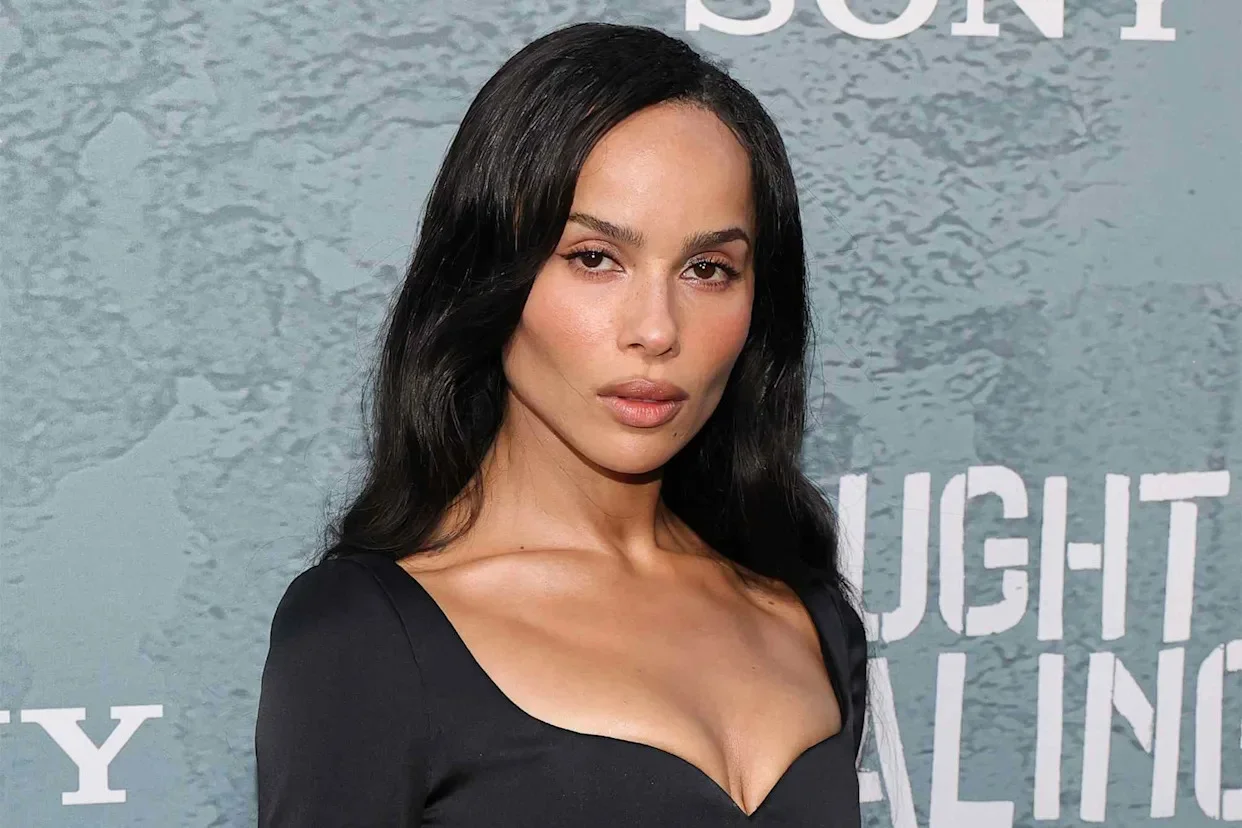
Zoë Kravitz recently shared mixed feelings about the ’90s, expressing enthusiasm for the era’s culture while criticizing the casual homophobia rampant in much of its media. Speaking about her new film, Caught Stealing, Kravitz admitted to feeling nostalgic for certain elements of that time, such as the fashion, the grunge scene, and the New York City vibe. However, she made it clear she prefers the present era over the ’90s regarding attitudes toward LGBTQ representation.
“[I’m] really nostalgic for that time,”
Kravitz told PEOPLE.
“Then also the fashion, all that stuff’s so cool. New York City and the grunge.”
She added a sharp critique of the humor embedded in popular shows from that decade, stating,
“Super homophobic jokes on mainstream television. If you watch Friends now you’re like, ‘Whoa.’”
Friends‘ Casual Homophobia and Reactions from Cast
Kravitz’s comments sparked surprise from her Caught Stealing co-star Austin Butler, who expressed disbelief that such content appeared in Friends. Kravitz confirmed,
“Oh, so much in Friends. Like, things that aren’t punchlines are punchlines. It’s wild. So maybe that? We can keep that there.”
Friends, known for following the lives of six young adults in New York City, remains one of the most-watched syndicated shows worldwide more than twenty years after it originally aired. Nevertheless, its portrayal of LGBTQ characters has drawn criticism from many fans and critics for being outdated and insensitive.
Challenging LGBTQ Storylines Within Friends
Two story arcs in particular complicate the show’s legacy regarding queer representation: the relationship between Ross’ ex-wife Carol and her partner Susan, and the character of Chandler’s transgender parent. Episodes featuring Carol (played by Jane Sibbett) and Susan (Jessica Hecht), especially the season two episode titled The One With the Lesbian Wedding, included humor at the expense of the couple’s queerness.
Meanwhile, the show’s handling of Chandler’s transgender parent received criticism from both the cast and creators. Marta Kauffman, one of Friends’ creators, offered a candid admission about the mistakes made in portraying this character.
“We kept referring to her as Chandler’s father, even though Chandler’s father was trans,”
Kauffman explained in 2022.
“Pronouns were not yet something that I understood… So we didn’t refer to that character as she. That was a mistake.”
Kathleen Turner, who portrayed Chandler’s parent, acknowledged the show’s shortcomings in 2018 by stating, “The show hasn’t aged well.”
Revisiting ’90s Media Through a Contemporary Lens
The discussion sparked by Kravitz highlights the growing awareness and critique of how LGBTQ individuals were treated in popular entertainment of the past. While the ’90s are often celebrated for their distinct cultural contributions, the period’s approach to queer representation is now being reevaluated with a more critical eye. This reassessment encourages audiences to recognize progress made and the importance of continued efforts toward respectful inclusion in media.
