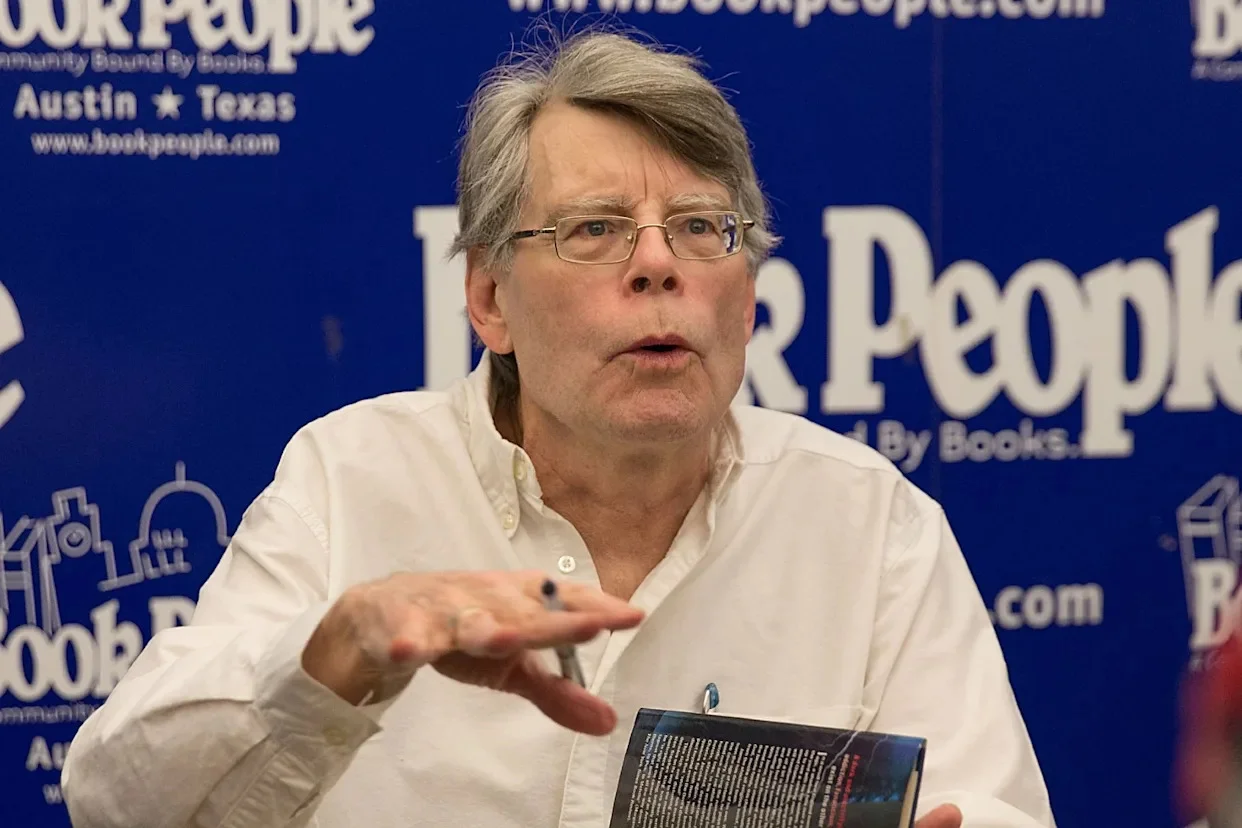
Stephen King used ‘The Dark Half’ to symbolically kill his Richard Bachman alter ego, tackling inner creative conflicts.
Stephen King, already established as a leading horror author with his debut novelCarrie, sought to break free from genre constraints by adopting the pseudonym Richard Bachman in the 1980s. Through Bachman, King explored crime and thriller genres, achieving moderate success until his disguise was uncovered following the release of Thinner. This revelation prompted King to retire the Richard Bachman name, though he chose a symbolic method to end this persona’s career.
In 1989, King published The Dark Half, a novel that blurred lines between author and alter ego. The story focuses on Thad Beaumont, a writer who created the pseudonymGeorge Stark to publish thrillers. When Beaumont attempts to retire Stark, the alter ego manifests and threatens his life, mirroring King’s real-life confrontation with his own pen name. The book was later adapted into a 1993 film starring Timothy Hutton, though it remains one of King’s more underrated adaptations.
The Dark Half as a Metaphor for Ending the Bachman Identity
The parallels between Stephen King’s Richard Bachman books and the fictional George Starknovels in The Dark Half are clear. Bothauthors created alternate personas to escape their typical writing styles and eventually sought to retire these identities. King acknowledged this in the author‘s note, stating,
Image of: Stephen King
“I am indebted to the late Richard Bachman.”
The nameGeorge Stark itself was inspired by mystery writer Donald E. Westlake’s pseudonym, Richard Stark, used for darker literature. This connection underscored how King grappled with his alter ego publicly revealed after the success of Thinner. A determined reader identified Bachman’s true identity and alerted King, effectively ending Bachman’s anonymity.
King stated he initially accepted Bachman’s demise but soon entertained a troubling thought, as noted by Bev Vincent in his analysis of King’s work:
“For a while I started to think, ‘Suppose Bachman wasn’t dead?’ And immediately the idea jumped to mind: What if a guy has a pen name that didn’t want to stay dead and isn’t that an interesting idea and how would that work out?”
For a while I started to think, ‘Suppose Bachman wasn’t dead?’ And immediately the idea jumped to mind: What if a guy has a pen name that didn’t want to stay dead and isn’t that an interesting idea and how would that work out?
This concept shaped the novel’s narrative, revealing that at a subconscious level, Thad Beaumont was both tormented and strangely attached to his pseudonym, George Stark. Ultimately, King resolved this internal conflict by “killing”Stark in the story, which symbolized the death of Richard Bachman.
The Unexpected Impact and Endurance of the Bachman Works
Despite King’s attempt to retire Bachman, the pseudonym found unexpected success, surpassing the author’s initial hopes. King’s wife reportedly dislikes The Dark Half because it exposes how Bachman as a pen name might overshadow King’s own identity and moral character.
The works published under Bachman have been adapted into films, sustaining the alter ego’s relevance. Notably, The Running Man (1987), featuring Arnold Schwarzenegger, became a cult classic, and Thinner, directed by Tom Holland in 1996, recalled the darker thriller style Bachman was known for, although it failed to achieve lasting acclaim.
One of Bachman’s novels, Rage, was withdrawn by King due to its association with real-life school shootings, highlighting the sometimes uneasy relationship between fiction and reality. Meanwhile, The Long Walk has been a persistent dream for adaptation, with various directors such as George Romero, Frank Darabont, and André Øvredal attached to the project at different times.
King revived the Bachman pseudonym in the late 1990s with a unique approach: in 1996, he released Desperation under his own name alongside The Regulators as a Bachman book, featuring overlapping characters in separate narratives. This was followed by Blaze published in 2007, marking the full return of Bachman in King’s bibliography.
Upcoming 2025 Film Adaptations of Richard Bachman Novels
Fans of Stephen King and his Richard Bachman alter ego have much to anticipate in 2025, as two major film adaptations of Bachman’s novels are slated for release. King’s larger slate in 2025 also includes adaptations such as The Monkey and the TV series The Institute, both drawing attention from his extensive fanbase.
In September 2025, The Long Walk will premiere in theaters under the direction of Francis Lawrence, known for his work on The Hunger Games. The film presents a dystopian set-up where young men participate in a grueling endurance march, with only one winner rewarded while the others face deadly consequences.
Following that, in November 2025, Edgar Wright, famous for hits like Shaun of the Dead and Hot Fuzz, will direct a new version of The Running Man. This adaptation aims to adhere more closely to Bachman’s original novel’s themes, offering a fresh perspective distinct from the 1987 Schwarzenegger film. Despite King’s narrative “death” of Bachman in The Dark Half, the alter ego persists in cultural and cinematic forms.
The Enduring Legacy of King’s Pseudonym in Literature and Film
The story of Stephen King’s Richard Bachman alter ego is a compelling example of an author wrestling with creative identity and the boundaries of genre. Although initially a strategic move to diversify his writing, the Bachman persona took on a life of its own in King’s fiction and in the eyes of his readers.
King’s symbolic “death” of Bachman through The Dark Half served as a cathartic moment, yet Bachman’s influence never fully disappeared, as seen in the sustained popularity of the pseudonym’s works and their ongoing film adaptations. The upcoming releases in 2025 stand as a testament to the enduring fascination with this dual identity and its themes of transformation, endurance, and survival.