
Oscar Isaac reveals that playing Victor Frankenstein was not initially a role he envisioned for himself. When he first met Guillermo del Toro, the acclaimed director did not mention his plans to create a new adaptation of the classic Frankenstein story, nor was Isaac aware that del Toro was searching for the perfect actor to embody the infamous doctor. It was only at the end of a lengthy meeting that del Toro revealed his intent.
“I didn’t find out until the end of a two-hour sit-down,”
Isaac recalls with a laugh while speaking to Entertainment Weekly on a busy New York City street.
“He said, ‘I think you have to be my Victor.’ And I said, ‘What now?’”
The conversation that ultimately convinced del Toro to cast Isaac did not revolve around the character of Victor Frankenstein but instead touched on the theme of fatherhood.
Exploring Victor’s Relationship with His Father
The movie presents Victor as a broken man at the edge of the Arctic, terrified and desperate. Isaac explains that the storytelling begins with Victor’s complicated relationship with his own father, which is central to the film’s emotional core.
“When we first find [Victor], he is this ragged man at the end of the Arctic. He is terrified. He is running. You don’t know if he’s running away or running through something or what’s going on,”
Isaac says.
“As Victor tells his tale, he begins with his father and his own creation. ‘How was I created? How was this person created? And if I’m gonna tell you about this horrible secret that I have, I must tell you how it got there. And that’s with my own father.’ So when Guillermo and I first met, that’s what we mostly talked about. We didn’t even talk about Frankenstein.”
This focus on the father–son dynamic marks a shift from previous interpretations of the story and gives the character of Victor deeper emotional layers linked to his family history.
Guillermo del Toro‘s Longstanding Passion for Frankenstein
Guillermo del Toro, a devoted fan of the Frankenstein story, has nurtured a deep connection to the tale for decades. Isaac describes del Toro’s enthusiasm:
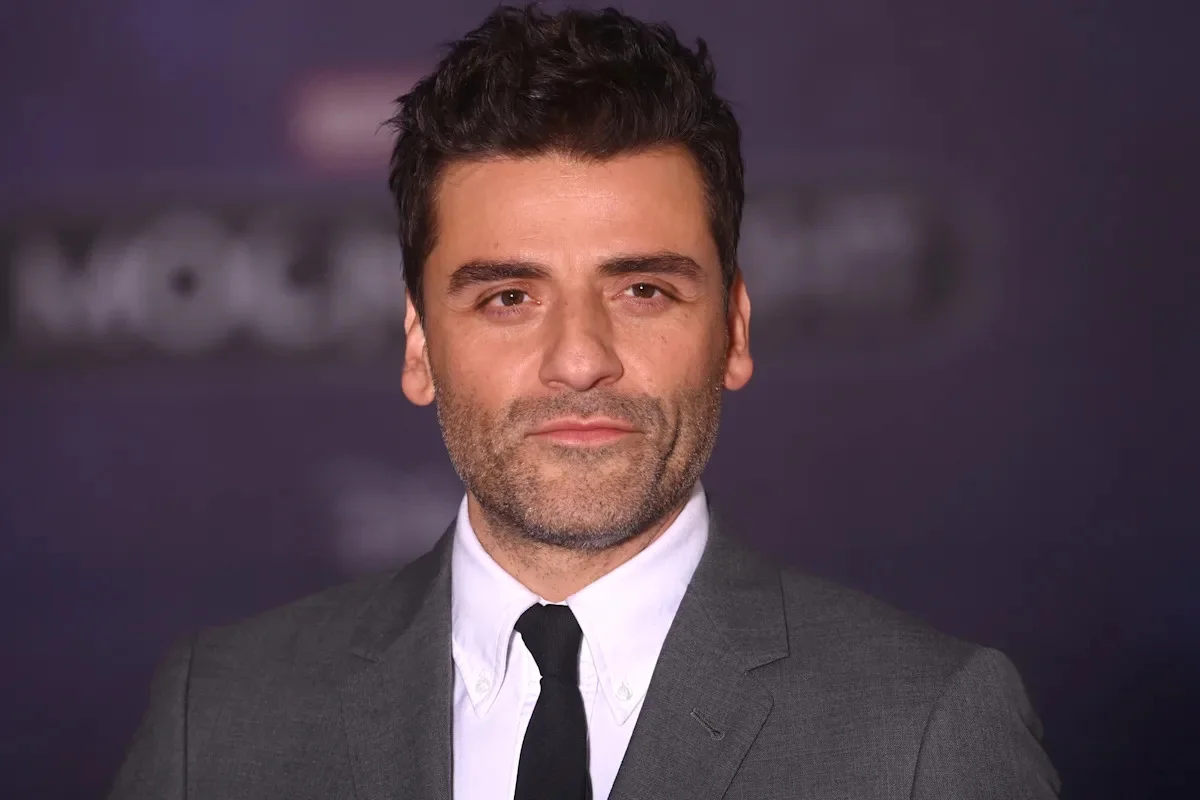
“You know, he has a house dedicated to Frankenstein,”
he says with admiration.
“He’s lived with this for 30 years. It’s his bible, and yet, he has somehow believed [so much] in that love that he’s letting it tell him what to do; he’s not controlling it.”
Del Toro’s adaptation, set to premiere in select theaters on October 17 before launching on Netflix on November 7, aims to refresh the story with his unique vision and long-held reverence for the source material.
A New Take on Victor’s Paternal Influence
Unlike Mary Shelley’s novel and many cinematic versions, del Toro’s film depicts Victor’s father, played by Charles Dance, as a dominant and abusive figure rather than a nurturing presence. Isaac highlights this contrast:
“In our film, he’s not that way: He has a very domineering father that’s quite abusive but that expects so much of him. And in fact, somebody that Victor blames for the death of his beloved mother.”
This tense paternal relationship shapes much of Victor’s motivation and turmoil throughout the story.
Revealing the Creation Process Unabashedly
Where prior adaptations often shrouded Victor’s scientific experiment in mystery to prevent dangerous imitation, del Toro’s version openly explores the mechanics and intensity behind his work. Isaac enjoyed the immersive experience of filming in Victor’s lab, an environment filled with visceral imagery of limbs and blood.
“The whole time we were in the lab, my alarm would go off at 4 a.m. sometimes, and I’m just jumping out of bed ready to get to work ’cause it was a banquet. And that one, it’s quite specifically a meat banquet,”
Isaac explains.
“There are these huge blocks of actual ice that you’d have all these [prosthetic] limbs on and blood everywhere.”
Isaac personally connected with this aspect since his own father is a doctor who even visited the set.
“The irony is, my father is a doctor and even visited set at one point. So I have that interest in the marvel of the human body built in.”
Portraying Victor as a Scientist and Rock Star
Del Toro encouraged Isaac to imagine Victor Frankenstein as more than a scientist—he is a “crazed artist,” specifically modeled as a musician with a commanding stage presence. Inspired by iconic performers like Jimi Hendrix and Prince, Victor approaches his laboratory as if it were a concert stage.
“That really sent us, and also Kate Hawley, the incredible costume designer, looking at references from the late-’60s and ’70s — Jimi Hendrix and Prince, watching the way Prince moves around the stage,”
Isaac explains.
“When Victor goes into the lab for the first time, he is looking at it like a concert hall, and he is saying, ‘Where do I want my singers? Where do I want the pyrotechnics? Where is all this gonna be?’ So that was a really fun energy. Guillermo [said], ‘This guy’s a rock star. He is the rock star of the moment,’ because at the moment, what everyone’s psyched about is these new incredible discoveries in science, and he’s at the frontier of that. There’s like a euphoria around that.”
This fresh perspective emphasizes the excitement and creative drive behind Victor’s groundbreaking work.
The Emotional and Physical Decline of Victor Frankenstein
Throughout the film, audiences will trace Victor’s trajectory from a vibrant, celebrated “rock star” scientist to a weary and battered man shaped by his relentless quest to conquer death, fueled by a desire to overcome his father’s control.
“You see that start to crumble and go more interior,”
Isaac says.
“He himself becomes much more of a monster and a creature by the end of it, as the actual creature starts to become more human.”
Isaac highlights the mirrored transformation between Victor and his creation, signaling a deep thematic link central to del Toro’s interpretation.
The Mirrored Connection Between Creator and Creation
In this adaptation, Victor Frankenstein and his creature reflect each other on multiple levels, encompassing the cycle of fatherhood, legacy, and redemption.
“They are a mirror of each other. They’re just these twin things, much like what his story’s about: The way that a father passes on to a son, and that son becomes a father and passes it on to his son, and the way these circles just keep going and keep going,”
Isaac explains.
“At the end, this heartbreak happens, and this forgiveness happens. And the hope is that this creature, who’s all set up to create chaos and violence, somehow stops that and changes it all.”
Jacob Elordi, who plays the creature, delivers a performance that Isaac describes as touching and intricate, defying typical horror tropes.
“He did so much work in a short amount of time, and as soon as he walked on set, he is heartbreaking,”
Isaac remarks about Elordi.
“Both scary and strange and mysterious and graceful, and very beautiful.”
Del Toro’s Humanized Monsters and Supportive Direction
Del Toro is known for portraying his creatures with dignity and complexity, as seen in his previous works like Pan’s Labyrinth and The Shape of Water. Despite the pressure of working on such a beloved story, Isaac notes that del Toro reassured him, Elordi, and Mia Goth—who plays Elizabeth Lavenza—that their efforts were supported fully by the director’s confidence.
“One of the first things he said is, ‘You can’t fail. You just need to show up,’”
Isaac recalls.
“So there was permission to not feel an obligation…. [He] absolved us of that pressure.”
This encouragement fostered an environment where the actors could explore their characters with freedom and depth.
Anticipation for Guillermo del Toro’s Frankenstein
With a theatrical release scheduled for mid-October and a Netflix debut in early November, del Toro’s Frankenstein promises to offer a distinctive and emotionally complex interpretation of the classic tale. Oscar Isaac’s portrayal of Victor combines scientific genius with a rebellious, rock star-like energy, reshaping the iconic character for modern audiences. The film‘s exploration of family, creation, and identity is positioned to resonate deeply, continuing del Toro’s legacy of humanizing legendary monsters while contributing a fresh voice to the Frankenstein story.
