
Twinless, now showing in theaters, features Dylan O’Brien portraying twins Rocky and Roman in a story centered on grief and complicated relationships. The film includes a particularly striking and uncomfortable scene involving toe-sucking, which stands out as an unusual moment in O’Brien’s performance during the climax. This moment arises as Dennis, played by James Sweeney—who also wrote and directed the film—shares a hotel room with Roman and confesses a secret, while the toe-sucking adds an unexpected and disturbing dynamic.
Plot Dynamics and Character Interactions
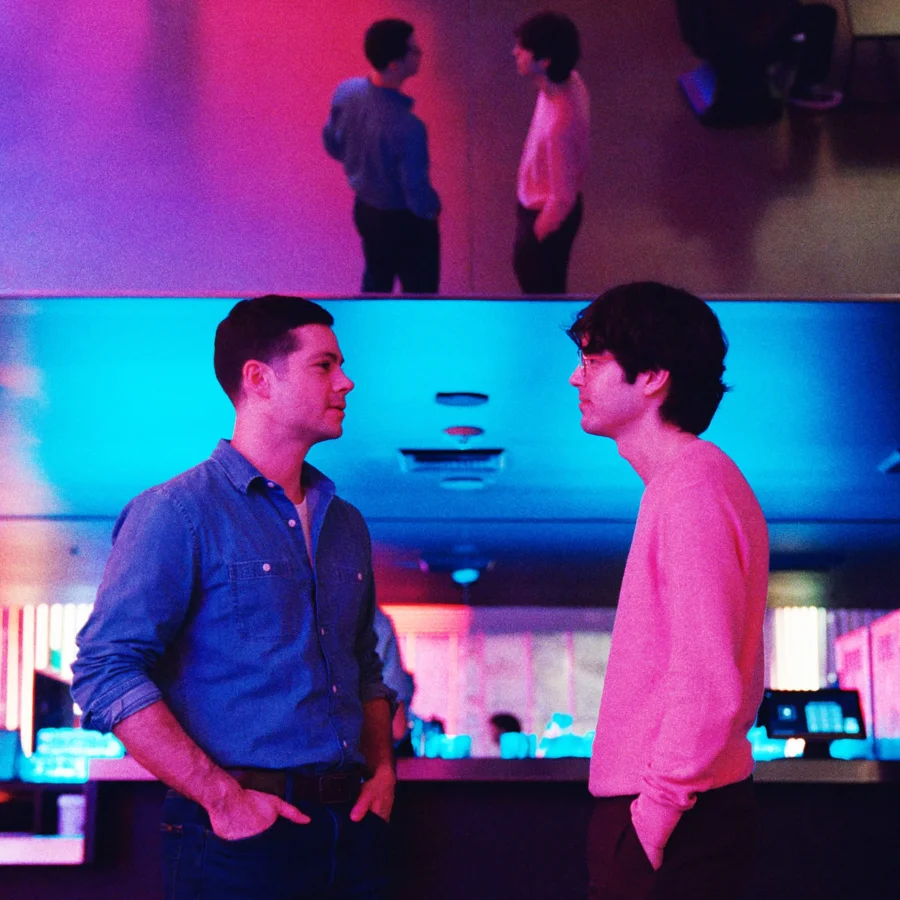
In Twinless, Rocky’s death in a tragic accident sparks the story, pushing Roman to connect with Dennis at a twin loss grief group. However, Dennis reveals he is not actually a twin; rather, he had a brief relationship with Rocky and was present at his fatal accident. This revelation complicates Roman’s grieving process and leads to the tense hotel room scene where Dennis tries to recreate the intimacy he had with Rocky by massaging and licking Roman’s toes. Despite the scene’s awkwardness, O’Brien took care to prepare for it thoughtfully.
We were shooting in a real hotel,
O’Brien told Entertainment Weekly.
So, there was a tub, and before we shot it, I went in and scrubbed away.
—Dylan O’Brien
Portraying Violence with Subtlety
Following the toe-sucking, the film takes a darker turn as Roman reacts violently to Dennis’ actions by beating him. The violence’s extent is left deliberately ambiguous; viewers only see Roman making angry strikes with Dennis positioned between two beds, obscuring the full impact. Sweeney explained the filming choices as both practical and artistic.
We tried to take a more objective approach to how we shot that,
he said.
Conveniently, it also made it easier to choreograph and didn’t require a stunt double. In terms of audience reactions, that more sobering approach is actually more painful to watch. Because now they have to use their imagination of what’s happening.
—James Sweeney
Crafting the Shocking Crash Scene
One of the film’s most harrowing moments is Rocky’s death in a crosswalk accident, which opens the film. Rocky steps into traffic after Dennis confronts him for ghosting, and is struck by a speeding car. Although the crash‘s visual elements were created using multiple plates combined with visual effects, the challenge lay in how to act the scene convincingly while maintaining shock and surprise.
I wanted it to be unexpected,
Sweeney commented.
I didn’t want it to be broadcast because oftentimes what happens in those scenes is like, ‘Oh, I know somebody’s about to get hit by something.’
—James Sweeney
O’Brien added insight into their efforts to not telegraph the crash early in filming:
We were trying as hard as we can to not telegraph it. So much of making things is you’re just guessing. So the conversation on the day was like, ‘What innocuous line do we put this in the middle of?’
—Dylan O’Brien
Technical Choices to Maintain Surprise
Camera angles played a crucial role in preserving the element of surprise around the crash scene. Sweeney described the approach to avoid drawing attention to the danger by not changing the setup dramatically. O’Brien reflected on the choice, recognizing its importance in preserving the film’s impact.
I wanted to not do an entirely new setup that showcases it,
said Sweeney.
That was the key to keeping it surprising.
—Dylan O’Brien
Impact and Viewing Experience
Twinless delivers an intense and emotionally charged exploration of loss, complicated relationships, and grief through its unique storytelling and scenes. Dylan O’Brien’s dual role, combined with James Sweeney’s direction and performance, creates a film that challenges audiences with uncomfortable but authentic moments. The choices made in filming and editing heighten the uneasy atmosphere, giving viewers space to imagine and emotionally engage with the darker aspects of the narrative. Twinless remains in theaters now, inviting audiences to confront these difficult themes firsthand.
