
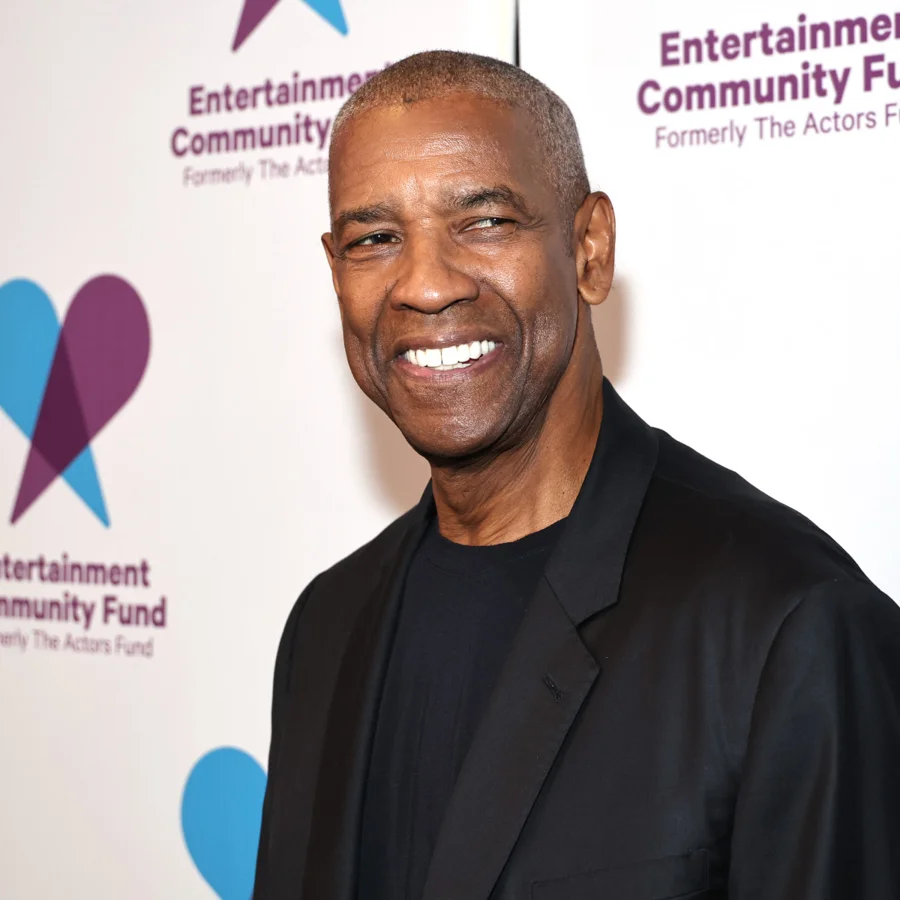
Denzel Washington, a two-time Oscar winner and longtime Hollywood icon, has been acting for nearly fifty years and has appeared in over 60 movies. Despite his legendary status, Washington openly admits that some of his films failed critically and commercially, particularly those from the 1990s. The actor revealed in an interview with The Times that these flops were largely due to financial pressures and personal responsibilities, explaining that this period was one where he prioritized earning money to support his family and lifestyle.
Washington described his career as divided into phases: one for learning, another for earning, and a final one for giving back. During the 1990s, he acknowledged,
“I was earning. I had responsibilities,”
and added,
“With a great agent, my career built into making money and so the earning kicked in and then life also kicked in, with bills, four kids and a house.”
This candid admission sheds light on why some of his projects from that era missed the mark, despite his undeniable talent.
Examining the notable missteps in Washington’s filmography
Although Washington avoided naming specific films when discussing his ’90s low points, several titles stand out as likely candidates. Shortly after the critical success of Malcolm X, Washington starred in the legal thriller The Pelican Brief alongside Julia Roberts, which was met with lukewarm reviews. The following year, he took a role in the sci-fi flick Virtuosity, playing a former cop involved in a virtual reality experiment; this film received only a 33% approval rating on Rotten Tomatoes, marking it as one of Washington’s less successful efforts.
Nonetheless, the 1990s were not entirely bleak. The same year that The Pelican Brief faltered, Washington delivered a powerful performance with Tom Hanks in the acclaimed drama Philadelphia. Additionally, the 1995 neo-noir thriller Devil in a Blue Dress was praised critically, though it did not do well financially. These films demonstrate that despite some stumbles, Washington’s acting during this decade contained noteworthy highlights that shaped his future success.
Washington’s acknowledgment of his financial motives during the ’90s also underlines the complexity of an actor balancing artistic ambition with practical realities. He admitted that the decade’s “clunkers” were a byproduct of his need to sustain his family, but that this phase also enabled him to reach higher-profile roles later. Following this era, Washington starred in prominent movies such as Deja Vu and American Gangster, which garnered widespread acclaim and box office success.
Critics identify Washington’s poorest films as predating the 1990s
While Washington considers his worst work to be from the ‘earning’ period of the 1990s, critics and audiences point to even earlier films as his lowest points. According to Rotten Tomatoes ratings, his least successful film is 1990’s Heart Condition, where he played a lawyer whose heart is transplanted into a racist cop, played by Bob Hoskins. The film holds a meager 10% approval rating, making it his most poorly reviewed movie by a wide margin.
General moviegoers, however, highlight 1988’s For Queen and Country as his least favorite. In this film, Washington portrays Reuben James, a British ex-paratrooper returning to a crime-ridden London neighborhood. It has a 28% audience score and is also noted as one of Washington’s lowest-grossing projects. Both of these early performances preceded the series of films in the ‘90s that Washington recalls as challenging, showing that his career lows extend before the decade he pointed to.
The long-term impact of Washington’s career challenges
Denzel Washington’s transparency about his career struggles offers insight into the difficult choices faced by actors balancing artistry and livelihood. While some of his work from the ‘90s may not have pleased critics or fans, these roles helped sustain the actor through a demanding personal phase filled with financial and family obligations. This period ultimately became a foundation for growth, leading to a later surge of critically acclaimed performances and accolades.
By openly admitting to moments of professional difficulty, Washington humanizes his journey and highlights the complexities behind fame. His willingness to acknowledge these less celebrated films reinforces his credibility and respect as an artist committed to his craft, despite inevitable setbacks. Moving forward, his reputation remains rooted in transformative roles that define him as one of the most accomplished actors of his generation.
