
For nearly ten years, Harris Dickinson has carved out a distinct space on screen by portraying masculinity in its myriad forms. Since his breakthrough role in 2017’s Beach Rats, where he played a vulnerable Brooklyn teenager grappling with his sexuality, Dickinson has consistently embodied layered male characters. His performances range from intense depictions like a professional wrestler in The Iron Claw to the subtler cynicism of an Instagram boyfriend in Triangle of Sadness, revealing his commitment to fully inhabiting roles informed by his own life experiences.
While Dickinson recently captured attention online with his dynamic dancing in Babygirl and now prepares for the high-profile task of portraying John Lennon in Sam Mendes’ upcoming Beatles tetralogy set for release in 2028, he remains grounded in his creative roots. When interviewed in a warehouse near his East London hometown, Dickinson reflected on the intensity of his journey, particularly focusing on his directing debut with Urchin, marking a new chapter in his career.
Harris Dickinson’s Transition Behind the Camera with Urchin
Urchin marks Dickinson’s first feature as a writer-director, a project he began crafting in 2020. The film centers on Mike, an outcast in London played by Frank Dillane, navigating the turbulent waters of addiction and personal trauma. This deeply personal story draws heavily from Dickinson’s own past, including his experiences working various jobs as a young man and the lessons he has assimilated from the industry. His intimate connection to the local homeless community also informed the film’s authenticity, portraying a world often overlooked.
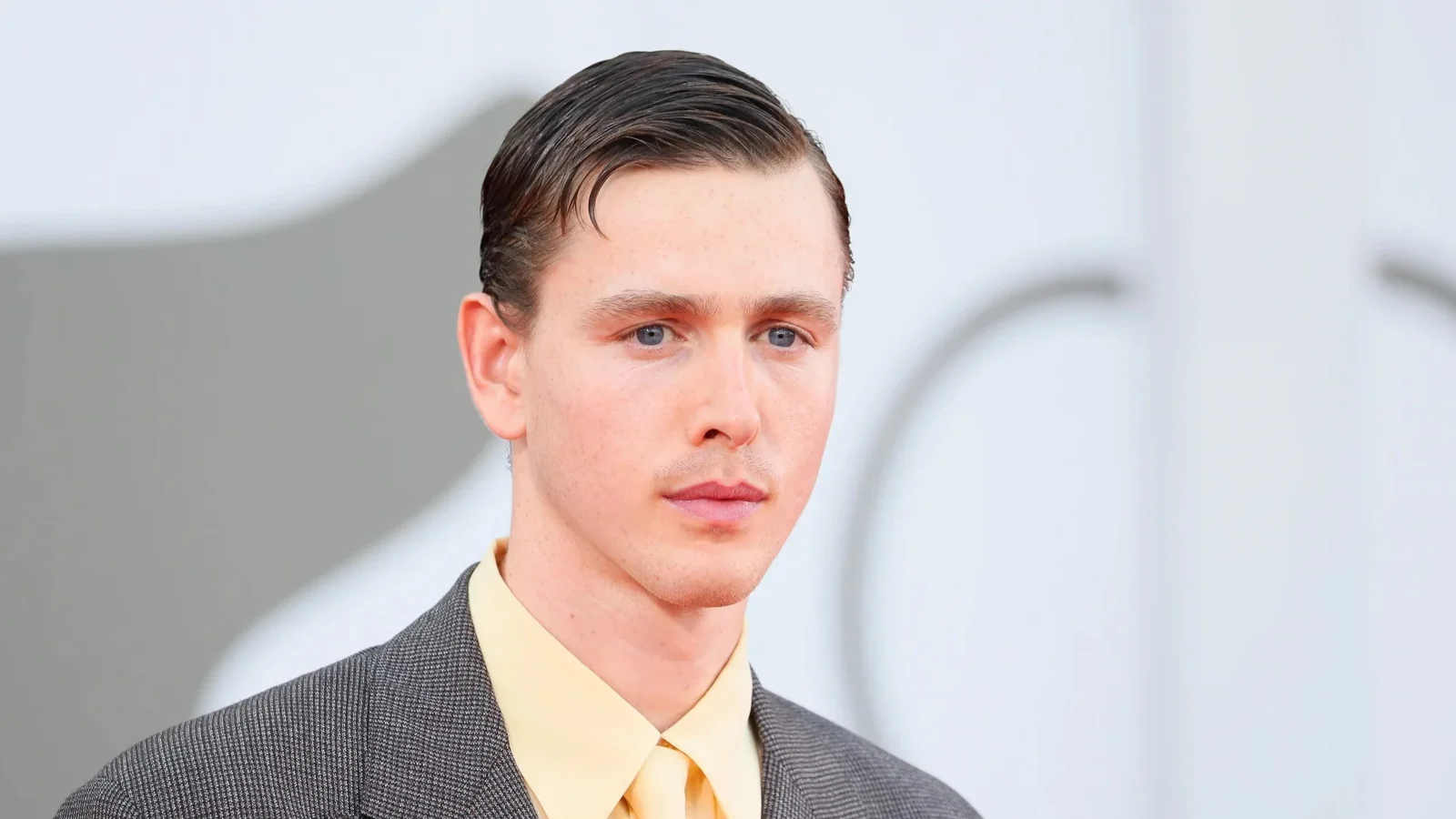
Discussing the character of Mike, Dickinson noted how the role extends his long-standing interest in complex, “knotty” characters who oscillate between innocence and maturity. Halina Reijn, director of Babygirl, once described Dickinson’s Beach Rats performance as embodying
“the boy and the man in one.”
In examining this duality, Dickinson explained,
“Because that’s what we’re all doing, aren’t we? We’re all trying to pretend not to be these little kids that we once were. On a very Freudian level, we’re all trying to figure out how to navigate our lives in a way that’s deeply confusing. At least I feel that, and I’m constantly battling with my own understanding of adulthood and maturity and masculinity and how to move through the world in a way that feels correct.”
The Emotional and Physical Demands of Portraying Vulnerable Characters
Mike, the protagonist of Urchin, represents a man unable to confront responsibility, using avoidance as a shield from trauma. Dickinson described this as a common defense mechanism for those with past hardships, framing Mike as a man-child lost without direction.
Physicality has been a consistent factor in Dickinson’s body of work, often demanding intense physical commitment. From the rigorous muscle gain required for The Iron Claw to the dramatic weight loss experienced for Trust, his dedication has tested both his limits and health. Reflecting on those experiences, he acknowledges,
“I lost a lot of weight when I was 21, 22, when I did a series with Danny Boyle [2018’s Getty oil-drama Trust]. There was a naivety to it. I didn’t really have a support network, I just did it on my own. I did it very unsafely, and I struggled with that and I have to rethink projects now because of that.”
This awareness influenced his direction of Frank Dillane in Urchin, observing the physical toll on his co-star as he lost weight and sustained an injury during filming. Dickinson shared,
“Frank is a really physical performer. He really put himself through a lot and lost a lot of weight [to play Mike]. He messed up his shoulder because of how much he was hunching. I’d see that and I’d get worried because I’d also been on the other side of it. So as a director I was constantly making sure he’d had his food.”
Creating a Supportive Environment for Actors
Dickinson’s extensive acting background shaped his approach to directing, particularly his sensitivity to the vulnerability of performers. He emphasized the importance of comfort on set, stating,
“It’s really vulnerable, isn’t it, acting? It’s an embarrassing process — well, it is for me — it’s a weird and humiliating thing, and feels rather silly at times. So I’m constantly having that in my head when I’m directing and creating the right setting for actors in order to feel comfortable. Then when comfortability comes, I think good performances can come because you’re able to access stuff and lose inhibition. If you’ve got the wrong settings, then it doesn’t work.”
Looking back at his own introduction to film sets, Dickinson recalled his first experience on Beach Rats as an intense, low-budget shoot with a guerrilla style. Describing the energy on set, he said,
“I just loved behind-the-scenes videos. I was always rushing to the Blockbuster near us.”
—Harris Dickinson
He remembered the excitement and learning curve of working in such conditions, noting the sense of desperation and immediacy that fed his passion.
Influence of Cinema and Mentorship on Dickinson’s Filmmaking
Growing up, Dickinson was fascinated by filmmaking techniques and storytelling. He recounted how early exposure to films like American Beauty and Donnie Darko led him to notice the craft behind the camera, reflecting on the camera work as deeply deliberate. His curiosity extended to behind-the-scenes content, where he often sought out documentaries and featurettes to learn more.
During the making of Urchin, Dickinson consulted closely with directors such as Ruben Östlund, who encouraged him to trust his instincts and make bold choices in editing and storytelling. Dickinson remembered their conversations with gratitude, quoting a conversation with Östlund:
“It’s your film. Change it. Listen to your gut.”
—Harris Dickinson
Incorporating Humor Amidst Serious Themes
Though often associated with intense roles, Dickinson revealed that humor plays a vital part in his work. He credited Triangle of Sadness with allowing him to explore comedic talent and acknowledged comedy as a foundational pathway into acting.
He explained the importance of incorporating humor into Urchin, highlighting how it reflects real-life coping mechanisms within marginalized communities.
“People who have been to the extreme end of morality are often the ones who can be the most humorous. Because they’ve got nothing to lose,”
Dickinson said, emphasizing the delicate balance between levity and gravity in his storytelling.
Returning to Familiar Places and Personal Memories
Filming parts of Urchin at a London hotel where Dickinson once worked added emotional depth to the production. Though the building had changed ownership and purpose, the actor-director found comfort in its lingering familiar smells and spaces.
Reflecting on his time there, Dickinson shared,
“I worked a lot of late-night shifts and the manager was really kind to me. When I started to get auditions through he would let me take the time off. I remember I got an [acting] job and I quit the hotel. I was like, That’s me done. Then I finished the job and very quickly realised that it doesn’t work like that: you still need an income because that money’s gone already. So I limped back in and asked for my job back and he gave it to me.”
Facing Vulnerability and Public Recognition
Dickinson openly addressed the vulnerability inherent in pursuing creative work, acknowledging that fear is part of that process. When discussing Urchin’s acceptance at Cannes, he humorously described it as,
“like taking your prized goat to the goat fair”
and worrying about its readiness. Reflecting on the film’s reception, he said,
“The goat did well. The goat did really well. I don’t know if the goat was ready but it jumped through the hoops, it did the tricks. People liked the goat. People stroked the goat, and perhaps the goat’s ego got a little big, and now the goat is ready to come back to reality.”
With a growing public profile, especially after Babygirl broadened his fanbase, Dickinson strives to maintain a separation between himself and his public persona. He explained,
“Getting recognised has definitely picked up, which is a strange one. For the most part they’re positive encounters, which I feel lucky for. People just want to say something nice and that what you’ve done has resonated with them and then move on. It feels counter-intuitive to deny that; to pretend that you’re not in the public domain. But yeah, I think that separation is important, and not letting that define your sense of self. Not to be overly philosophical about it, but the more you engage with it, the more it will destabilise you. I’ve noticed that the more I engage with what’s being said, or with reviews, the less stable I feel. The best way is to understand it, have gratitude, and then carry on with the work.”
Looking ahead to playing John Lennon, Dickinson admitted mixed feelings about this heightened visibility:
“I’m in Beatles world, and I’m loving that, and it’s a great challenge.”
—Harris Dickinson
Despite the excitement, he maintains a grounded perspective on fame, noting quietly,
“I just don’t think that I’m that interesting. I don’t think people care in that sense.”
When reassured that Lennon’s legacy will naturally draw attention, Dickinson laughed,
“Yeah, he’s a pretty interesting bloke. But I’m not him. I don’t know, it’s a speculative question, isn’t it? Check back in in four years. I’ll be a mess.”
Shared Journeys with Fellow Actors
Dickinson also reflected on his friendship with Jeremy Allen White, who is preparing to play Bruce Springsteen in Deliver Me From Nowhere. Their conversations helped ease the pressure of entering such daunting roles, with Dickinson appreciating the camaraderie and understanding between actors undergoing similar challenges.
Balancing Large-Scale Projects with Personal Work
Currently navigating the demands of major productions while promoting Urchin, Dickinson highlighted the importance of mental separation between projects. He described a previous year of exclusive focus on directing Urchin as allowing clarity, before stepping back into acting and bigger commercial films. He explained,
“I keep my mind on that, but step out. I think it’s unhealthy to have one sole thing that your brain is working on. It’s healthy for me to have a few things to work on, maybe to my sleep’s dismay.”
Collaborating with Sam Mendes and Industry Insights
Working with Sam Mendes, known for directing American Beauty, a film that deeply influenced Dickinson’s early filmmaking interests, has been surreal. He expressed appreciation for Mendes’ down-to-earth nature, challenging stereotypes about creative geniuses.
“You should be able to be a good person as well,”
Dickinson insisted, emphasizing his respect for Mendes’ humility.
Self-Competition and Ambitions Moving Forward
Dickinson revealed that his primary competitor in the industry is himself. He detailed his internal drive:
“I think the fear always exists in me that the goat is only as good as the last time it went to the fair. Maybe that’s all I’m thinking of — that I’ve got to continually try and do better than what I’ve done. It’s probably normal. I don’t think it’s a unique perspective. But I’m my own worst critic. My harshest critic. And I think that’s a coping thing. Like, if I’m super-hard on myself, then no-one else can break me.”
Reflecting on his journey, he admitted moments of doubt early in his career:
“Maybe I don’t want to do this. Maybe I can’t handle not getting jobs.”
—Harris Dickinson
He described his current success as a fortunate outcome of persistence and labor, fully aware that many others share his dedication but lack similar opportunities.
Discussing future filmmaking plans, Dickinson expressed grand ambitions, humorously stating,
“I want to direct seven Marvel films in a row.”
When asked if he wanted to direct blockbusters like Maleficent or The King’s Man, films he has acted in, he said emphatically,
“No, no, no. I want to make the films that I want to make.”
He envisions creating entertaining, high-quality adult adventure stories that retain his authentic voice and integrate humor naturally. Referencing a compliment from filmmaker Sean Baker, Dickinson said,
“Sean Baker said at the London Film Festival that Anora is an adult cinema experience, and that’s what I want to do. I want to make films that are high-quality with incredible acting but have humour and that come directly from me in my own voice, that hasn’t been messed with. I don’t know exactly what that will be like. But I think that’s an okay ambition.”
Looking Ahead After Urchin’s Release
Urchin is set to arrive in UK cinemas from 3 October 2025, marking an important milestone in Harris Dickinson’s evolving career. His journey from determined young actor to confident writer-director exemplifies a creative force who harnesses personal experience and artistic ambition to tell compelling stories. As he prepares to take on the legendary role of John Lennon, audiences around the world will be watching closely to see how this next chapter unfolds.
