
The Season 3 finale of Foundation, titled The Darkness, delivered several unexpected twists that have left fans stunned about the show‘s future direction. David S. Goyer revealed key insights into these plot shifts, highlighting dramatic character deaths and surprising developments that alter the arc of the series. These changes coincide with significant shifts in the storyline, especially surrounding the decline of the Galactic Empire.
In the finale, Brother Dusk, portrayed by Terrence Mann, defies expectations by surviving beyond his intended fate and instead unleashes a violent rampage. He systematically kills all the Empire clones, including Demerzel (Laura Birn), who was on the cusp of gaining freedom, followed by Brother Day (Lee Pace). The episode closes with Dusk seated alone on the throne as the Empire crumbles, fulfilling Hari Seldon’s (Jared Harris) long-standing prophecy.
Another major shock was the true identity of the Mule, the antagonist for the season. Contrary to prior assumptions that Pilou Asbæk’s character held that role, it is Bayta (Synnøve Karlsen) who emerges as the real Mule. She has been covertly using her powers to manipulate others, including the pirate figure played by Asbæk, who mistakenly believes he is the Mule. This twist redefines several character dynamics within the series.
The finale’s closing moments also introduced a new mystery: a robot skull brought back to Trantor connects with another robot located on the Moon, near Earth, suggesting an expansion of the story’s scope and a nod to larger conspiracies yet to unfold.
Exploring the Secrets of Earth and Robots in the Foundation Universe
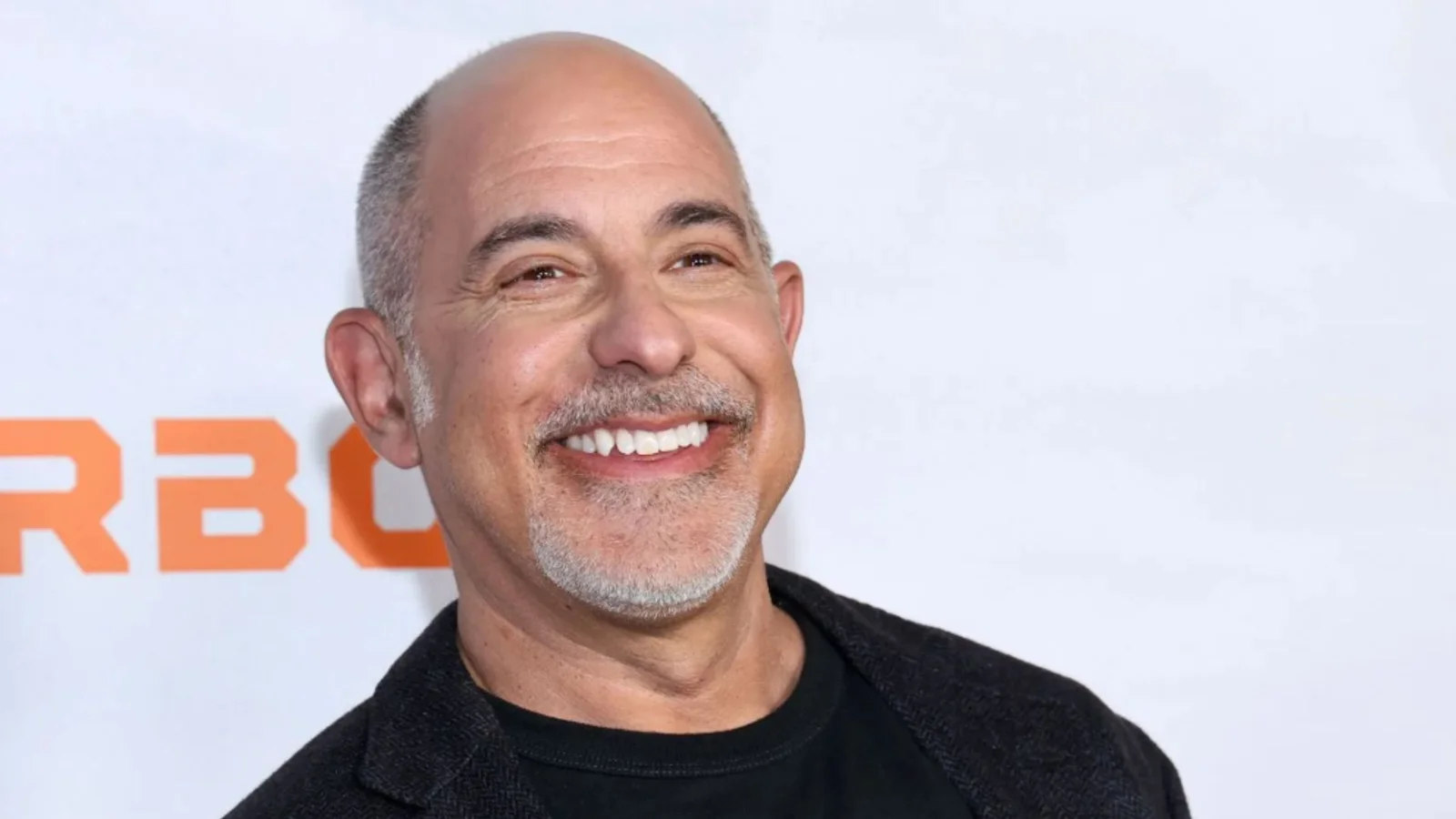
David S. Goyer shared with TheWrap that Earth still exists within the Foundation universe, but its location is deliberately obscured from public knowledge. He explained,
“We know that Earth is something that exists, but for whatever reason, people don’t know where it is anymore, which is not by happenstance, that information has been redacted. I think a lot of people were wondering, what is the deal with Earth? How did this all start?”
—David S. Goyer, Showrunner
The show incorporates elements from Isaac Asimov’s original books, where robots, thought to be destroyed, have been secretly hiding on the Moon since the Robot Wars.
“In the books, the robots are hiding in the moon, there’s a group of them that haven’t been destroyed, and they’ve been on the moon ever since the Robot Wars. They’ve just been silently watching and waiting and deciding when to make their presence known again.”
—David S. Goyer, Showrunner
Goyer originally planned to reveal this Moon connection at the end of Season 5 but chose to accelerate this storyline to align with the Empire’s fall in Season 3. This move was part of an effort to maintain momentum and sustain audience engagement as the show enters its next chapters.
David S. Goyer’s Departure and Reasons Behind It
While Foundation has been renewed for a fourth season, David S. Goyer confirmed that Season 3 would be his final one as showrunner. He cited multiple reasons for stepping down, including impending budget cuts and the logistical challenges of managing production from a distant location, away from his family in Los Angeles.
“They wanted to lower the budget, which is totally their prerogative. I just was worried that, having done three seasons of it, I was having a hard time figuring out how to keep doing my vision of the show on a smaller budget,”
—David S. Goyer, Showrunner.
Goyer indicated the show’s filming location in Prague, coupled with extensive travel times, specifically impacted his ability to balance work and family life:
“Our production home base is in Prague, and there aren’t not even any direct flights to Prague, so doorway to doorway, it’s like 18 to 20 hours.”
This separation forced difficult decisions about his continued involvement.
Despite his exit as head showrunner, Goyer remains an executive producer, providing story outlines for forthcoming seasons. He emphasized that he designed the series with various stopping points, allowing potential conclusions after Seasons 4, 6, or 8. This flexible architecture ensures the story can end satisfactorily regardless of how long the show runs.
Crafting Season 3’s Narrative and Shattering Expectations
Goyer revealed his strategic approach to planning Foundation’s seasons, starting each with a detailed season document to map out major plot events. For Season 3, he intentionally kept the narrative as an immediate continuation of Season 2 rather than skipping ahead by centuries as in previous seasons, mirroring the original trilogy’s cliffhanger ending with the Mule’s reveal.
He explained his goal was to deliver a finale that left viewers questioning the future:
“What would be the most exciting thing? And the most exciting thing would be if we end the season at a place where you think, ‘How can the show even survive after this? How can the Foundation prevail?’”
—David S. Goyer, Showrunner.
The fall of the Empire was designed to definitively mark a turning point. Goyer wanted to challenge traditional storytelling tropes by killing off key characters who were often perceived as protected by “plot armor,” such as Brother Day and Demerzel, to underscore the inevitability of the Empire’s collapse.
He reflected on their deaths:
“I love the character of Demerzel, but what would make me uncomfortable is the tragic irony of Demerzel almost being free and then getting killed. And the same with Day, the tragedy of Day turning from this really selfish oaf of a character to being someone selfless and then getting killed before he could do this final act of contrition.”
—David S. Goyer, Showrunner.
The Fate of Key Characters and Ambiguous Returns
Regarding the status of Demerzel and Lee Pace’s Brother Day, Goyer was cryptic: “[Smiles] Looks that way,” when asked if Demerzel is dead, and declined to confirm whether Pace would return in future episodes. These open-ended answers maintain suspense about pivotal characters as the show progresses.
Goyer also discussed Demerzel’s complex arc, portraying her as a morally gray character driven by necessity rather than choice. He noted that her cold, calculating nature evolved across episodes, culminating in actions like destroying the planet vital to her own religion to protect her mission. This layered characterization invites viewers to wrestle with their sympathies.
The Unraveling of Brother Dusk’s Destructive Path
Brother Dusk’s descent into destructive madness was a deliberate portrayal of someone consumed by spite and failure. Goyer described him as lacking interest in governance or stewardship, embodying a dangerous figure overwhelmed by a personality disorder:
“Dusk clearly has a personality disorder – it’s all personal for him. A switch has been flipped, and that’s a bad person to have in charge of a weapon like that.”
—David S. Goyer, Showrunner.
With no advisors or counterbalances left, Dusk stands alone as the Empire’s last figure of power but surrounded only by fearful sycophants, highlighting the bleakness of the Galactic government’s future.
Unpacking the Mule Twist and Subverting Audience Expectations
Fans of Isaac Asimov’s Foundation series expected a twist surrounding the Mule, a pivotal character in both the books and the show. Goyer elaborated on how he crafted a surprise that would challenge both longtime readers and newcomers alike. He acknowledged that while the original books revealed a surprising Mule identity in the 1950s, modern audiences are more sophisticated, requiring fresher narrative devices.
Choosing Bayta as the true Mule was an intentional subversion. Goyer pointed out biases that audiences hold, saying even in contemporary contexts, female characters may be underestimated, which he used to his storytelling advantage:
“Even though we’ve come a long way from the 1950s in terms of equality for women, I think people still tend to underestimate women.”
—David S. Goyer, Showrunner.
Bayta’s deceptive portrayal as shallow or vapid was a deliberate red herring to mislead viewers while building to the big reveal. Goyer described how Bayta used a strong villain figure as a cover to conceal her control:
“Bayta was smart enough to know that she needed a big, hulking villain to be her red herring, to be her straw man.”
—David S. Goyer, Showrunner.
The character she manipulates believes himself to be the Mule due to Bayta’s covert influence, a psychological control enacted through proximity rather than long distance powers. This dynamic added layers to the season-long narrative tension.
The Nuances of Hari Seldon’s AI and Vault Hari’s Role
The series also delves deeper into the AI representation of Hari Seldon, known as Vault Hari. Goyer illustrated that this AI is not infallible nor purely benevolent. Instead, Vault Hari exhibits restlessness and frustration, especially as it becomes aware of hidden truths and secondary plans unknown to the original Foundation.
He explained that Vault Hari’s actions, including giving the Prime Radiant to the Empire, stem from a mix of calculation and emotional rebellion:
“I think the whole act of Vault Hari giving the Prime Radiant to Empire at the end of Season 2 wasn’t as calculated a plan as he’s saying. A bit of it was he was like a kid acting out, and he just wanted to do something that would fuck with the math because he was starting to feel irrelevant.”
—David S. Goyer, Showrunner.
Season 4 and Beyond: Potential Endpoints and Future Directions
Goyer conveyed that the ongoing plot involving Earth, robots, and the mysterious presence on the Moon could serve as an endgame sequence either by the conclusion of Season 4 or later, depending on how many seasons the series ultimately gets. He acknowledged changing audience appetites and production realities influencing the series’ length.
“I started to think, ‘OK, there’s an off ramp I can think of at the end of Season 4, there’s an off ramp I can think of at the end of Season 6, and there’s one at the end of Season 8.’ It just depends.”
—David S. Goyer, Showrunner.
While shorter runs are increasingly common due to production costs and shifting streaming trends, the show’s design affords multiple satisfying stopping points, even if it means some story threads remain unresolved for now.
Production Challenges and the Impact on the Show’s Future
Goyer faced several external hurdles, including strikes and the COVID-19 pandemic, that extended the production timeline and complicated his personal life balance. The distance from Prague to Los Angeles proved taxing, especially with a family, contributing to his decision to step down.
“When COVID kind of ended and everyone went back to school, they weren’t with me. I just underestimated the toll it would take on me and my family.”
—David S. Goyer, Showrunner.
He is cautious about the prospects of the show continuing with a smaller budget and expressed uncertainty about maintaining his original vision under those constraints. Despite this, he expressed pride in what has been accomplished over the three seasons he oversaw.
Goyer’s Upcoming Projects and Final Thoughts
Looking forward, David S. Goyer is focusing on several new projects, including two feature films and another television series that explores different science fiction themes. He described this upcoming work as “extremely different from Foundation” but equally intellectually challenging.
This transition marks a significant moment in the production of Foundation, as the show enters its next phase with new leadership while carrying forward the complex storytelling and world-building Goyer helped establish.
