
Robert Redford, the Oscar-winning actor and director renowned for his activism and founding of the Sundance Institute and Film Festival, passed away on Tuesday morning at his home in Utah. He was 89 years old. Redford’s profound influence on independent filmmaking and his commitment to social issues remain an enduring part of his legacy.
Final Moments and Family Announcement
Redford’s death was confirmed by his publicist, Cindi Berger, who shared the details with Rolling Stone but did not reveal a cause of death. Berger stated,
“Robert Redford passed away on September 16, 2025, at his home at Sundance in the mountains of Utah – the place he loved, surrounded by those he loved,”
highlighting the peaceful setting of his final hours. She added,
“He will be missed greatly. The family requests privacy.”
From Heartthrob to Groundbreaking Actor and Director
Redford’s career spanned decades, marked by his ability to play charismatic leading men while undertaking more challenging and unconventional roles. He captivated audiences in iconic performances such as Jay Gatsby, bringing depth and vulnerability to the character. His breakthrough in the 1970s came through a range of films from the enthralling escapism of The Sting to the political intensity of All the President’s Men. Transitioning behind the camera, Redford earned the Academy Award for Best Director with his 1980 debut, Ordinary People. He later directed critically praised films including A River Runs Through It and Quiz Show.
Beyond his work in film, Redford’s establishment of the Sundance Institute created a vital platform for emerging filmmakers. The Sundance Film Festival has been the launching ground for notable talents such as the Coen brothers, David O. Russell, and Quentin Tarantino, shaping contemporary independent cinema. Despite his fame, Redford retained a cautious relationship with Hollywood, rooted in his Southern California upbringing.
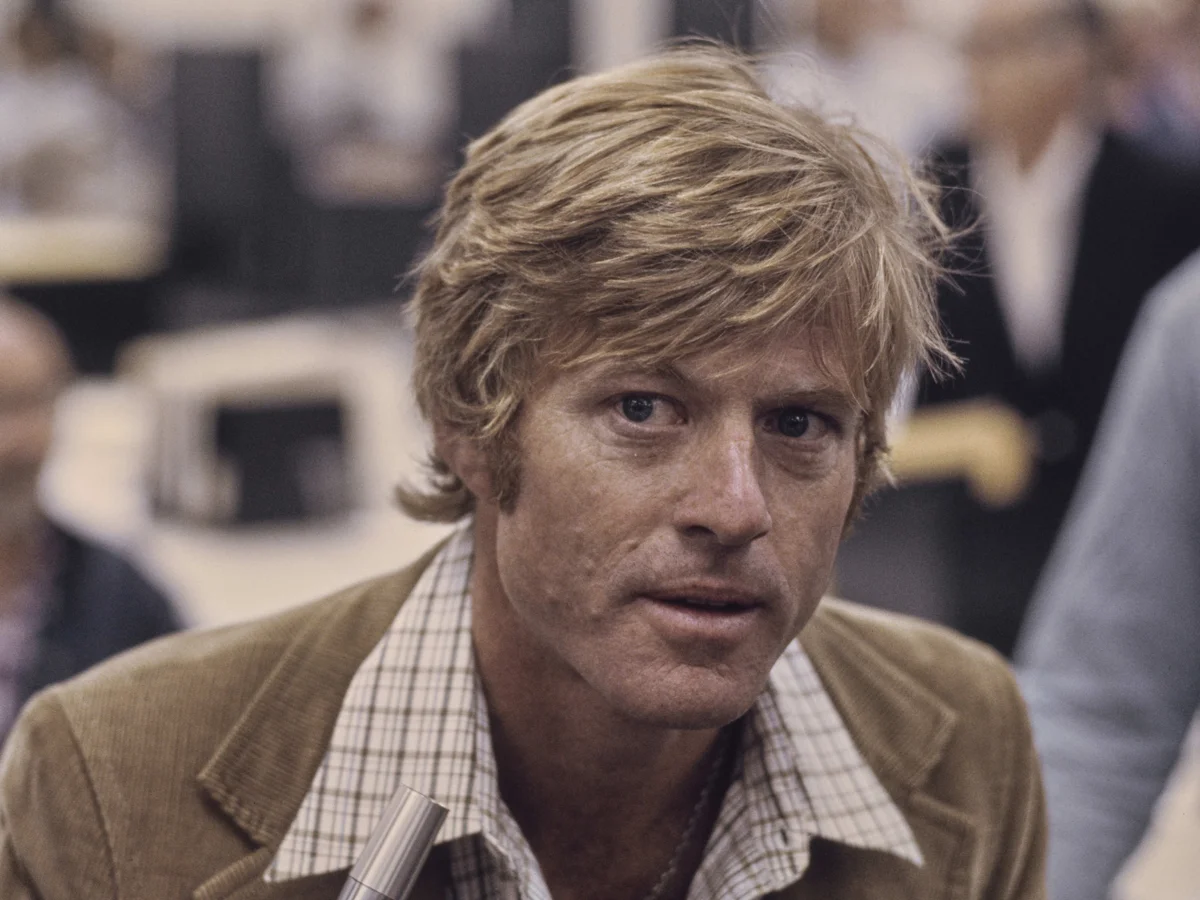
Redford’s Perspective on Hollywood and Fame
Redford once expressed discomfort with the idea of seeking celebrity or valuing fame above substance. Reflecting on his early years, he said,
“There was nothing at the end of the rainbow for me here,”
referring to his hometown. He elaborated,
“Hollywood was not a place I dreamed of getting to. I never could take seriously the obsession people have about being a celebrity or getting to Hollywood – I was born next door.”
His attitude underscored his preference to allow his craft and activism to define his life over public adulation.
Early Life and Formation of the Artist
Born Charles Robert Redford Jr. in Santa Monica in 1936, he grew up mainly in Van Nuys, California. His academic performance was uneven, reflected in anecdotes such as biographer Michael Feeney Callan’s note that Redford
“sat at the back of the assembly hall, reading Mad magazine”
during his high school graduation. Redford briefly attended the University of Colorado Boulder for baseball but was expelled after a year due to what he called “having too much fun,” including spending excessive time in the mountains rather than studying.
After traveling across Europe, Redford moved to New York to pursue acting, undertaking roles in theater and television. Early credits included guest appearances on series such as Perry Mason and Alfred Hitchcock Presents. His stage work earned an Emmy nomination in 1963 for The Voice of Charlie Pont, signaling his growing reputation.
Rise to Stardom and Influential Collaborations
By the mid-1960s, Redford was solidifying his film career, winning the Golden Globe for Most Promising Newcomer – Male in 1966. He starred in the film adaptation of Neil Simon’s Barefoot in the Park, reprising his Broadway role as the cautious newlywed Paul Bratter. However, his breakthrough came with the 1969 revisionist Western Butch Cassidy and the Sundance Kid, co-starring Paul Newman. This film, which challenged the romanticized myth of the Old West, resonated with audiences and critics alike. Redford’s portrayal of the Sundance Kid reflected his rejection of mythmaking and helped define his career’s core themes.
Redford and Newman remained close friends until Newman’s death in 2008, with the former collaborating again on the acclaimed heist film The Sting, which won Best Picture. Other notable films included the Western drama Jeremiah Johnson. However, Redford’s growing fame did not dilute his desire for meaningful work. He confessed,
“I started to get uncomfortable. I felt I wasn’t free to do other things,”
describing negotiations with Warner Bros. that allowed him to create politically charged films like The Candidate in exchange for studio support.
Cinematic Critiques of Politics and Society
The Candidate presented a prescient view of American politics, focusing on appearance over substance, a theme that gained greater relevance over time. Redford’s political awareness also guided his roles in All the President’s Men, highlighting the Watergate scandal, and Three Days of the Condor, a thriller involving CIA conspiracies. His critical perspective toward the United States was shaped during his time in France, where Parisians challenged his understanding of his homeland. He observed,
“[I was] beginning to realize that there was mythology about my own country given to me – and that there was a wonderful country there, which I still believe there is – but it was a different one than the sloganeering that was going on about the country.”
He continued,
“I began to see the other side of it and think. And I felt that there was a story to be told – there are really a series of good stories about what’s the story beneath the story you were given about your own country.”
This mindset informed much of his artistic and activist efforts.
Directorial Vision and Social Commentary
Redford’s directing achievements began with Ordinary People, which explored familial trauma and won four Academy Awards, including Best Director and Best Picture. Through directing, he often tackled social and political themes spanning different areas, such as media influence in Quiz Show, American foreign policy in Lions for Lambs, and legal system flaws in The Conspirator. His work behind the camera expanded his influence beyond acting, allowing him to address complex topics with depth and nuance.
Ongoing Acting Roles and Environmental Advocacy
Alongside directing, Redford continued acting in the 1980s, portraying sensitive characters in films like The Natural and Out of Africa. He also committed himself to environmental causes and the development of the Sundance Institute, which he founded in the early 1980s to support emerging filmmakers. He explained,
“I thought I’d like to put something back, because I had been taken with a Native American policy: When you take something out of the land, you want to put something back. So I decided to think for a while about what I could do that might generate some opportunity for somebody else.”
The Sundance Institute and its associated film festival in Park City, Utah, have grown into a crucial incubator for independent cinema, serving as the event that launches each year’s prestigious film season. Its impact on the industry is considerable and lasting.
Later Career and Retirement from Acting
Redford delivered a remarkable performance in 2013’s nearly wordless survival drama All Is Lost, portraying a man fighting to survive at sea. By late 2016, he indicated he was concluding his acting career after completing two films, Our Souls at Night and Old Man and the Gun. In an interview with his grandson Dylan Redford, he stated,
“Once they’re done then I’m going to say, ‘Okay, that’s goodbye to all that,’ and then just focus on directing.”
He also expressed a renewed interest in painting, a passion from his youth: “At this point in my life, age 80, it’d give me more satisfaction because I’m not dependent on anybody. It’s just me, just the way it used to be, and so going back to sketching – that’s sort of
