
Robert Redford, the acclaimed actor, director, and founder of the Sundance Film Institute, died on September 16, 2025, at age 89. The Hollywood icon, known for his golden-boy looks and influential career, passed away at his home in the mountains of Utah, a place deeply associated with his personal and professional legacy. His death was confirmed by Cindi Berger, CEO of Rogers & Cowan PMK, who shared that Redford was surrounded by loved ones at the time of his passing.
Robert Redford passed away on September 16, 2025, at his home at Sundance in the mountains of Utah — the place he loved, surrounded by those he loved,
Cindi Berger, Chief Executive of Rogers & Cowan PMK said in a statement.
He will be missed greatly. The family requests privacy.
The Career and Impact of a Hollywood Icon
Redford rose to stardom with memorable performances in classic films such as Butch Cassidy and the Sundance Kid, The Way We Were, The Sting, Three Days of the Condor, and All the President’s Men. His presence in Hollywood was marked by a signature blend of rugged charm and understated acting style. While his on-screen appearances became less frequent in recent years, his influence remained significant.
His last major acting role came in 2019 with Avengers: Endgame, where he reprised his part as Secretary Alexander Pierce, sharing the screen with fellow established stars like Michael Douglas and Tilda Swinton. Beyond acting, Redford took on executive producing roles, including on projects such as AMC’s thriller series Dark Winds.
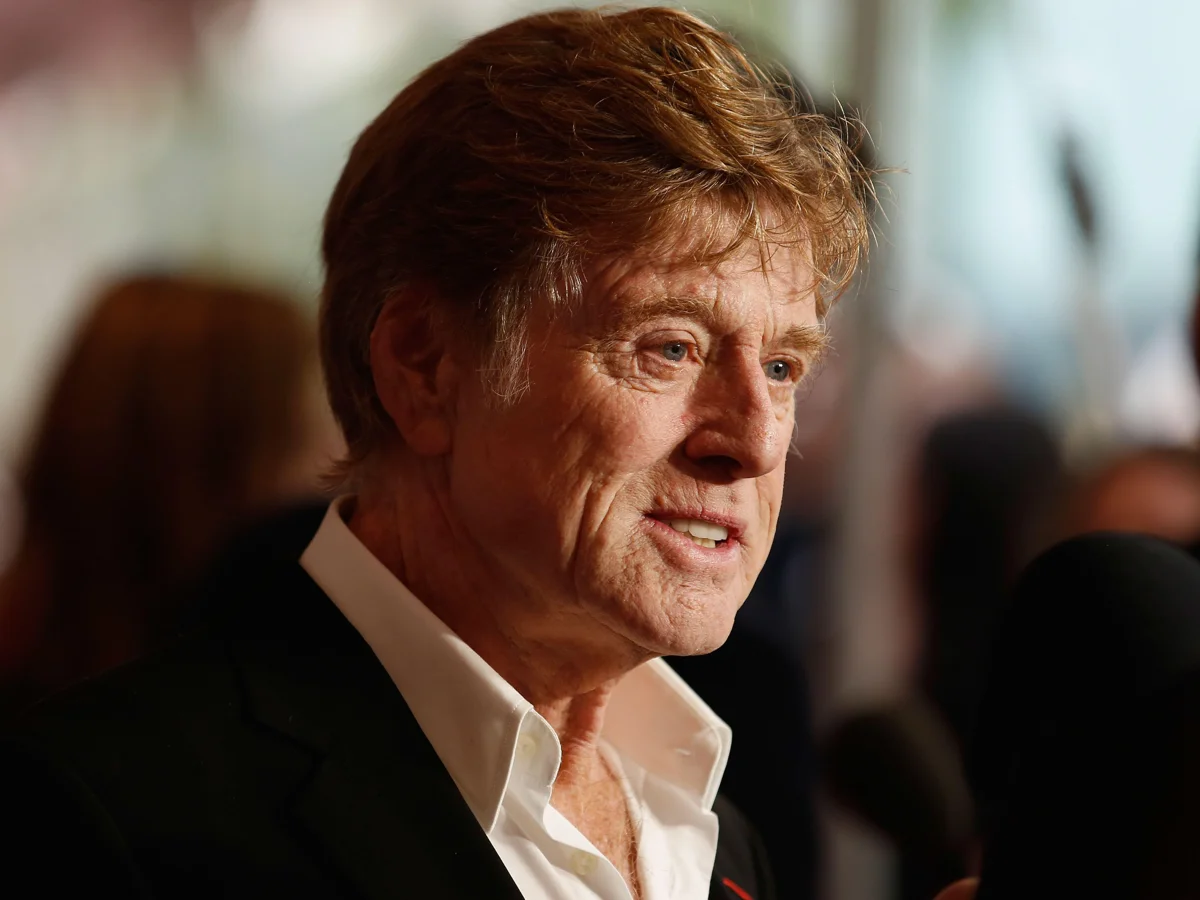
Throughout his career, Redford was celebrated not only for his striking looks—a tousled blond mane and a confident smile—but also for his commitment to environmental activism and an independent approach to filmmaking. His efforts redefined the Hollywood landscape by using his celebrity status to foster new voices and challenge mainstream cinematic norms.
An Acting Style Marked by Authenticity and Restraint
Redford’s style, characterized by instinct and emotional honesty, earned the admiration of his peers. Sydney Pollack, a frequent collaborator, described him as an impulsive actor who eschewed rehearsals and contrived performances. Beginning in television and theater, Redford gradually built his film career.
Launching from early roles on shows like Perry Mason and The Twilight Zone, as well as stage productions including Barefoot in the Park, he broke into films with 1962’s War Hunt. His breakthrough came with the role of the Sundance Kid opposite Paul Newman in the major 1969 hit. This success propelled him to further achievements, including Oscar-nominated roles and box office triumphs throughout the 1970s.
He’s a very instinctive, impulsive actor,
Sydney Pollack said.
I don’t think there’s anything studied or premeditated about the work. He’s the opposite of the actor who wants to rehearse and pin things down.
Major Films and Hollywood Influence in the 1970s and 1980s
Following his rise, Redford starred in critically acclaimed and commercially successful films. These included the western Jeremiah Johnson, the Oscar-winning The Sting, and the romantic hit The Way We Were. His collaborations with Newman and Barbra Streisand helped cement his status as a top box-office attraction. Despite some mixed critical reviews, many of these films resonated strongly with audiences.
Other significant films included The Great Gatsby, political thriller Three Days of the Condor, and the investigative drama All the President’s Men. His involvement in the latter was comprehensive, serving as star, producer, and a creative force behind adapting the Bob Woodward and Carl Bernstein bestseller to screen. The film garnered eight Academy Award nominations and is still regarded as a landmark political thriller.
In the following decades, Redford transitioned to more mature roles in movies like The Natural, Out of Africa, and Indecent Proposal, showcasing a range that, while not expansive in emotional breadth, revealed a consistent magnetic presence. He often portrayed complex, sometimes antagonistic characters, bringing layers of depth and charisma.
He’s a very brave actor when you get down to it in that sense,
Pollack commented.
A big part of what made Bob popular is what he withheld.
The Visionary Behind Sundance and Supporter of Independent Film
Arguably, Redford’s most enduring contribution was the founding of the Sundance Film Institute in 1981, an organization that evolved into a bastion for independent filmmaking. Launching the Sundance Film Festival transformed an obscure regional event into the premier platform for emerging talent and a vital marketplace for indie movies in the United States.
Redford established Sundance shortly after earning the Academy Award for directing Ordinary People in 1980, momentarily placing his career on hold to nurture a new generation of filmmakers. The festival’s influence on the industry continues to be profound, shaping trends and championing voices outside the Hollywood mainstream.
I think he’s constantly trying to figure out different directions for himself because he’s someone who’s always taking on new challenges,
said Geoff Gilmore, longtime co-director of the Sundance Film Festival.
Sundance is only one of his truly remarkable achievements,
Frank Pierson, former Academy president, remarked.
When you look at the sum total of everything he has done as a producer, director and actor, there are not many people who have dedicated themselves so completely to their ideals as Bob Redford.
Exploring American Themes Through Film and Filmmaking
In 1969, Redford’s career took a new turn when he founded Wildwood Enterprises and began more hands-on roles in his projects. His films Downhill Racer and The Candidate were part of a planned trilogy exploring the American Dream and the costs of success, punctuated by a critique of the notion that how one plays the game matters more than winning.
I wanted to tell these stories about America, the America that I knew,
Redford explained.
I remembered these slogans you were given as a kid, like ‘It doesn’t matter if you win or lose, but how you play the game,’ and it was a lie. I wanted to make a film about that lie.
Although the trilogy was never completed, Redford considered reviving the character Bill McKay from The Candidate, only to abandon the idea amid a political landscape he viewed as farcical.
I got excited about that,
Redford said,
(but) what stopped that, and probably has stopped it for good, was George Bush. I mean, you can’t beat that charade. He’s taken it away from me; there’s nothing I can say about politics that isn’t going to be known.
Directorial Work and Political Engagement
Redford’s work behind the camera displayed a reflective and sensitive approach. Films like A River Runs Through It, Quiz Show, and The Legend of Bagger Vance often examined characters that mirrored his own youthful image—promising, flawed, and seeking redemption. Later projects engaged more overtly with social and political issues.
He was a vocal environmentalist, particularly advocating to protect Alaska’s Arctic Wildlife Refuge from exploitation. Redford’s last films as director tackled politically charged topics, such as Lions for Lambs addressing America’s role in Afghanistan, and The Conspirator, which portrayed the controversial trial following President Lincoln’s assassination.
His 2011 film, The Company You Keep, saw him play a former Weather Underground activist whose past is exposed decades later. Additionally, Redford’s 2013 performance in All Is Lost, a nearly wordless survival drama, showcased his ability to convey profound emotion with minimal dialogue.
His portrayal of a villainous figure in Captain America: The Winter Soldier (2014) and his role as journalist Dan Rather in 2015’s Truth demonstrated his versatility and willingness to engage with contemporary political narratives.
I believe there is a role for activist filmmaking,
Redford said in 2002.
and there should be. I think it is wholly appropriate to focus on social cultural issues of our time — particularly documentaries, as the truth seems harder to find in the traditional avenues of media and journalism.
Early Life and Formation of Ideals
Born in Santa Monica, California, in 1936, Redford recalled his childhood during World War II as one marked by unity and hope. But early encounters with politics left an indelible impression. At age 13, he received a sports award from then-Senator Richard Nixon, an experience that shaped his skepticism.
He shook my hand and gave me the award,
Redford recounted.
and the vibe that went through me was so extreme, I said, ‘What in the hell, who is this guy? What a creep, what an absolutely dark character. What a false, artificial person this is.’ And it hit me, I think that stuck…Of course I associated that with politics.
Redford’s teenage years were marked by rebellion, leading to his expulsion from the University of Colorado Boulder, where he attended on a baseball scholarship. He financed a European trip aspiring to become a painter but ultimately chose acting, studying at the American Academy of Dramatic Arts in New York and beginning his career in theater and television.
Remembering Robert Redford’s Multifaceted Legacy
Sydney Pollack once reflected on Redford’s unique and unpredictable career paths, noting that his various roles resonated differently with diverse audiences. Some admired him for his offbeat roles in films like The Candidate and Downhill Racer, while others remembered him as a romantic lead or a champion of independent film through his festival and institute. His directorial debut with Ordinary People left a significant mark as well.
There’ll be those who remember him for offbeat movies like ‘The Candidate’ or ‘Downhill Racer.’ There will be those who’ll remember him as a great romantic leading man in movies like ‘The Way We Were.’ There will be those who will consider him a great force in the emergence of independent filmmaking. There will be those that will remember ‘Ordinary People’ as an impressive directorial debut. The one thing he has always been is difficult to anticipate. I think he enjoys, in a perverse way, not doing what you expect him to do.
Sydney Pollack
Robert Redford is survived by his wife Sibylle Szaggars, their two children, and several grandchildren, leaving behind a legacy that transcends his onscreen artistry to his transformative influence on independent cinema and environmental advocacy.
