
Robert Redford, a towering figure in Hollywood whose career spanned decades across acting, directing, and environmental activism, passed away on September 16 at his home in Sundance, Utah, at the age of 89. Known for his profound impact on cinema and his enduring passion for nature, Redford’s career legacy reflects not only his artistic achievements but also his commitment to conservation and cultural exploration.
A Life Devoted to Exploration and Creativity
Born Charles Robert Redford Jr. on August 18, 1936, in Santa Monica, California, Redford showed early signs of a restless spirit and creativity. As a child, he was an athletic and rebellious student, often distracted in class and more interested in drawing than traditional schoolwork. Reflecting on his youth in a 2013 NPR interview, Redford said,
“I was not a good student through my entire life. My mind was out the window. I drew underneath the desk. I drew pictures. I wasn’t learning the way I was supposed to learn, and I think I realized that my education was going to happen when I got out in the world and engaged with other cultures, other places, other languages and had the adventure of exploration. And I felt, ‘That’s my education.’”
Seeking wider horizons, he enrolled at the University of Colorado in Boulder but soon felt confined there.
“I was drinking, and talking all the time about going to Europe, dreaming about Utrillo and Matisse and Braque. I wanted to be in that place, where they’d been. I’d wanted out of L.A., but Colorado wasn’t far enough,”
Redford explained in a 1998 interview with The New Yorker. In 1956, he left college and embarked on a trip to Europe, embracing a newfound awareness of himself and the world.
He recalled in a later reflection,
“Around the time I went to Europe, I got interested in who I was. I felt as though a film had been ripped from my eyes. I’d done sports, I’d done trouble, and suddenly something clicked into place. I went everywhere with a pad, sketching, drawing pictures, making notes. A consciousness is what happened to me.”
From Stage Beginnings to Hollywood Stardom
Upon returning to the United States, Redford briefly lived in Los Angeles, where he married Lola Van Wagenen. They had four children: sons Scott and James, and daughters Shauna and Amy. Tragically, Scott died at two months old in 1959, and James passed away in 2020. The couple moved to New York so Redford could pursue art studies first at the Pratt Institute and then at The American Academy of Dramatic Arts.
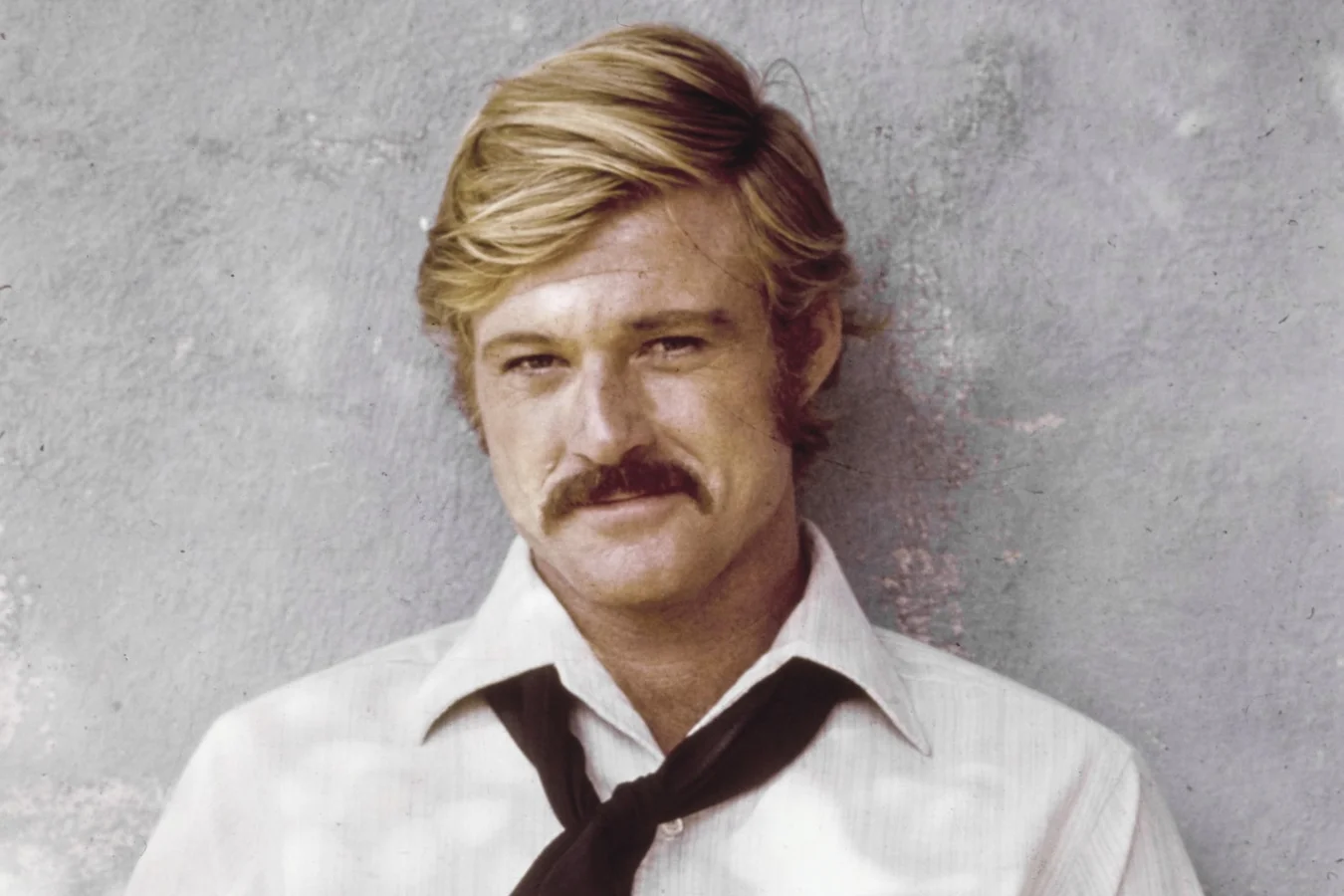
It was at the Academy where Redford’s approach to acting transformed. He credited his role as Konstantin Treplev in Chekhov’s The Seagull for a shift in perspective.
“It was the beginning of everything coming into focus with me,”
he told AARP in 2011. Launching his career with small roles on stage and television, he made his film debut in 1962’s War Hunt.
Redford quickly rose to fame, starring in a variety of classic films including Butch Cassidy and the Sundance Kid (1969), The Way We Were (1973), All the President’s Men, and The Natural. His versatility and charisma made him one of Hollywood’s most beloved leading men, and he seamlessly expanded into producing and directing as well. His directorial work on Ordinary People (1980) earned him the Academy Award for Best Director, and in 2002, he received the Jean Hersholt Humanitarian Award for his wide-ranging contributions to film and philanthropy.
Building Sundance and a Legacy Beyond Film
Redford’s passion extended beyond cinema. His love of nature led him to acquire a 2,600-acre stretch of land in Utah, which became the Sundance Mountain Resort. He first discovered the area while riding his motorcycle from California back to college, captivated by sights such as Inspiration Point near Yosemite National Park. He said in 2018,
“There’s a mile long tunnel when you leave Fresno, California. You come out the other end, and suddenly, there’s Inspiration Point. There in front of you is Yosemite National Park and all the magical beauty of that era—it looks like it was sculpted by God. That’s when I became not only aware of nature but almost addicted to nature in its purest form.”
His environmental dedication led him to help protect natural landmarks like the Grand Staircase-Escalante National Monument in Utah, established during President Bill Clinton’s administration. Redford served on the board of the Natural Resources Defense Council and co-founded The Redford Center with his late son James to create films promoting environmental solutions.
In a 2024 interview with his grandson Conor Schlosser, Redford reflected on his environmental activism:
“I realized how important the environment was for me, and how important it was to sustain it, the predominant thinking came from people who saw it in a different way. They saw the environment as something to destroy so they could build, something they could develop. So very early on, when I realized the importance of the environment, I also realized that I was going to have to play a role in protecting it, and it might not be easy.”
Personal Life and Later Years
After divorcing Lola Van Wagenen, Redford met Sibylle Szaggars in the late 1990s at his Sundance Resort. They married in 2009, sharing a life connected deeply to both creative work and the outdoors. Throughout his later years, Redford continued to act and produce, even considering retirement in 2018 but acknowledging a desire to keep exploring new ventures. He told The New York Times then,
I can’t imagine stopping at all, but just moving forward onto new territory.
Redford’s publicist confirmed his peaceful passing at home in the Utah mountains, stating,
he died at his home at Sundance in the mountains of Utah.
His publicist added,
The place he loved, surrounded by those he loved,
and noted,
He will be missed greatly. The family requests privacy.
Chronology of Key Career Milestones
Redford’s career timeline is marked by influential roles and projects across many decades:
1965 – Began rising prominence in film and television.
1967 – Starred in Barefoot in the Park, showcasing his romantic lead capabilities.
1969 – Achieved major success with Butch Cassidy and the Sundance Kid, cementing his status as a leading actor.
1970 – Starred in Little Fauss and Big Halsy, continuing to diversify his roles.
1973 – Featured in The Way We Were, furthering his critical acclaim.
1978 – Maintained a steady presence in Hollywood’s evolving landscape.
1980 – Directed the emotionally potent film Ordinary People, winning the Oscar for Best Director.
1981 – Continued directing and acting with various projects.
1985 – Starred in the epic romantic drama Out of Africa.
1988 – Maintained acting roles into the late 1980s.
1993 – Appeared in the provocative drama Indecent Proposal.
1995 – Continued to balance roles in front of and behind the camera.
1998 – Directed and starred in The Horse Whisperer, one of his notable late-career works.
2002 – Awarded an honorary Oscar recognizing his humanitarian and cinematic contributions.
2007 – Remained active in the arts, including festival involvement.
2012 – Participated in select film projects and advocacy.
2013 – Continued to influence the film and environmental communities.
2015 – Balanced between acting and supporting Sundance initiatives.
2018 – Starred in The Old Man & the Gun, one of his final major acting roles.
2021 – Maintained presence in the industry until shortly before his passing.
Enduring Influence of Robert Redford
Robert Redford’s career legacy embodies a rare blend of artistic excellence and passionate advocacy for the environment. His performances captivated audiences worldwide, while his Sundance Institute and Film Festival created a vibrant platform that nurtured independent filmmakers. Beyond cinema, his commitment to preserving nature and raising awareness about environmental issues helped shape conversations that continue today. As the film and conservation worlds remember him, his multifaceted contributions stand as a lasting beacon for creativity and responsible stewardship.
