
Dave Bautista’s latest film, Afterburn, released on September 19, attempts to carve out a place in the crowded post-apocalyptic action genre but swiftly collapses under the weight of its own clichés and uninspired storytelling. Set in a devastated future Earth, the movie follows treasure hunter Jake in a bleak world ravaged by solar flares, with Bautista leading the cast in what many will see as a lackluster effort.
Underdeveloped Characters and a Bleak, Generic Vision
Director J.J. Perry’s film adapts the Red5 comic series, but the result is a grim and pulpy experience that wallows in tired action tropes and relentless monochromatic tones. Bautista’s Jake is a self-described loner navigating a lawless wasteland where warlords control fractured territories. Unfortunately, the hero emerges as a severely undercooked archetype who offers little emotional engagement. His interactions, including a sparing connection with Olga Kurylenko’s French freedom fighter Drea, fall flat, and the frequently repeated use of the word merde feels like a clumsy nod to her nationality rather than meaningful characterization.
Samuel L. Jackson delivers the film’s strongest moments, bringing energy and a touch of charisma to King August, a powerful and aristocratic patron who tasks Jake with stealing the Mona Lisa from French territory. Jackson’s performance is a rare bright spot, imbuing even weak dialogue with some semblance of life.
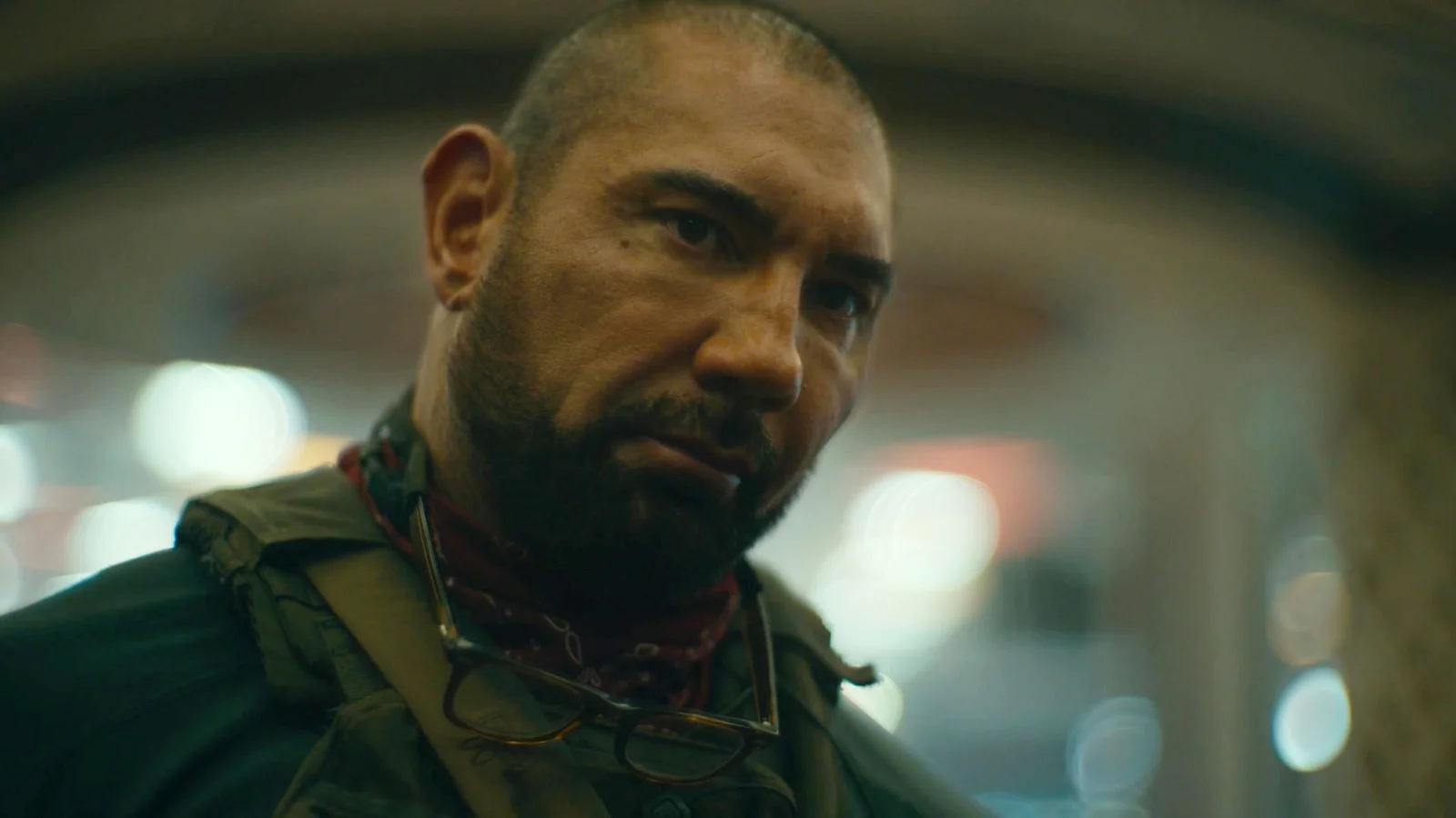
Dave Bautista Struggles to Anchor the Film’s Action-Heavy Plot
Afterburn follows closely on the heels of Bautista’s previous misfire, In the Lost Lands, reinforcing the view that while the former wrestler is personable, he lacks the depth required to carry a film as the leading man. Displaying a notably stoic expression, Bautista fits the role’s demand for a taciturn bounty hunter, yet this minimalism comes across more as wooden than stoic. The story focuses on Jake’s role as a London-based artifact thief who retrieves rare treasures for wealthy clients, culminating in a mission to secure the Mona Lisa in exchange for the chance to retire peacefully on a boat.
The film’s plot seems like a watered-down echo of The Book of Eli, which used sacred scripture as a beacon of hope amid post-apocalyptic chaos. Instead, Perry’s vision prioritizes violence and action set pieces over world-building or narrative coherence. This is particularly evident in the portrayal of the antagonist General Volkov, played by Kristofer Hivju, whose mannerisms are exaggerated to the point of unintended humor. Volkov’s obsession with grandiose propaganda, symbolized by massive banners emblazoned with a capital “V,” and his flamboyant leadership style do little to inspire dread, instead prompting bewilderment.
A Struggle Between Mad Max-Style Chaos and National Treasure Tropes
Filmed in Slovakia, Afterburn benefits from the authentic rural backdrop that supports its post-apocalyptic visuals without breaking the budget. The movie employs several chase sequences reminiscent of vintage car stunts, including multiple ramps and jumps that evoke the spirit of action franchises like The Dukes of Hazzard. Yet, attempts to inject excitement often fall short, with the geographic progress across France depicted through an overused animated map featuring a tiny car tracing the route, which adds an oddly cartoonish touch.
The narrative aims to blend the frantic energy of Mad Max with a treasure hunt vibe akin to National Treasure but ultimately succumbs to emphasizing trivial elements over substance. For instance, Jake spinning a Public Enemy vinyl record comes off as superficial character development, and the central plot revolving around the Mona Lisa lacks nuance or intrigue. The film relies heavily on excessive gore, with enemies dramatically exploding upon gunfire, which feels more like a visual gimmick than compelling action.
Afterburn’s Place in the Genre and What Lies Ahead
Despite its shortcomings, Afterburn offers a glimpse into the potential of combining comic book influences with dystopian storytelling, although this film falls far short of that promise. The reliance on CGI effects and simplistic world-building underline the challenges faced by low-budget productions trying to compete in a genre dominated by more polished works. Though distributed by Inaugural Entertainment and opening in theaters this fall, the movie is likely to be remembered more as a misguided attempt than a standout entry.
With Bautista still finding his footing as a lead action star and J.J. Perry’s direction focused more on spectacle than narrative, Afterburn may serve as a cautionary example of what happens when kinetic energy replaces cohesive storytelling. Viewers seeking a meaningful exploration of a post-apocalyptic world or compelling character arcs will likely be left disappointed by this drab offering.
