
Director Larry Yang and producer Victoria Hon are exploring the possibility of a sequel to Jackie Chan’s The Shadow’s Edge, which is currently premiering in the Open Cinema section of the Busan International Film Festival. The film, a reimagining of the Hong Kong classic Eye in the Sky, has sustained the No. 1 spot at China’s box office for four consecutive weekends, demonstrating strong audience reception.
Yang, who previously worked with Chan on the 2023 film Ride On, brings his experience from his debut feature Mountain Cry—the closing film of the 20th Busan festival—to redefine this crime thriller for modern viewers.
Reinventing a Classic for Today’s Viewers
The Shadow’s Edge offers about 85-90% new content, creatively inspired by the original storyline. Yang prioritized delivering the core idea over performing a strict remake. He explained the challenge was not updating the setting to the digital age, but aligning the tone and emotional rhythm to appeal to current cinematic tastes.
“The challenge didn’t come from shaping the story into today’s tech-driven world, but from fitting into today’s audiences’ cinematic tastes,”
Yang told Variety.
“I wouldn’t mind tell the same story again if the audiences today could appreciate it, but I guess that would not be the case. Finding the right tone – a combination of right characters, rhythm and emotional flow – for today’s audiences is more important than finding the right story settings.”
Respecting the original came from seeing the film’s central idea as its strongest element. According to Yang,
“My respect for the original come from my willingness to buy the remake right even if it’s just 1%, because that 1% is the idea of a film. A great idea always comes before a story. There can be countless ways to tell that idea, but a great idea is a great idea.”
His creative freedom allowed the project to evolve into a new form rather than a scene-to-scene replica. As he noted,
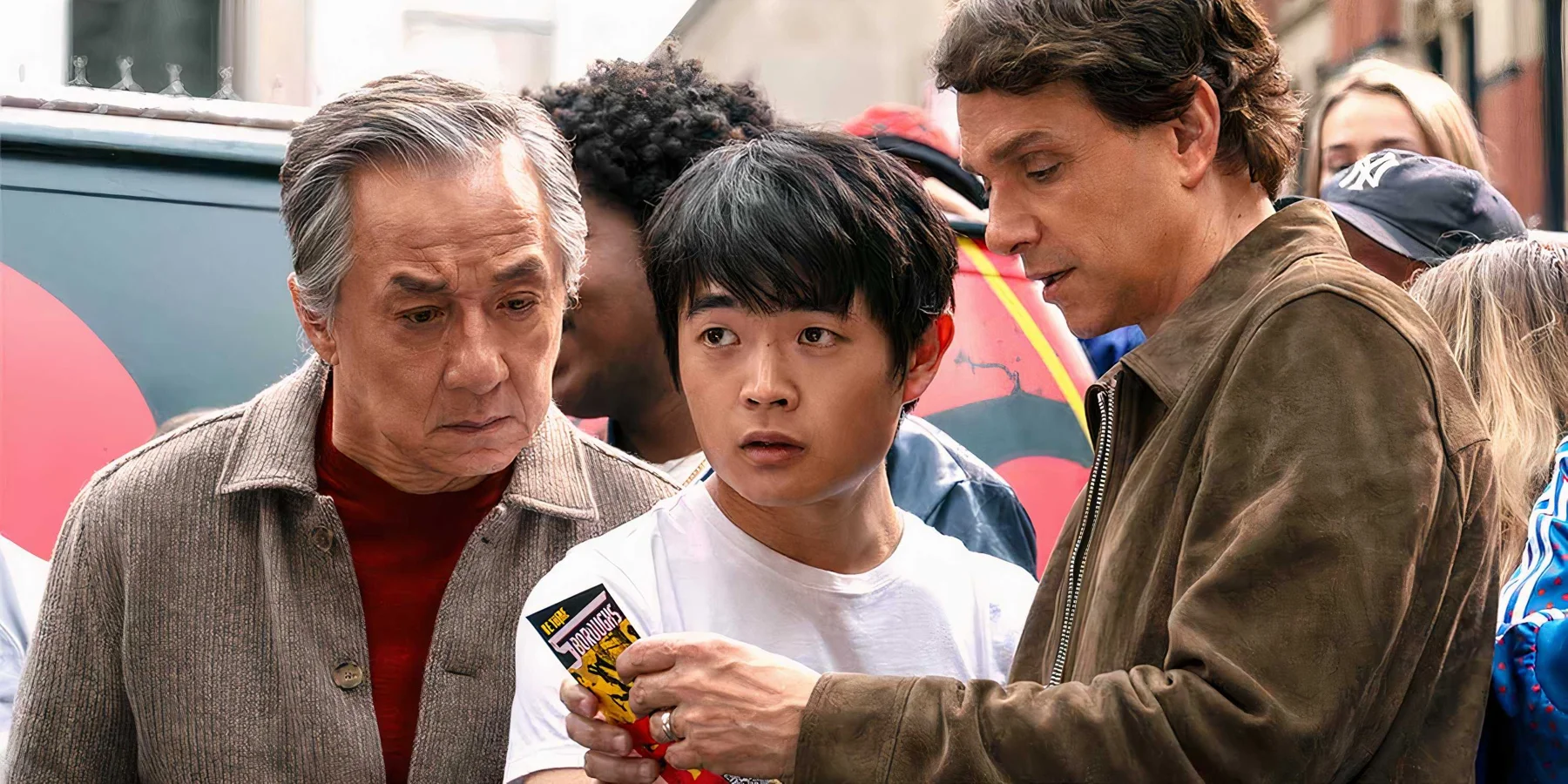
“My opinion of a remake doesn’t necessarily have to be an exact scene-by-scene reboot of the same story, but instead a new breed of the same idea. Therefore, I didn’t worry too much about balance. I primarily focused on what would be good for my story and my tone surrounding this great idea.”
Film Plot and Character Developments
In the story, Jackie Chan portrays a retired surveillance expert called back into action to investigate a complex heist in Macau. Tony Leung Ka-fai returns in a reimagined villain role from Eye in the Sky, where his character has been reshaped for the contemporary setting.
Yang envisioned Leung’s character through a speculative lens:
“What if that guy didn’t die? What if he survived, was saved by a bunch of kids, raised them, trained them, and teamed up with them two decades later? What if, by spending years with these boys, this ruthless guy began to grow a bit of something called love in him? And, what if, due to some misunderstanding or miscommunication, the boy betrayed his love?”
The narrative combines advanced surveillance technologies with intense, character-driven action. Yang emphasized that while technology informs the story’s obstacles and tools, the film remains fundamentally human-centered.
“The idea of a covert surveillance team on foot searching for a ghost came from the original story,”
he said.
“Technology serves as obstacles and opportunities on both sides, giving new twists to the story. I made sure this part never exceeded the flow of intensive energy while telling the story. It’s still a ‘human story,’ never tech-driven, but wit-driven.”
Purpose Behind the Action Scenes
Yang highlights that the fight sequences are designed to advance the story rather than merely provide spectacle.
“Action served as a continuation of a dialogue, a continuation of a quiet and covert surveillance mission, and a continuation of the evil-fighting barrier which technology alone couldn’t reach,”
he explained.
“We built sequences that ‘speak’ through character by always holding on to the human factors.”
On Jackie Chan’s physical performance, Yang expressed confidence:
“Jackie can still fight, and this movie is far from reaching his limit.”
Thematic Focus on Generational Change and AI
Producer Victoria Hon stressed the film’s exploration of generational tensions and modern technology’s role.
“We bought the remake rights for ‘Eye in the Sky’ a few years ago and have been developing a story for years,”
she said.
“How to make the story work with today’s audiences has always been an interesting discussion internally. At the same time, we see how AI plays a more and more significant role in modern society. So we wanted to incorporate this element into the story. The idea of old and new became the theme we wanted to discuss and explore.”
Production Challenges and Industry Context
Creating an action film in today’s Chinese market posed challenges, particularly convincing investors of the genre’s potential profitability. Hon explained,
“I think the biggest challenge was to make this film and this genre itself. In the recent China film market, action films were not doing very well at the box office. To make investors believe in this genre, we worked hard on the script and building the characters.”
Strong writing played a critical role in attracting top actors and crew. Hon noted,
“I believe the script is always the first milestone of a project – being able to talk to masters like Jackie and Tony and convince them there’s something different and unique in their characters.”
The production also integrated young actors skilled in wushu and creative, energetic young team members.
Balancing experience with fresh talent paralleled the film’s themes.
“This is just like the theme of our film,”
Hon said.
“I think it is also one of the key to success – that we respectfully learned from the masters and added young energy and creatives into the film.”
Collaborative Approach to Action Direction
The collaboration between director Larry Yang, action director Su Hang, and Jackie Chan was essential to achieving high-quality action sequences. Hon recalled,
“In all the action scenes, Larry and action director Su Hang had many creative ideas they wanted to try. They shot action demos and showed them to Jackie. With Jackie’s experience, he gave advice on parts that could escalate the tension, or parts that could be dangerous and needed preparations. Other than that, he gave us all his trust, which meant a lot and allowed us to try new things.”
Despite the financial and time demands, they maintained a consistent crew for filming action to preserve quality. Hon explained,
“Action scenes are very costly and time consuming. Even so, we shot the actions scenes with one single crew to keep the action and actor performance consistent. Pre-production time was about 5 months and we shot 84 days. Most of the action scenes were storyboarded, and action demos were filmed during pre-production.”
Macau’s Unique Setting Enriches the Film
The production embraced Macau’s mix of old and new cultural elements to complement the story. Hon observed,
“Macau is a city with mixed cultural elements. It has very fancy luxurious hotels, and also very old town almost next to each other. We loved that atmosphere, and we felt the story and character could blend into the city well.”
Location scouting lasted eight months, and some scenes evolved naturally from the city’s geography.
“The script’s locations were based on routes we walked ourselves and felt reasonable to include,”
Hon said.
“For example, when the robbers flew from the Macau Tower, they needed to find the nearest platform to land. We stood at the edge of the tower and saw the platform of Wynn Macau. That’s how we first approached the hotel and asked for their support.”
Optimism for International Success and Future Projects
Golden Network Asia manages the film’s international sales, with positive reactions at Cannes earlier this year. Hon shared,
“This time most of the sales were made in Cannes earlier this year, and many buyers were confident to promote the film after seeing our demos and reels. I look forward to the theatrical release in all the regions and hope for strong box office results.”
Yang anticipates developing additional action films while considering new ideas for a sequel. He stated,
“We’re considering the idea of a sequel, but right now we’re unsure what direction it will take. I don’t want to repeat myself so I will very likely find a new approach. We’ll see how that goes.”
Committed to storytelling across genres, Yang said,
“I love telling a good story, and I will continue searching for great movie ideas and compelling stories to tell, no matter the genre. I’m interested to try different genres, including sci-fi or historical stories in the future.”
Hon also sees growing global opportunities for Asian films.
“Commercial genres like action and thrillers are probably the most popular ones for reaching global audiences,”
she explained.
“We will keep working in action, and I also hope to do more co-production that can target both local and international audiences.”
