
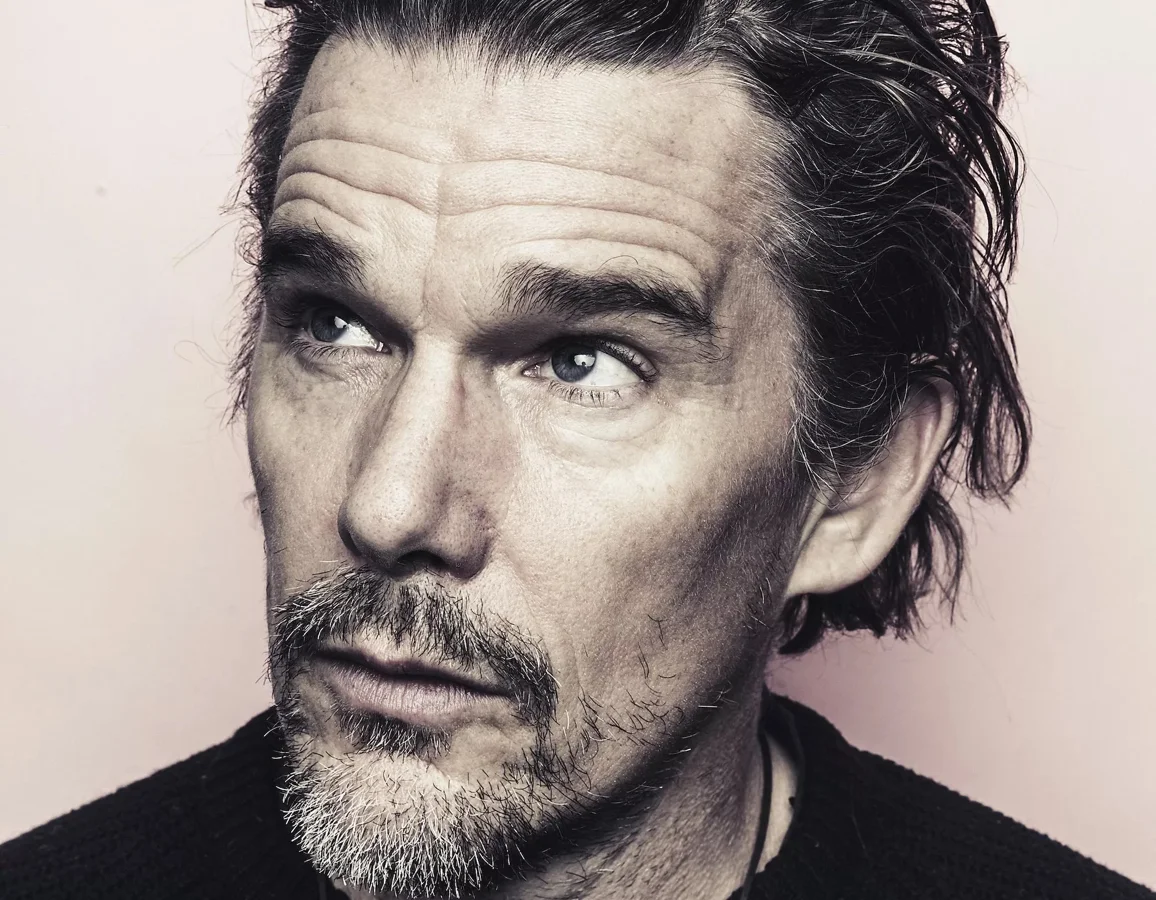
Ethan Hawke is currently filming The Weight in Germany alongside Russell Crowe, a historical drama set in 1930s Oregon that has been a long-held ambition of his. Known for his diverse talents as an actor, writer, and documentarian, Hawke is simultaneously developing two major upcoming projects: Blue Moon, his ninth collaboration with director Richard Linklater, and The Lowdown, an eight-episode limited series created by Sterlin Harjo. These roles showcase Hawke’s commitment to complex and challenging characters, signaling a new chapter in his career.
Transforming Into Iconic and Unfamiliar Characters
In Blue Moon, Hawke portrays Lorenz Hart, a legendary lyricist famed for classics like “My Funny Valentine” and “The Lady Is A Tramp.” This role demands a deep physical and psychological transformation: Hawke appears balding, shorter in stature, and embodying Hart’s struggles with alcoholism and romantic longing. Meanwhile, in The Lowdown, he takes on the role of Lee Raybon, a Tulsa-based citizen journalist who confronts corruption and moral failings within his community. These parts differ dramatically but share a dedication to rich, multifaceted storytelling that reveals Hawke’s range.
A Career of Enduring Collaborations and Growth
Hawke’s acting journey began in the mid-1980s with Explorers, but it was his role in Dead Poets Society that confirmed his standing in Hollywood. The 1990s saw him become a notable figure with films like Reality Bites, while his partnership with Richard Linklater, starting in 1995 with Before Sunrise, has been influential and long-lasting. Their projects, including the Before trilogy and Boyhood, have garnered critical acclaim and an Academy Award nomination for Hawke. This ongoing collaboration laid the foundation for the ambitious Blue Moon, where Linklater challenges Hawke to reach new depths.
Richard Linklater’s Vision for Blue Moon
Linklater explains the intensity behind Blue Moon’s production, revealing how the film required Hawke to disappear into Hart’s persona both physically and mentally. Shooting under tight financial constraints and a demanding schedule, Linklater pushed Hawke harder than ever before, creating a “dance” of mutual challenge and creative trust. The narrative unfolds nearly entirely in Sardi’s restaurant, depicting Hart’s vulnerability as he grapples with his sobriety and personal demons on the eve of a significant theatrical opening. Linklater’s direction underscores the powerful authenticity Hawke brings to the role.
Hawke on Embodying Lorenz Hart and Artistic Responsibility
Hawke describes his initial unfamiliarity with Lorenz Hart but embraces the freedom that came from portraying a figure less known to mainstream audiences. He contrasts this with playing icons like Johnny Cash or Ray Charles, where audience expectations can be constraining. His focus shifted toward honoring the truth of Hart’s life and legacy, acknowledging the responsibility to portray the lyricist’s integrity faithfully.
Joining Forces with Sterlin Harjo on The Lowdown
For The Lowdown, Hawke reunited with filmmaker Sterlin Harjo, who first collaborated with him on the final episode of FX’s Reservation Dogs. Harjo shares that he always expected to work with Hawke, drawn to a shared artistic sensibility and language. On set, they bonded over music, teaching each other songs by Hank Williams and Tyler Childers, highlighting a connection rooted deeply in art and storytelling. This synergy drives The Lowdown’s narrative, focusing on community struggles and personal truth through Hawke’s character, Lee Raybon.
The Character of Lee Raybon and The Lowdown’s Themes
Lee Raybon is depicted as a bookshop owner and local “truthstorian” who doggedly investigates dark secrets within Tulsa’s affluent families, using his alternative newspaper as a platform. His pursuit of transparency invites both comedic and dangerous conflicts, emblematic of the series’ blend of humor and social critique. The show’s sharp lines—exemplified by Killer Mike’s memorable remark,
“White men that care are the saddest of the bunch”
—signal its commitment to tackling weighty issues with an edge.
Adapting to the Limited Series Format
Hawke’s interest in limited series grew from his experience adapting the James McBride novel The Good Lord Bird, where the longer format allowed deeper narrative exploration. While initially cautious about television, he credits Reservation Dogs and Sterlin Harjo’s vision for reigniting his enthusiasm for the medium. He criticizes TV that merely fills time without meaningful content, preferring projects where he can merge into a larger, purposeful artistic vision. This perspective aligns with his approach to both The Lowdown and Blue Moon.
Documentary Filmmaking and Artistic Exploration
Beyond acting, Hawke has pursued documentary filmmaking, most recently with The Last Movie Stars on HBO, which documents the lives of Paul Newman and Joanne Woodward. He is also developing a documentary about country music legend Merle Haggard, a project born from Hawke’s admiration for artists who maintain individuality in politically divided times. Hawke explains that he is drawn to exploring lives of artists who have made lasting contributions, reflecting on how Haggard’s refusal to conform offers lessons on unity and self-determination.
Reflections on Art, Politics, and Humanity
During the interview, Hawke contemplates the role of art amid societal unrest and technological change. He rejects despair in the face of trends that commodify or replicate creativity, emphasizing that true expression stems from an internal spirit rather than mere words. Using metaphors about running marathons and climbing mountains, he underlines the fundamental human drive to create and endure beyond quantifiable achievements. This philosophy informs his choice to work closely with creators like Linklater and Harjo, who share a dedication to genuine storytelling.
Collaboration as a Lifeline for Meaningful Storytelling
Hawke’s ongoing partnerships with Richard Linklater and Sterlin Harjo reveal a commitment to art as a means of survival and connection in difficult times. Their work together forms a “secret rhythm” that enables them to tell stories with precision and heart. As Hawke puts it, the essence of their efforts is simply to be human and to honor that shared experience through their craft.
“Nobody else would have cast me in this movie, Rick sees something in me that other people don’t. One of the remarkable things about Rick is that he operates with a level of gratitude, with the understanding that the world does not owe us any of this. That became clear to me on Before Sunset.” – Ethan Hawke
“It was a real dance. Ethan has never had to transform this much physically and mentally. That’s why I was a bit of a nag as a director. I mean, nobody ever wanted to sleep with Larry Hart, so Ethan had to disappear.” – Richard Linklater
“Weirdly, I always knew I would work with Ethan. I read his first book (The Hottest State) when I was young, and it felt like we spoke a similar language, like we were kindred. It’s amazing how long he has been working as an actor and yet he can still surprise you.” – Sterlin Harjo
“The really bad aspect of TV, for me, is when you can feel it doing the job of wasting your time successfully. You’re home from work, you have an hour before you have to make dinner, and you want to take your mind off of your problems and not actually have to engage in anything.” – Ethan Hawke
“I’ve made a few documentaries now, and they’re all about the lives of other artists. So, clearly, I’m trying to learn something about people who have been able to contribute something of themselves over a long period of time.” – Ethan Hawke
“When you’re making a documentary about a life, you have to find out why this individual’s story might have meaning beyond the individual.” – Ethan Hawke
“We’re living in a weird moment. It doesn’t give me despair. It doesn’t even give me pause. It’s never really about the words; it’s about the spirit behind the words.” – Ethan Hawke
