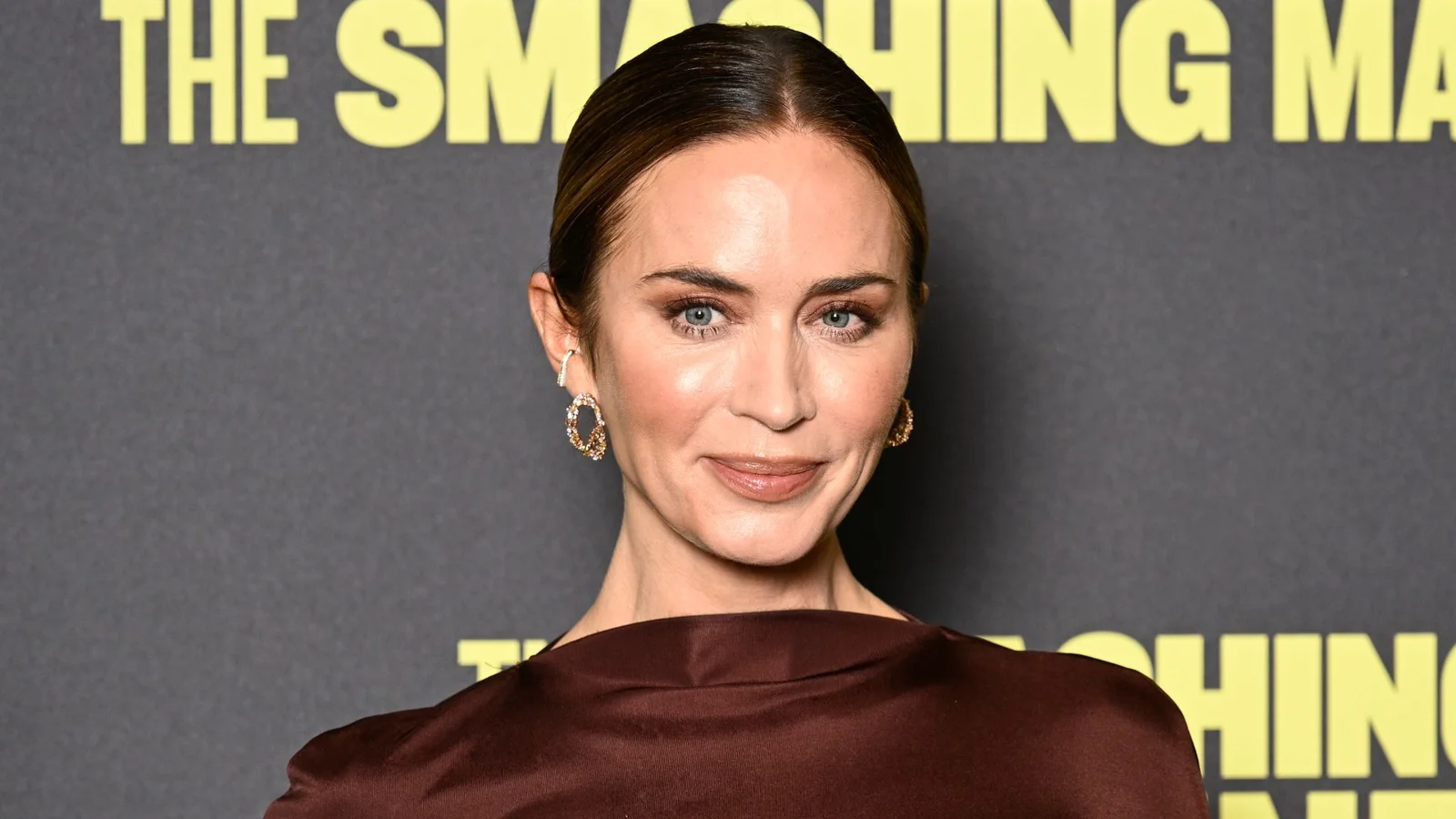
Emily Blunt condemns AI actress, urges preserving human connection. [Image Source: YIMG]
Emily Blunt criticized the emergence of an AI-generated actress named Tilly Norwood, amid reports that talent agencies have taken interest in the digital figure. Speaking to Variety on Monday, the Oscar-nominated actress expressed deep concern about the use of artificial intelligence in the entertainment industry, emphasizing the threat it poses to genuine human connection and performance. Blunt’s comments highlight growing tensions around the integration of AI in Hollywood, a core issue central to the ongoing Emily Blunt AI controversy.
Details Surrounding Tilly Norwood’s Introduction to the Film Industry
Tilly Norwood was introduced publicly by her creator Eline Van der Velden during the Zurich Summit, part of the Zurich Film Festival. Developed by Van der Velden’s AI talent studio Xicoia, Norwood is described as the first self-proclaimed AI actress designed to capture the imaginations of casting agents and audiences alike. Xicoia builds on Van der Velden’s earlier AI production efforts through Particle6. Industry insiders and media outlets such as Deadline and Variety have widely covered this novel talent approach, sparking debates on authenticity and the future of acting.
Emily Blunt’s Reaction to the AI Actress’s Image and Industry Interest
Reacting to a revealing photo of Norwood, Blunt expressed disbelief and alarm, questioning how agencies could seriously consider the AI figure as a viable performer. She said,
Image of: Emily Blunt
“Does it disappoint me? I don’t know how to quite answer it, other than to say how terrifying this is,”
Emily Blunt told Variety. She continued,
“No, are you serious? That’s an AI? Good Lord, we’re screwed. That is really, really scary, Come on, agencies, don’t do that. Please stop. Please stop taking away our human connection.”
Her blunt remarks underscore the fear many actors share about AI potentially replacing real human performers and eroding artistic expression.
Promises and Ambitions Behind the Creation of Tilly Norwood
Eline Van der Velden framed Norwood not as a replacement but as an innovation in creativity. In a July interview, Van der Velden declared,
“We want Tilly to be the next Scarlett Johansson or Natalie Portman, that’s the aim of what we’re doing.”
Despite this ambition, Blunt pointed out the redundancy, replying, “But we have Scarlett Johansson.” Van der Velden insists Norwood is a new artistic tool, akin to animation or CGI, providing alternative storytelling methods instead of supplanting live acting.
Widespread Industry Backlash Against AI Performers
The reaction from the acting community has been overwhelmingly negative. Following reports that talent agencies are courting Norwood, numerous actors voiced their disapproval on social media platforms. Actress Eiza Gonzalez condemned the trend, saying,
“Shame on whoever is trying to normalize this. Horrific and terrifying,”
while Ariel Winter expressed frustration:
“The F–K is this s–t be SO fr right now,”
and Nicholas Chavez added,
“Not an actress actually nice try.”
Mara Wilson criticized the ethical implications by questioning the source of Norwood’s composite face, asking,
“And what about the hundreds of living young women whose faces were composited together to make her? You couldn’t hire any of them?”
Meanwhile, Lukas Gage made sarcastic remarks about Norwood’s “performance,” joking,
“she was a nightmare to work with!!!!”
and,
“she couldnt hit her mark and she was late!”
Melissa Barrera voiced disdain in her Instagram stories, urging actors to distance themselves from agencies representing AI performers, stating,
“Hope all actors repped by the agent that does this, drop their a$$. How gross, read the room,”
reflecting the frustration felt by many in the industry.
Creative Defense from AI Actress’s Creator Amid Criticism
Van der Velden responded to the backlash with a lengthy explanation posted on social media, emphasizing that Norwood is a creative artwork rather than a substitute for human performers. She wrote,
“To those who have expressed anger over the creation of my AI character, Tilly Norwood, she is not a replacement for a human being, but a creative work – a piece of art. Like many forms of art before her, she sparks conversation, and that in itself shows the power of creativity,”
reflecting a belief in AI’s potential to expand artistic possibilities.
Van der Velden argued that AI tools should be viewed as new kinds of creative expression, akin to how animation, puppetry, or CGI introduced fresh dimensions without replacing human actors. She added,
“I’m an actor myself, and nothing – certainly not an AI character – can take away the craft or joy of human performance,”
highlighting respect for traditional acting. She described Norwood’s creation as
“an act of imagination and craftsmanship, not unlike drawing a character, writing a role or shaping a performance.”
Van der Velden hopes for AI to be accepted as part of the artistic community based on its own merits rather than direct comparisons to humans.
Official Opposition from SAG-AFTRA to Synthetic Performers
The actors’ union SAG-AFTRA issued a formal statement condemning the use of AI-generated performers like Norwood. Labeling Norwood a “synthetic performer” and referring to the AI as “it,” the union highlighted the challenges that such technology poses to human creativity and performer livelihoods. They affirmed,
“SAG-AFTRA believes creativity is, and should remain, human-centered. The union is opposed to the replacement of human performers by synthetics.”
The union further clarified,
“To be clear, ‘Tilly Norwood’ is not an actor, it’s a character generated by a computer program that was trained on the work of countless professional performers — without permission or compensation.”
The statement emphasized the lack of lived experience or genuine emotion in AI characters and suggested that audiences are uninterested in purely computer-generated content detached from the human element. SAG-AFTRA warned that AI performers
“create the problem of using stolen performances to put actors out of work, jeopardizing performer livelihoods and devaluing human artistry.”
Additionally, the union reminded producers that contractual obligations require transparent negotiations and consent when synthetic performers are considered for projects:
“Additionally, signatory producers should be aware that they may not use synthetic performers without complying with our contractual obligations, which require notice and bargaining whenever a synthetic performer is going to be used,”
SAG-AFTRA concluded.
The Broader Implications of the Emily Blunt AI Controversy
This controversy reveals a critical crossroads in entertainment, where technology challenges the very essence of human creativity and employment. Emily Blunt’s outspoken resistance and the widespread pushback from actors’ unions and celebrities underscore fears that AI could erode the foundational human connection in performance arts.
As AI continues to evolve, the industry faces urgent questions about ethics, compensation, and the preservation of artistic integrity. The strong voices opposing AI-generated actors like Tilly Norwood may influence future guidelines, regulations, and public perception, shaping how technology will be integrated—if at all—into film and television moving forward.