
Hollywood’s fascination with biopics continues, now turning its focus to Broadway legends like Lorenz Hart. Richard Linklater’s new film, Blue Moon, set to debut in theaters on October 24, brings Hart’s story to the big screen, exploring the life and struggles behind some of American musical theatre’s most enduring songs. This film dives into the world of Richard Rodgers and Hart’s songwriting partnership, highlighting their influence on the musical theatre canon.
The Legacy of Rodgers and Hart’s Songbook in American Culture
While Lorenz Hart himself may not be a widely recognized name outside theatre circles, many have likely enjoyed his work unknowingly. Hart and his collaborator Richard Rodgers produced iconic standards such as “Blue Moon,” “My Funny Valentine,” “Isn’t It Romantic?”, and “Bewitched, Bothered, and Bewildered.” Unlike Rodgers’ later work with Oscar Hammerstein II, which emphasized storytelling, the Rodgers and Hart musicals were rooted in vaudevillian traditions focused on catchy tunes, humor, and light-hearted performances rather than plot-driven narratives.
Richard Linklater’s Personal Connection to the Music
Director Richard Linklater reveals how the music became a meaningful part of his life.
“This music’s been with me for 40 years,”
he states, describing an unexpected connection formed during his younger years, when after attending punk shows, he found himself returning to the classic show tunes of Rodgers and Hart. The idea for Blue Moon originated not with Linklater but from screenwriter Robert Kaplow, whose screenplay—a one-sided monologue featuring Hart—captured Linklater’s attention by its raw emotion and clever wit.
The Changing Nature of Musical Theatre and Hart’s Place in It
Though Hart once was a major figure on Broadway, the decline in popularity of Rodgers and Hart musicals has made him less known today, even among musical theatre enthusiasts. Their shows belonged to an era valuing entertainment over cohesive storytelling, focusing on spectacle through showgirls and humor, a style that contrasts sharply with the narrative-driven musicals that followed. This shift partly explains Hart’s enduring reputation more as a songwriter than as a dramatist.
Ethan Hawke Brings Hart’s Complex Character to Life
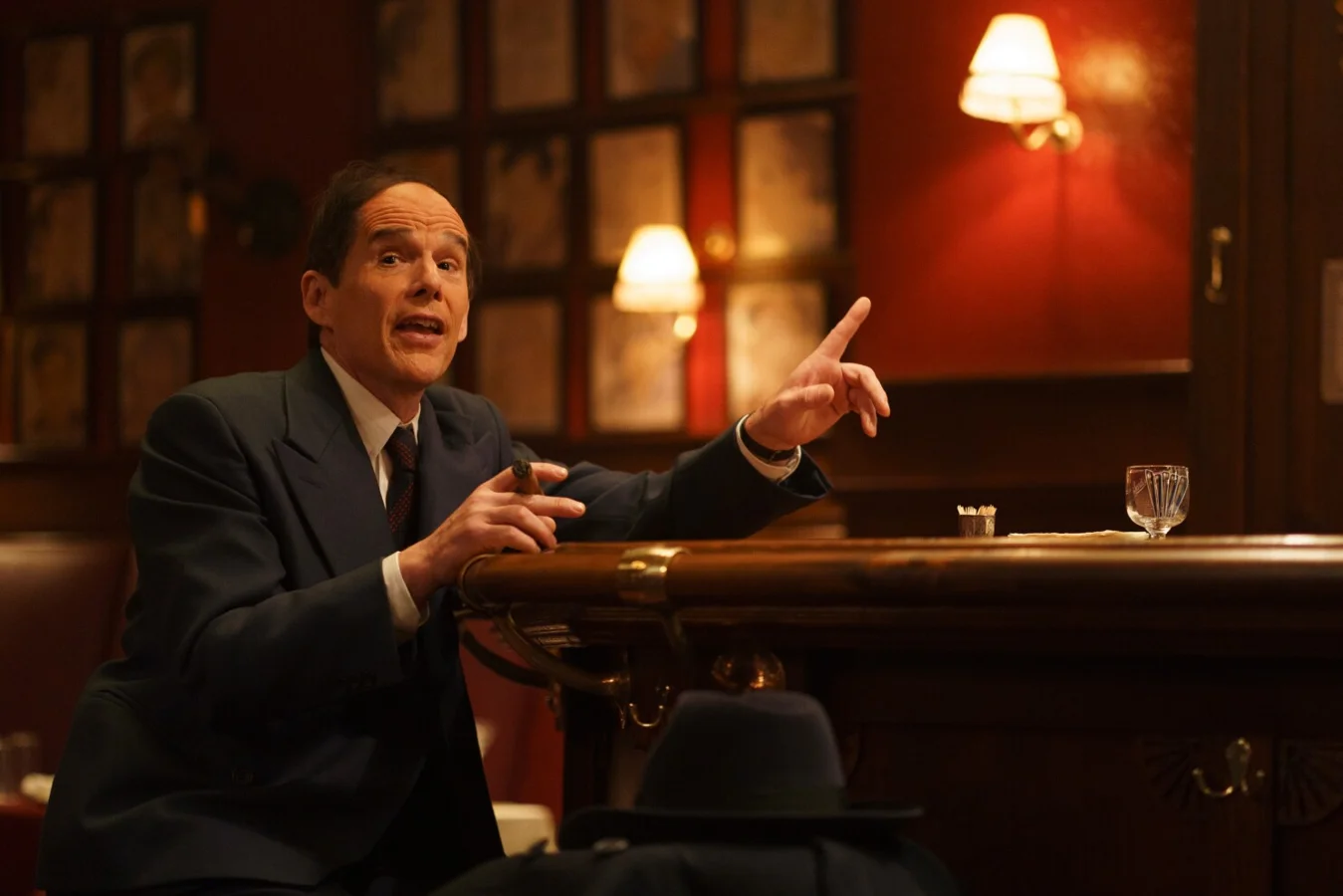
In portraying Lorenz Hart, Ethan Hawke offers a transformative performance that captures the lyricist’s nuances and inner turmoil. Hawke connected immediately to the screenplay when first introduced to it, feeling an intimate familiarity with Hart’s character and work. At the time, Hawke was performing in a Broadway revival of Macbeth directed by Jack O’Brien, who became an enthusiastic supporter of the film project after learning about the story’s connection to the opening night of Oklahoma!—a defining moment for Hart and Broadway history.
Significance of Oklahoma!’s Premiere in Hart’s Career
The opening of Oklahoma! in 1943 marked a pivotal point for Hart’s career and the world of musical theatre. This production, Rodgers’ first major musical with Hammerstein, was revolutionary for integrating music, dance, and drama into a unified narrative, breaking away from the vaudeville-influenced style Hart was known for. Rodgers and Hammerstein chose earnest themes and strong storytelling, contrasting sharply with the urbane wit and casual style of Rodgers and Hart’s earlier works.
Hawke reflects on the importance of that night, recalling Jack O’Brien’s interpretation:
“I remember Jack [O’Brien] talking about why it had to be that night of all nights, right in the middle of the war, right when musical theatre is changing and becoming what Hammerstein wanted, what that transition meant. He was like, ‘That’s a portrait of a death.’”
This metaphor emphasized the profound impact the musical’s debut had on Hart’s personal and professional life.
The Complex Personal Life of Lorenz Hart
Hart’s difficulties extended well beyond Broadway’s spotlights. Known for heavy drinking and instability, Hart’s challenging personality and personal struggles often complicated his career. Standing under five feet tall, a trait cleverly exaggerated by movie techniques to accommodate Hawke’s height, Hart was also a closeted gay man and battled deep emotional anguish. It is widely believed that the premiere of Oklahoma! intensified his internal conflicts, with the shelving of his partnership with Rodgers contributing to his downfall.
The Tragic End of Lorenz Hart’s Life
Less than eight months after Oklahoma! premiered, Hart died of pneumonia, following prolonged exposure to cold weather during a night of drinking in Manhattan. The film opens with a tribute drawn from jazz singer Mabel Mercer’s poignant reflection:
“the saddest man I ever knew,”
which encapsulates the melancholy at the heart of Hart’s story and sets the tone for Linklater’s sensitive character study in Blue Moon.
Artistic License in Depicting Hart’s Story at Sardi’s
While the movie portrays Hart at the opening night party for Oklahoma! in the iconic Sardi’s restaurant, much of the film’s narrative unfolds through imagined conversations and encounters. Hart often isolates himself from the main celebration, interacting with a bartender, played by Bobby Cannavale, and sharing a fictional yet poignant meeting with author E.B. White, portrayed by Patrick Kennedy. Linklater describes these moments not as outright fantasies but as plausible, heightened glimpses into what could have been, offering a fairy-tale quality to the otherwise somber story.
Broadway Cameos and Easter Eggs for Fans
Fans of musical theatre will appreciate the subtle appearances sprinkled throughout Blue Moon. One notable cameo features a young Stephen Sondheim, played by Cillian Sullivan, accompanying Oscar Hammerstein at the party. Although Sondheim’s presence at the 1943 premiere is historically unlikely, the nod highlights the connection between theatre’s past and future legends. Linklater is concurrently working on a long-gestating film adaptation of Sondheim’s Merrily We Roll Along, deepening this meta-layer of homage.
Reflecting on his missed chance to share the film with Sondheim before the latter’s passing in 2021, Linklater says,
“I was waiting to tell him, to know for sure the film was going to happen. I was looking forward to that moment, but I missed it by a year or two. I think he would have thought that was pretty funny.”
Using Hart’s Music as the Foundation for the Film
Rather than striving for strict historical accuracy, Blue Moon focuses on the emotional and lyrical depth of Hart’s work to paint a portrait of the man behind the songs. Hawke credits Hart’s songbook and 1956’s Ella Fitzgerald Sings the Rodgers & Hart Song Book as crucial resources for immersing in the character. His favorite piece, “Bewitched, Bothered, and Bewildered,” evokes a powerful experience of longing and transcendence, with lyrics compared to literary masterpieces.
Linklater captures the essence of Hart’s pain and artistry, noting,
“There’s all this yearning and longing and left-behind, that other people are having the fun, normal life, this idea of being outside the glass looking in. That’s all in his lyrics, all that pain. But there’s a beauty. It’s always moving. They’re never self-pitying. They’re carrying the weight of the world.”
This duality frames the film’s portrayal of Hart as a man whose exquisite artistry was inseparable from his inner sorrow.
