
Seven years after the release of First Reformed, Ethan Hawke has shared his perspective on the film’s ambiguous conclusion, shedding light on the layered meaning behind the final scene. Written and directed by Paul Schrader, who also wrote classics like Taxi Driver and Raging Bull, the 2017 film centers on Reverend Ernst Toller, portrayed by Hawke, whose fate remains uncertain at the movie’s end. Hawke’s insights offer a deeper understanding of the film’s complex themes for fans and new viewers alike.
Ethan Hawke’s Interpretation of the Film’s Ambiguous Conclusion
In a recent Vanity Fair video series where actors reflect on their careers, Ethan Hawke discussed the intricate and deliberately unclear ending of First Reformed. He explained that the conclusion is designed to embody the idea that true wisdom contains opposing truths simultaneously, representing what he describes as “the continuity of opposites.” The final shot, Hawke says, captures the tension between life and death, reality and illusion, symbol and experience.
Hawke refrained from offering a clear-cut explanation, warning that doing so would weaken the powerful effect crafted by Schrader. Instead, he highlighted the intention behind Schrader’s choice, comparing the ending to a ringing bell whose significance lies not in the sound itself but in the lasting questions it stirs in the audience’s mind. This metaphor captures how the film prompts viewers to continue reflecting on its themes long after it ends.
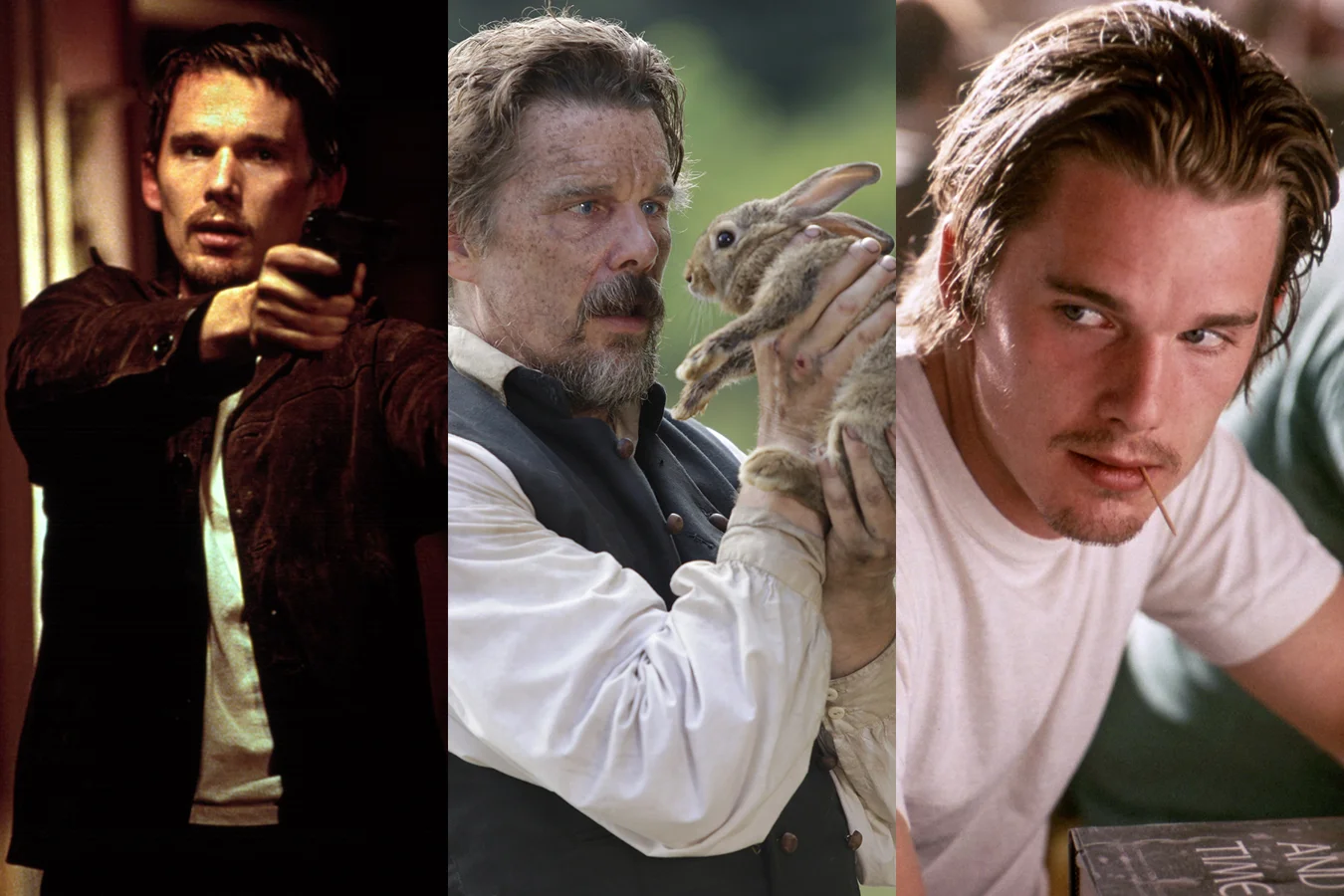
“I know some things about it that I’m not sure are helpful to say, but I think that ending is a cinematic expression of a thought that is articulated earlier in the film, was that wisdom is holding two opposing thoughts at the same time. And that shot is an attempt at the continuity of opposites, like, how do you express it? It’s real, it’s not real. He’s dead. He’s finding life for the first time. It’s a symbol. So to answer it is to rob it of its power. The thing that I know is how much thought Paul put into that, and that I read multiple drafts with multiple endings, and I watched him arrive at that as the right ending. And I found it incredibly satisfying, it does exactly what Paul, even if you don’t like it, it’s doing what he wants to do. So it’s fine. And I know Paul has said before that, ‘A great movie starts as you walk out of the theater after it was over.’ A great film should be like a bell, and it’s not the ringing of the bell that’s important. It’s the vibration and what it awakens in you that’s significant. And so the end of that movie is a bell ringing, and it’s designed to walk you out of the theater thinking about the themes of the film, rather than finishing a story.”
— Ethan Hawke, Actor
The Story and Characters in First Reformed
First Reformed features Ethan Hawke as Reverend Ernst Toller, the pastor leading a small congregation in upstate New York. His personal and spiritual crisis intensifies after meeting an unstable environmental activist and his pregnant wife, Mary, who is portrayed by Amanda Seyfried, an Oscar-nominated actress known for her role in Mank. The film further stars Cedric the Entertainer, Victoria Hill, and Philip Ettinger in supporting roles, rounding out a cast that explores themes of faith, despair, and redemption.
Deliberate Ambiguity Surrounding Reverend Toller’s Fate
The film’s ending is purposefully ambiguous, leaving the audience uncertain about Reverend Toller’s ultimate fate. As Toller prepares to ingest a glass of drain cleaner, Mary stops him, interrupting the act. They share a passionate kiss, and the screen cuts to black abruptly. This unresolved finale allows for multiple interpretations: one suggests Toller’s salvation through a miracle, while another implies the final moments could be a dying vision experienced as he drinks the poison.
Paul Schrader, who earned his first Oscar nomination for writing First Reformed, has openly discussed how he intended this duality. Schrader explained that the film’s conclusion might represent either a miraculous reprieve or a hopeful vision in the face of death, both representing an optimistic outcome in different ways.
“One, that a miracle has occurred, and his life is spared. The other is equally, in my sense, optimistic, which is that he drinks the Drano, and he’s on all fours. He’s throwing up his stomach, and God comes over to him.”
— Paul Schrader, Writer and Director
The Significance and Lasting Impact of the Film’s Ending
The unresolved nature of First Reformed’s conclusion invites viewers to engage in personal reflection about the film’s themes of despair, hope, and spiritual struggle. By resisting a definitive interpretation, Schrader encourages audiences to grapple with the coexistence of conflicting emotions and ideas that Reverend Toller’s story embodies. Ethan Hawke’s commentary reinforces this approach, emphasizing that the film’s final moments are meant to resonate beyond the screen, staying with viewers as they leave the theater.
For those following the careers of Paul Schrader and Ethan Hawke, First Reformed stands as an enduring exploration of faith and human fragility, with its ambiguous ending continuing to inspire debate and analysis. The film’s layered narrative and complex characters promise to remain significant in contemporary cinema discussions.
