
Nia DaCosta’s Hedda adaptation breathes fierce new life into Henrik Ibsen’s 1891 play, Hedda Gabler, transforming the timeless portrayal of a trapped and ruthless woman into a dark, claustrophobic drama set in the 1950s. This striking reinvention takes place in the confines of Hedda’s expensive but burdened home during a lavish party, capturing the tensions between class, gender, and societal norms with unsettling intensity.
A Night of Manipulation and Desperation
Tessa Thompson stars as Hedda, a Bohemian spirit caught off guard by her recent marriage to George, a conventional professor played by Tom Bateman. Hedda’s limited options in a restrictive era force her into a loveless arrangement, where she clings to evenings of decadence and defiance to escape her stifling reality. As George vies for a coveted university position, Hedda’s carefully curated party becomes the stage for her covert schemes and simmering frustrations.
The tension heightens when Eileen Lovborg, portrayed by Nina Hoss, arrives as Hedda’s ex-lover and academic rival. Eileen’s groundbreaking, progressive work and promising career threaten George’s prospects and expose sharp contrasts between the two women’s lives. Eileen also has Thea, a supportive girlfriend played by Imogen Poots, adding layers of queerness and complexity to the narrative.
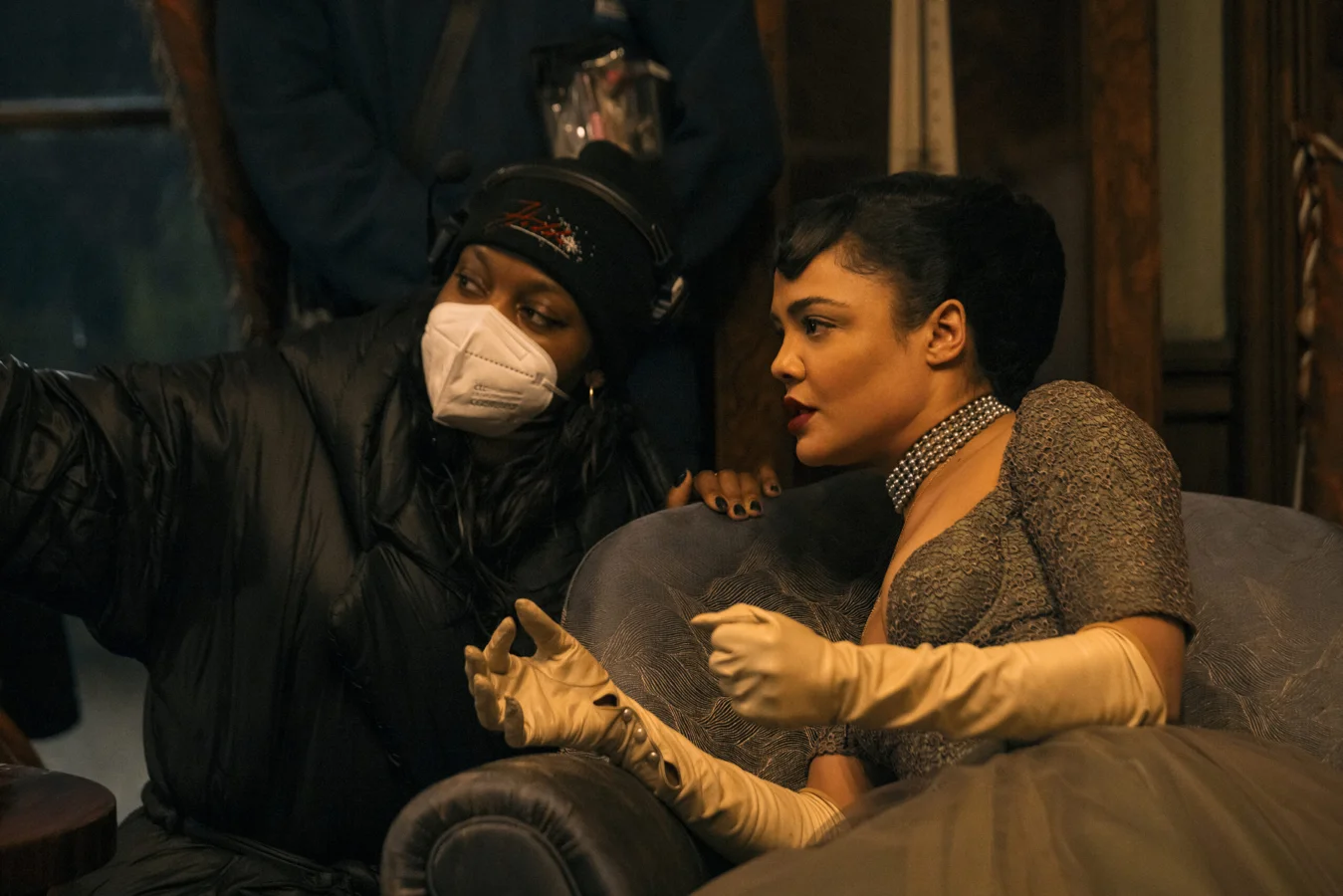
Hedda’s Ruthless Quest for Control
Far from a traditional heroine, DaCosta’s Hedda emerges as a cold, calculating figure in constant pursuit of control and freedom, indifferent to the collateral damage she causes. Trapped by societal expectations but unwilling to surrender, she maneuvers with cunning and cruelty, embodying a poisonous mix of vulnerability and menace. Her nights are marked by relentless manipulation, as she challenges everyone who stands between her and her desires.
Unlike the reverent portrayals of Hedda by iconic actresses such as Ingrid Bergman, Maggie Smith, and Cate Blanchett, Thompson’s interpretation channels a darker, more predatory energy. Hedda is a shadowy presence, a “vampire in disguise” who thrives in the night and threatens those around her with a chilling blend of detachment and intensity.
A Powerful Ensemble and Modern Relevance
DaCosta’s version is shaped by a strong ensemble cast that reflects the film’s layered themes. Nina Hoss’s Eileen transforms the originally male character into a fiercely independent woman determined to conquer academia against the odds, adding a cutting queer dimension to the story. The rivalry and parallel struggles between Hedda and Eileen underscore racial and professional barriers, especially poignant given Hedda’s identity as a Black woman facing closed doors where Eileen barely finds cracks in the system.
The film unflinchingly amplifies the social conflicts at the heart of Ibsen’s work, highlighting the ongoing battles of feminism and queerness against entrenched societal repression. DaCosta’s bold approach refuses to soften these struggles, instead presenting them with raw urgency and blazing intensity.
An Intense, Visceral Adaptation for Today’s Audience
Hedda is a cinematic tour de force, combining hypnotic cinematography and razor-sharp editing with performances that fully inhabit the characters’ emotional turmoil. This adaptation respects the theatrical tradition of the original while boldly pushing boundaries, creating a film that is as electrifying and provocative as it is faithful to Ibsen’s spirit. DaCosta’s work offers a compelling example of how classic material can be revitalized to resonate powerfully with modern viewers, addressing timeless themes through a fresh, urgent lens.
“Hedda doesn’t have a plan, she’s in pursuit of a Xanatos Gambit, manipulating everyone at the gala in pursuit of the best possible outcome — but only for Hedda. If she brings someone along with her, bully for them, but that’s incidental. She’s a serpent who backed itself into a corner, and now she’s coiling and uncoiling, and sinking her fangs into everyone who stands between her and freedom, lust, money and victory. She’ll destroy any life as long as it’s not her own, and she’ll feel little, or nothing, about it.” – unnamed source
“DaCosta has assembled a brilliant ensemble and conducts them like an experimental orchestra. Hoss stands out as the lover Ibsen, in his time, imagined as a man, but DaCosta’s rewrite spins gold razor-wire about of this film’s abundant queerness. Hedda and Eileen are united in their outsider status, but also divided. Eileen has a career. She’s fought tooth and nail to succeed in male-dominating academia. Hedda can’t fall back on her career. And as a Black woman, the doors Eileen barely managed to crack open will slam right in Hedda’s face. The times may be more progressive than in Ibsen’s original, but DaCosta has the freedom to say the quiet parts loud, and set them beautifully on fire.” – unnamed source
